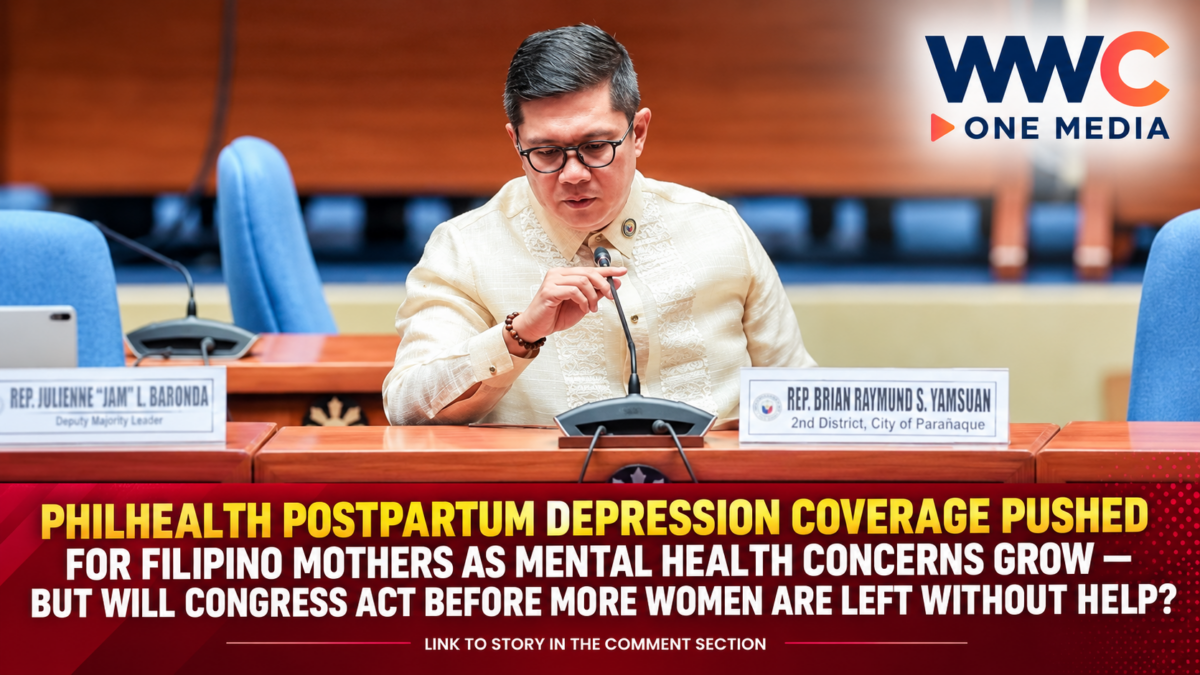
MANILA, Philippines — October 25, 2026 — For many Filipino mothers, the challenges of childbirth do not end when they leave the delivery room. Behind the excitement of welcoming a newborn, some women face depression, overwhelming anxiety, emotional exhaustion, and serious mental health conditions that can go unnoticed or untreated.
Now, a proposed law seeks to strengthen the country’s response to these often-overlooked struggles by requiring the Philippine Health Insurance Corporation (PhilHealth) to develop a dedicated benefit package for postpartum mental health care.
Parañaque City 2nd District Representative Brian Raymund Yamsuan is pushing House Bill No. 8617, which would provide specific health insurance coverage for the screening, diagnosis, and treatment of mental health conditions affecting women after childbirth.
The measure aims to address a critical challenge in maternal health: ensuring that mothers receive appropriate psychological and psychiatric care, rather than having their symptoms dismissed as ordinary consequences of pregnancy and motherhood.
A Hidden Mental Health Crisis Among Filipino Mothers
Postpartum depression can affect a mother’s emotional well-being, relationships, daily functioning, and ability to care for herself and her newborn.
Yet many women remain reluctant to seek professional assistance because of social stigma, financial difficulties, or expectations that mothers should endure their struggles without complaining.
Yamsuan warned that postpartum depression, anxiety, and stress should never be treated as insignificant problems.
He emphasized that women recovering from childbirth are particularly vulnerable and should not have to confront mental health challenges without proper support.
The lawmaker also cited research suggesting that depressive symptoms may be widespread among pregnant and postpartum Filipino women.
One study referenced in reports about the proposed legislation found clinically significant depressive symptoms in at least three out of five pregnant or postpartum participants.
However, this finding should not be interpreted as evidence that 60% of all Filipino mothers have clinically diagnosed postpartum depression. Depressive symptoms and a confirmed psychiatric diagnosis are different, and the study’s participants may not represent the entire population.
Other hospital-based studies cited in coverage of the bill reported postpartum depression prevalence estimates ranging from 14.5% to 32.8%, illustrating how findings vary across research settings.
What House Bill 8617 Proposes
The proposed legislation seeks to require PhilHealth to establish a specific package for postpartum mental health conditions.
Coverage envisioned under the measure would include routine mental health screening, medical assessment and diagnosis, and appropriate treatment for conditions associated with childbirth.
These include postpartum blues, postpartum depression, and postpartum psychosis.
The proposal would also require the Department of Health and PhilHealth to implement a nationwide information campaign explaining postpartum mental health conditions, the importance of early intervention, and available public health services.
Supporters believe a more clearly defined benefit package could encourage mothers to seek professional assistance before symptoms become more severe.
Crucially, however, House Bill 8617 has not yet become law.
Congressional records show that the measure was filed on March 17, 2026, and referred to the House Committee on Health on March 18, where it remains pending according to the latest verified listing.
PhilHealth Already Provides Some Mental Health Benefits — So What Is Missing?
The proposal comes as PhilHealth has already expanded several maternal health services.
Under its existing outpatient mental health benefits, PhilHealth lists annual coverage of ₱9,000 for general mental health services and ₱16,000 for specialty services, subject to eligibility requirements and access through participating providers.
These benefits include screening, assessment, diagnostic services, follow-up consultations, psychosocial support, and essential medicines.
Additionally, PhilHealth’s 2026 expanded maternity care guidelines already recognize mental health counseling as part of postpartum care, with mental health screening and support included in relevant maternal services.
This distinction is important.
The proposed legislation should not be presented as the first attempt to include mental health support in PhilHealth maternity coverage.
Instead, its potential significance lies in establishing a dedicated postpartum mental health benefit that could more explicitly address diagnosis and treatment for childbirth-related psychiatric conditions.
Questions remain about the eventual coverage limits, access requirements, participating facilities, and how the proposed package would work alongside existing benefits.
Why Postpartum Depression Must Be Taken Seriously
Medical experts distinguish between temporary emotional changes after childbirth and more serious psychiatric conditions.
Postpartum blues commonly involve short-term mood changes, tearfulness, and emotional sensitivity that usually improve within approximately two weeks.
Postpartum depression involves more persistent or severe symptoms, including intense sadness, hopelessness, anxiety, and difficulty functioning.
Postpartum psychosis is a rare but potentially life-threatening psychiatric emergency that may involve hallucinations, delusions, confusion, or severely disorganized behavior.
Mothers experiencing persistent symptoms should receive professional evaluation rather than being told simply to endure them.
Any signs of postpartum psychosis, or thoughts of harming oneself or a baby, require immediate emergency medical attention.
The distinction matters because different conditions require different levels of care, ranging from counseling and monitoring to specialist psychiatric treatment.
Existing PhilHealth Maternity Benefits Have Also Expanded
Beyond mental health services, PhilHealth has increased financial support for childbirth and maternal care.
According to the Philippine Information Agency, expanded hospital maternity benefits introduced in 2026 raised normal delivery coverage to ₱29,000 from ₱9,759.
Cesarean section benefits also increased, with reported coverage ranging from ₱58,000 to ₱62,000 depending on the applicable case classification.
The reforms also expanded covered prenatal checkups and included three postnatal consultations.
These improvements are intended to reduce the financial pressure associated with pregnancy and childbirth.
However, greater financial protection for delivery does not automatically guarantee comprehensive psychiatric treatment after pregnancy.
That gap is central to the debate surrounding Yamsuan’s proposed legislation.
Could the Proposed Law Change Maternal Health Care in the Philippines?
If enacted and effectively implemented, the measure could help make postpartum mental health services a more visible component of government-supported maternal care.
For women outside major urban centers, the biggest challenges may involve more than insurance coverage.
The availability of psychiatrists, psychologists, trained primary care workers, referral services, and participating healthcare facilities could determine whether expanded benefits translate into actual treatment.
The government would also need to address public awareness, confidentiality, and the social stigma that prevents some women from acknowledging psychological distress.
A dedicated benefit package could reduce financial barriers, but successful implementation would still depend on accessible healthcare professionals and clear procedures for obtaining assistance.
What Happens Next?
House Bill 8617 still needs to advance through the legislative process before its proposed requirements could become law.
Until then, existing PhilHealth mental health and maternity benefits remain the relevant programs for eligible patients seeking covered care.
The larger issue now facing policymakers is whether the Philippines can provide a maternal healthcare system that protects not only a mother’s physical recovery after childbirth but also her emotional and psychological well-being.
For thousands of Filipino families, the unanswered question is no longer simply how much childbirth costs — but whether mothers can receive timely mental health treatment when they need it most.
And as lawmakers consider a dedicated PhilHealth postpartum mental health package, another question remains: Will expanded insurance coverage finally make postpartum psychiatric care more accessible, or will gaps in healthcare services continue to leave vulnerable mothers without the support they need?