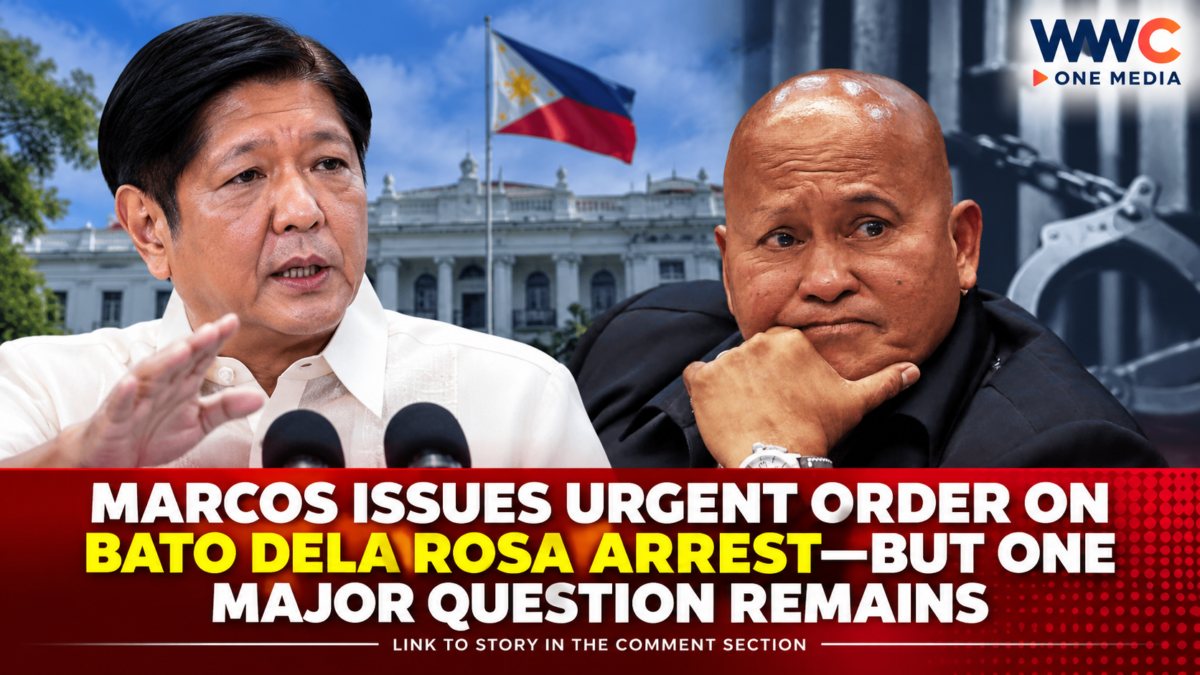
MANILA, Philippines — President Ferdinand “Bongbong” Marcos Jr. has directed law enforcement agencies to move swiftly in enforcing the arrest order against Senator Ronald “Bato” dela Rosa, while emphasizing that the operation must remain lawful and avoid unnecessary loss of life.
The latest directive comes as authorities intensify efforts to locate the senator, who is wanted under an arrest warrant issued by the International Criminal Court (ICC) over alleged crimes against humanity linked to former president Rodrigo Duterte’s war on drugs.
Palace Press Officer Claire Castro said on October 24 that Marcos wanted authorities to act without delay.
“There should be no time wasted in enforcing the law,” Castro said, describing the President’s instruction for police to act quickly and decisively.
However, she stressed that the administration also wants the arrest carried out without fatalities.
The statement signals a renewed push by the government to resolve the case as pressure mounts over Dela Rosa’s whereabouts, the legality of the arrest effort, and the risks surrounding a potentially high-profile police operation.
₱50-million bounty raises the stakes
The government’s campaign intensified after Interior Secretary Juanito Victor “Jonvic” Remulla announced a ₱50-million reward for information leading to Dela Rosa’s capture on October 23.
Remulla described the senator as “armed and dangerous” and gave him one week to surrender, according to reports by GMA News and The Philippine Star.
Authorities have said they are pursuing the senator in connection with the ICC warrant. Remulla has also urged Dela Rosa to surrender rather than prolong a potentially dangerous confrontation.
The reward announcement has nevertheless triggered objections from the senator’s legal camp.
Dela Rosa’s lawyer, Israelito Torreon, questioned the legal basis for the bounty, arguing that no Philippine court had issued a separate arrest warrant against his client. His legal team maintains that the government is relying on the ICC warrant despite the Philippines’ withdrawal from the Rome Statute, the treaty establishing the court.
The dispute highlights a central question in the case: how Philippine authorities should enforce an ICC arrest warrant amid continuing legal and political disagreements over the court’s jurisdiction.
Senate minority calls for a peaceful resolution
The escalating manhunt has also prompted concern within the Senate.
On October 24, members of the Senate minority appealed to Marcos and concerned government agencies to work with Dela Rosa’s legal counsel toward a peaceful resolution.
The senators said the government should pursue justice and uphold the law while protecting lives and respecting the rights of those involved.
Their appeal came amid concerns about the potential dangers of an arrest operation and the public dispute over the government’s reward offer.
The administration, meanwhile, has maintained that authorities must enforce the law. The challenge is to carry out the operation without triggering violence or undermining the legal process.
Why Dela Rosa is wanted by the ICC
Dela Rosa served as Philippine National Police chief under Duterte and was a prominent figure in the former president’s anti-drug campaign.
The ICC’s case concerns alleged crimes against humanity associated with the campaign. Dela Rosa is accused of involvement in crimes linked to the killings; the allegations remain subject to judicial proceedings, and an arrest warrant is not a finding of guilt.
The Philippines withdrew from the Rome Statute effective March 17, 2019. However, the ICC has maintained that it can investigate alleged crimes committed while the country was still a member, including conduct within the period covered by its investigation into the Philippines.
The government’s handling of the case has become a major political and legal issue, particularly following Duterte’s arrest in March 2025 and his transfer to The Hague to face proceedings before the ICC.
The ICC case and the government’s enforcement efforts have also renewed debate over accountability for deaths during the anti-drug campaign, the limits of domestic jurisdiction, and the Philippines’ obligations under international law.
What happens next?
With a ₱50-million bounty announced, a one-week surrender ultimatum reported, and the President calling for swift enforcement, the pressure on Dela Rosa has intensified.
But the outcome remains uncertain. Authorities must still locate the senator and carry out any arrest in accordance with applicable law, while his legal team continues to challenge aspects of the operation.
The Senate minority’s call for dialogue adds another dimension to the standoff: whether the case can be resolved peacefully or whether the government’s manhunt will escalate further.
For now, Marcos’ message is clear: authorities should not waste time enforcing the law, but the operation must not result in unnecessary loss of life.
The key question remains: will Dela Rosa surrender, or will authorities have to continue their search as the legal and political battle intensifies?