
MANILA, Philippines — Digital payments are surging across the Philippines, but access to formal credit remains a major hurdle for millions of Filipinos.
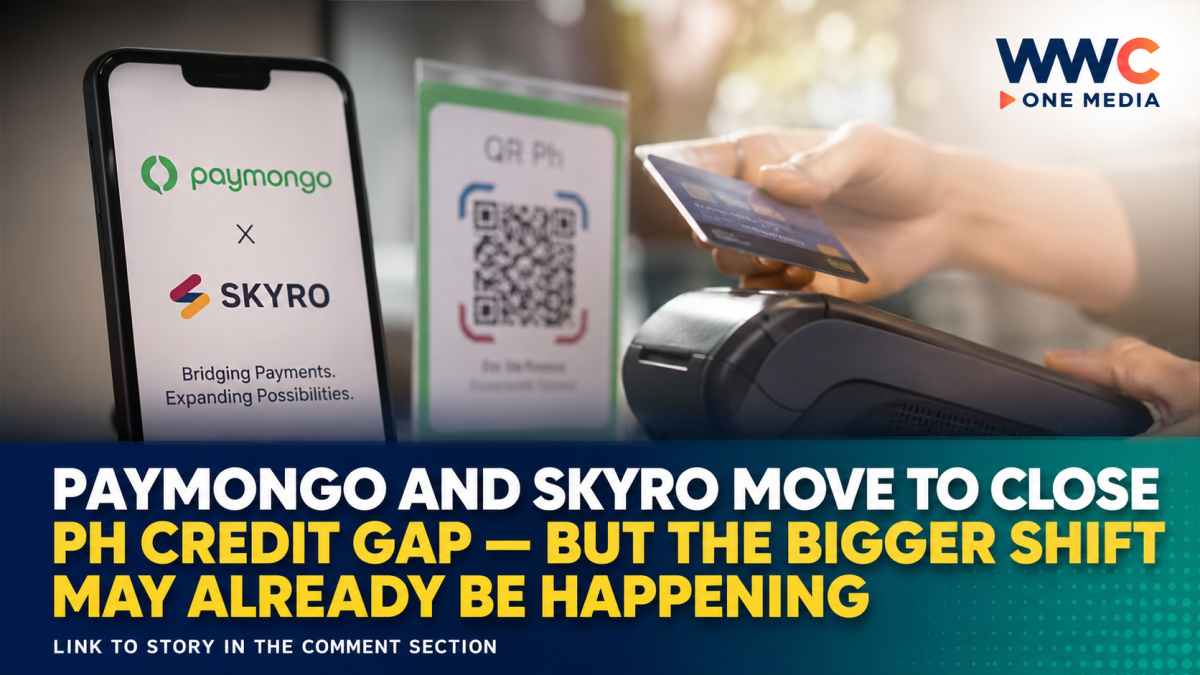
Now, fintech companies PayMongo and Skyro are trying to close that gap by connecting Skyro-approved credit with PayMongo’s growing network of QR Ph merchants.
The partnership allows eligible Skyro customers to use their approved credit at participating merchants on PayMongo’s network through QR Ph — without requiring businesses to install new terminals, undergo another integration or change how they accept payments.
The move comes as the country’s payment habits rapidly shift toward mobile and digital transactions.
Digital payments are already mainstream
Data from the Bangko Sentral ng Pilipinas show that digital payments accounted for 57.4% of retail payment transactions by volume in 2024, up from 52.8% in 2023. Digital transactions also represented 59% of retail payment value during the year.
That transformation has accelerated on PayMongo’s own platform.
According to PayMongo’s first-half 2026 data, QR Ph represented 55% of payment volume, up from just 16% a year earlier. QR Ph payment volume grew by more than 510% year-on-year, while cards accounted for 19% and e-wallets for 21%.
PayMongo also said it processed nearly 10 million completed transactions during the first half of 2026, almost double the number recorded during the same period in 2025. Its active merchant base grew 93% year-on-year.
That means the payment infrastructure needed to reach consumers is increasingly already in place.
The bigger challenge is credit.
The Philippines has a digital-payment boom — but a credit-access problem
TransUnion reported in October 2025 that only one in 20 Filipino consumers held a credit card, despite 80 million Filipinos using digital wallets and 65% having access to formal financial services.
BusinessWorld likewise reported that TransUnion sees first-time cardholders as an important potential driver of financial inclusion because traditional credit cards can serve as an entry point into the formal credit system.
This creates an unusual divide: Filipinos increasingly have the ability to pay digitally, but many still lack access to traditional forms of formal credit.
PayMongo and Skyro are positioning their partnership as a way to connect those two systems.
What changes for merchants?
For businesses already accepting QR Ph through PayMongo, the arrangement is designed to require no additional terminal, integration or enrollment.
Customers who have already been approved for Skyro credit can use that credit at participating PayMongo merchants, potentially allowing them to complete purchases they might otherwise postpone.
For Skyro, meanwhile, the partnership provides access to PayMongo’s merchant network without requiring the lender to build an independent payment-acceptance infrastructure.
PayMongo CEO Jojo Malolos described the arrangement as bringing Skyro’s credit into the places where consumers already shop and pay.
The payment company also provides infrastructure that financial companies can use throughout the lending cycle — from disbursement to merchant payments and repayment collection.
Skyro is expanding beyond traditional lending
Skyro said it has already issued more than two million product loans in the Philippines.
A separate August report noted that the company had expanded to more than 10,000 partner stores and more than 3,000 online and offline merchant partners.
The company uses data analytics and a digital-first application process to assess customers, including consumers who may not have established traditional credit histories.
Its partnership with PayMongo also expands digital repayment options, including payments through online banking and e-wallets.
Why this matters
The significance of the PayMongo-Skyro partnership goes beyond another fintech tie-up.
The Philippines has spent years building an increasingly interconnected digital-payment ecosystem through systems such as InstaPay and QR Ph. The BSP is also targeting further growth in digital retail payments, with the broader goal of reaching 60% to 70% digitalization by 2028.
The next challenge is making sure that access to digital payment infrastructure is matched by access to appropriate and responsible financial products.
That is where the PayMongo-Skyro model could become significant: PayMongo brings the payment rails and merchant reach, while Skyro brings the credit.
If the model gains traction, the distinction between where Filipinos pay, where they borrow, and where they repay could become increasingly blurred.
And that may be the bigger story: the Philippines is no longer simply moving from cash to digital payments — the country’s fintech industry is now trying to connect digital payments with the much harder problem of expanding access to formal credit.
WWC ONE MEDIA MJE




Leave a Reply