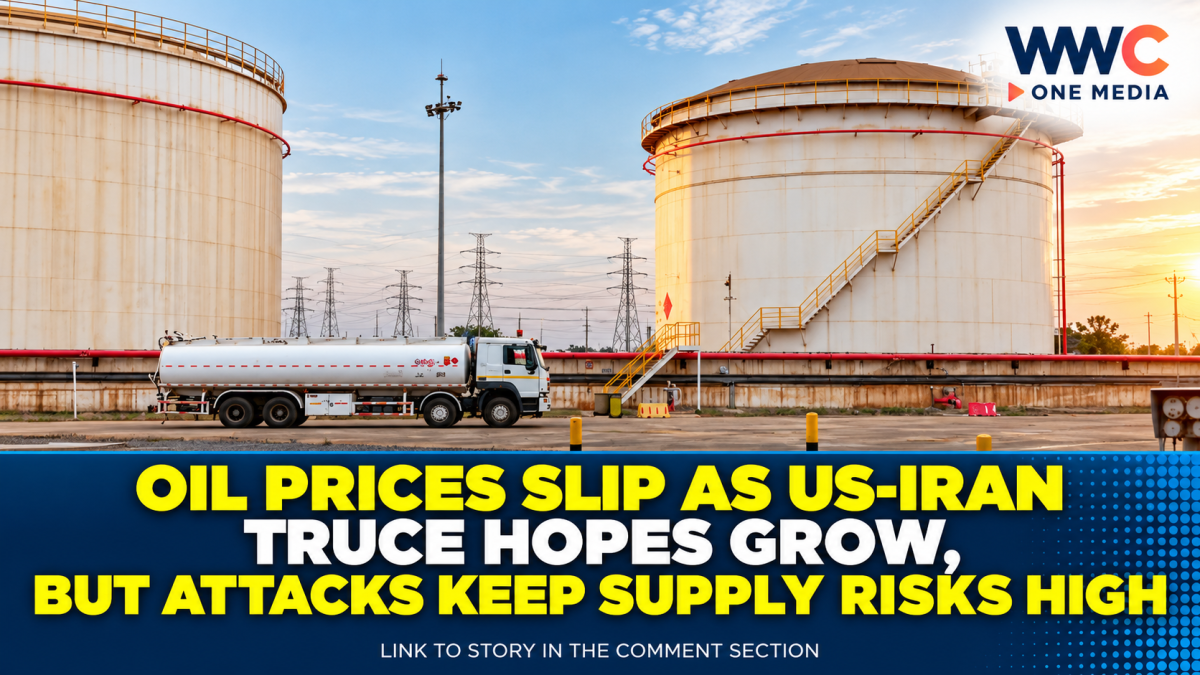
Oil prices edged lower on Friday as markets weighed hopes for a possible US-Iran truce against renewed attacks threatening critical energy infrastructure in the Middle East.
Brent crude fell 74 cents, or 0.69 per cent, to US$105.85 a barrel, while West Texas Intermediate declined 81 cents, or 0.86 per cent, to US$93.80. The modest declines came after both benchmarks surged as much as 5 per cent during Thursday’s trading session.
The market is closely watching discussions between US and Iranian negotiators in New York. The talks are reportedly exploring a phased path toward ending the conflict that could involve Iran reopening the Strait of Hormuz and the United States lifting its economic blockade of Iran.
Any meaningful reopening of the Strait of Hormuz could ease one of the biggest supply concerns facing energy markets. The waterway is a crucial route for global oil and gas shipments, and disruptions since the conflict began have significantly reduced regional energy flows.
But traders remain cautious because the security situation has not stabilized.
Saudi Arabia said it intercepted six ballistic missiles launched by Yemen’s Iran-backed Houthi rebels, with the attacks targeting areas including Taif and the Yanbu region on the Red Sea. The attacks have renewed concerns that oil infrastructure and alternative export routes could remain vulnerable even if diplomatic negotiations make progress.
Saudi Arabia has been increasing crude pumping through its East-West Pipeline toward the Red Sea export hub of Yanbu, offering an alternative route for moving oil if Gulf shipping remains disrupted. However, tanker loadings from the Red Sea had not yet fully resumed, according to industry and shipping data cited in the reports.
The market has therefore been pulled in two directions. Diplomatic developments are reducing some of the immediate fear of a prolonged supply crisis, while missile attacks and threats to energy facilities are keeping a geopolitical risk premium in crude prices.
The weekly picture also remains volatile. Brent was still heading for a weekly gain of about 2 per cent, while WTI was on track for a weekly decline of more than 6 per cent, highlighting the different pressures affecting the two benchmarks.
For consumers and businesses, the direction of oil prices could have wider consequences for fuel, transportation and energy costs if the conflict continues to disrupt regional supply chains.
The latest decline therefore does not signal that the oil crisis is over. Markets are watching whether diplomacy can reopen the Strait of Hormuz and restore disrupted flows — or whether another attack on critical energy infrastructure sends crude prices sharply higher again.