Global oil prices slipped on Monday, October 19, 2026, after US President Donald Trump moved to waive key sanctions and tariffs targeting Russia, raising expectations that additional Russian fuel supplies could reach international markets.
Brent crude futures fell as much as 1.3% to US$108.43 per barrel, while US West Texas Intermediate (WTI) crude dropped 0.52% to US$100.88 per barrel in early trading. The declines followed a sharp rally on Friday, when Brent settled at its highest level since May 19, as escalating geopolitical tensions threatened global energy supplies.
The latest pullback reflects a shift in investor sentiment. Traders are weighing the possibility of increased Russian fuel exports against continuing disruptions to oil shipments caused by conflict in the Middle East.
However, the easing of restrictions does not guarantee an immediate surge in Russian supplies, and oil prices remain vulnerable to further geopolitical developments.
Trump’s Russia Sanctions Waiver Puts Oil Markets on Alert
Trump signed an executive order on Friday waiving key sanctions and tariffs under the Graham Act, legislation introduced to increase economic pressure on Russia over its ongoing war in Ukraine.
The decision followed discussions between Trump and Russian President Vladimir Putin concerning increased Russian diesel exports to the United States.
US Secretary of State Marco Rubio said the administration would take up to 60 days to assess the economic implications of the waiver, leaving uncertainty over the policy’s longer-term impact.
The move could provide greater flexibility for Russian fuel exports and ease some concerns about the availability of refined petroleum products.
Nevertheless, the measure has raised questions about the future direction of US policy toward Moscow. Ukrainian President Volodymyr Zelenskiy criticised the decision, arguing that easing restrictions could undermine efforts to pressure Russia over the war.
For oil traders, the immediate issue is whether the policy will translate into additional barrels reaching the market and whether those supplies will be sufficient to offset disruptions elsewhere.
Middle East Conflict Continues to Threaten Oil Supplies
Despite Monday’s decline, oil prices remain elevated because of persistent security risks in the Middle East.
Brent crude briefly reached US$110 per barrel on Friday, its highest level since May 19, as attacks on commercial vessels raised concerns about shipping safety and the movement of energy supplies through the Gulf.
According to shipping and commodity analytics firm Kpler, average crude oil flows through the Gulf fell sharply to approximately 8.5 million barrels per day over a seven-day period last week, compared with more than 20 million barrels per day during the previous week.
The decline highlights the scale of the supply disruption facing global energy markets.
At least 10 confirmed incidents involving commercial vessels were reported during the week, adding to concerns that further attacks could disrupt shipments and increase transportation costs.
The Strait of Hormuz remains particularly important because it is a critical route for oil and petroleum products moving from major Middle Eastern producers to international customers.
Any prolonged disruption could tighten global supply, potentially offsetting the downward pressure on prices from additional Russian exports.
Will Cheaper Oil Bring Relief to Consumers?
The latest decline could eventually provide some relief to businesses and consumers if lower crude prices persist and translate into reduced wholesale fuel costs.
However, a short-term fall in international oil benchmarks does not automatically mean motorists will see immediate reductions at petrol stations.
Retail fuel prices are also influenced by refining margins, shipping expenses, currency movements, taxes and the timing of local fuel price adjustments.
For countries that rely heavily on imported petroleum, the direction of crude prices remains particularly important. Sustained increases can raise transportation and manufacturing costs, contribute to inflation and put additional pressure on household budgets.
Conversely, a lasting decline could ease some of those pressures, although the benefits would depend on local market conditions and the extent to which international price movements are passed on to consumers.
Russia’s Oil Exports Remain a Key Factor
Russia continues to play a significant role in global energy trade, particularly for major importers such as China and India.
Recent supply constraints and stronger competition for Russian crude have complicated purchasing decisions among Asian refiners. Industry reporting has highlighted reduced availability from some Russian export routes and increased demand from Chinese buyers, forcing some Indian refiners to consider more expensive alternatives.
The latest US policy shift could improve the flexibility of Russian energy trade, but the overall impact will depend on the scope of the waiver, shipping availability, export capacity and demand from major importing countries.
It is also important to distinguish crude oil from refined fuels such as diesel. Changes affecting diesel exports may influence particular fuel markets without necessarily producing an equivalent increase in crude oil supplies.
As a result, the impact on global prices may vary between crude oil, diesel and other petroleum products.
What Investors Should Watch Next
Oil markets are likely to remain volatile as traders monitor developments in US-Russia relations, the implementation of the sanctions waiver and the security situation in the Middle East.
Three factors will be particularly important in the coming days:
- Russian export volumes: Whether the policy change leads to a measurable increase in crude oil or refined fuel shipments.
- Middle East shipping security: Whether attacks and disruptions continue to restrict oil flows through major export routes.
- US policy decisions: Whether Washington maintains the waiver, modifies its scope or introduces additional measures affecting Russian energy trade.
For now, the decline in oil prices suggests investors are responding to the prospect of additional supply rather than assuming that the global energy crisis has ended.
With Brent crude still trading above US$108 per barrel in the latest reported session, geopolitical risks remain a powerful influence on the market.
The central question is whether increased Russian fuel availability can provide meaningful relief while disruptions in the Middle East continue. Until there is clearer evidence of stronger supply and safer shipping routes, oil prices are likely to remain sensitive to political decisions and unexpected developments.
SEO keywords: oil prices today, Brent crude oil price, WTI crude oil, Donald Trump Russia sanctions waiver, Russian oil exports, global fuel prices, Middle East oil supply disruptions, Strait of Hormuz, diesel prices, global energy market.
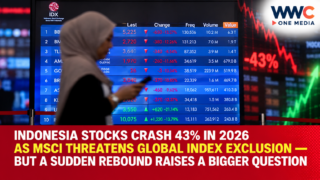
Indonesia’s stock market has suffered one of its steepest declines in nearly three decades after global index provider MSCI proposed reclassifying the country from an emerging market to a standalone market, raising concerns about foreign investment, financial stability and the outlook for Southeast Asia’s largest economy.
The Jakarta Composite Index plunged 11.6% on Friday, October 16, 2026, marking its worst single-day drop since January 1998. The sell-off deepened the benchmark’s losses to approximately 40% since the beginning of the year, leaving Indonesian equities among the world’s worst-performing major stock markets.
The dramatic decline followed MSCI’s announcement on October 15 that it had launched a consultation on the proposed reclassification, citing persistent concerns about market transparency, ownership disclosures and suspected coordinated trading activity.
The proposal represents a more severe threat than the previously discussed possibility of downgrading Indonesia from emerging-market to frontier-market status. If implemented, the change could reduce the country’s visibility among international investors and force funds tracking MSCI’s emerging-market indexes to sell Indonesian stocks.
MSCI Warning Raises Billions of Dollars in Outflow Risks
The potential financial consequences are significant. Goldman Sachs estimates that removing Indonesia from MSCI’s emerging-market indexes could trigger approximately US$5.6 billion in passive investment outflows. Additional selling by actively managed funds could increase the pressure, although those investors would not necessarily be required to withdraw.
Other financial institutions have also warned of substantial capital flight, with estimates varying according to the funds affected and the assumptions used.
Indonesia has already experienced considerable foreign investor withdrawals. International investors sold a net US$4.88 billion worth of Indonesian equities in 2026 through the period reported on October 19, putting the market on course for one of its largest annual outflows in years.
The concern extends beyond immediate stock market losses. Large-scale withdrawals could weaken market liquidity, make it more difficult for companies to raise capital and undermine investor confidence in the country’s financial system.
Why MSCI Is Questioning Indonesia’s Market Status
MSCI, a major global provider of investment indexes, said investors continue to raise concerns about the transparency of Indonesian shareholding structures and the possibility of coordinated trading.
These issues can make it difficult for investors to determine how much of a company’s stock is genuinely available for public trading, commonly known as its free float. Uncertainty over ownership and trading practices can also undermine confidence in whether market prices accurately reflect supply and demand.
Indonesian authorities have announced several reforms in response to the concerns, including stronger disclosure requirements for shareholders with ownership stakes exceeding 1%, more detailed investor classification information, reporting requirements for highly concentrated shareholdings and a roadmap toward a minimum free-float requirement of 15%.
However, MSCI said market participants had not yet seen sufficiently consistent evidence that these measures had materially improved market transparency and functioning.
The index provider has therefore proposed moving Indonesia directly to standalone-market status rather than treating a frontier-market classification as an adequate response to the problems identified.
The distinction matters because standalone markets are not included in MSCI’s emerging-market or frontier-market indexes, potentially removing an important source of benchmark-driven investment demand.
Rupiah Weakens as Financial Stability Concerns Grow
The stock market turmoil has also intensified pressure on Indonesia’s currency and broader financial markets.
The Indonesian rupiah weakened toward 18,000 against the US dollar, approaching its record low of 18,190 recorded in June 2026. Investors are increasingly concerned that prolonged equity market weakness could spread into the currency and government bond markets.
Analysts have warned that sustained capital outflows could push domestic borrowing costs higher, tighten financial conditions and make financing more expensive for businesses and households.
Gary Tan, a portfolio manager at Allspring Global Investments, has highlighted the risk that the broader impact could extend beyond index-related stock selling if pressure spreads to the rupiah and domestic bond yields.
Such developments would present a challenge for policymakers seeking to maintain financial stability while supporting economic growth.
Government Faces Pressure to Restore Investor Confidence
The proposed MSCI reclassification comes at a difficult time for President Prabowo Subianto’s administration, which has been working to attract investment and sustain economic growth amid mounting market concerns.
Indonesia’s sovereign credit outlooks have also faced pressure this year, with Moody’s and Fitch Ratings both moving their outlooks to negative, adding to investor scrutiny of the country’s economic management and policy direction.
Indonesian financial regulators have responded to the market turmoil with enforcement actions involving alleged trading manipulation and questionable shareholding practices.
On October 16, the Financial Services Authority announced sanctions linked to investigations involving several listed companies. These actions form part of wider efforts to address concerns about market integrity and demonstrate that authorities are prepared to enforce existing rules.
However, restoring confidence may require more than announcing new regulations. Investors will be looking for evidence that ownership information is reliable, trading practices are properly monitored and violations are addressed consistently.
The Indonesia Stock Exchange has also indicated that it intends to seek clarification from MSCI regarding the proposed reclassification, while authorities have reiterated their commitment to improving market governance.
What Happens Next for Indonesia’s Stock Market?
MSCI’s proposal is not yet a final decision. The consultation process is scheduled to run until April 30, 2027, with a final determination expected by June 30, 2027.
Until then, Indonesia faces pressure to demonstrate measurable improvements in transparency, free-float disclosures, market accessibility and regulatory enforcement.
MSCI has also said its existing freeze on certain changes involving Indonesian securities in its indexes will remain in place until further notice.
The outcome could have significant implications for international investment flows. A reclassification to standalone status would mean Indonesia no longer qualifies for MSCI’s emerging-market or frontier-market indexes, potentially reducing demand from funds that track those benchmarks.
Nevertheless, the scale of any eventual capital outflow will depend on the final decision, the amount of investment tied to the affected indexes and how individual fund managers respond.
For Indonesian businesses, the immediate challenge is maintaining access to financing and investor support while the market reassesses the country’s risk profile.
For policymakers, the priority is rebuilding confidence through credible reforms and consistent enforcement rather than relying solely on assurances.
Indonesia remains Southeast Asia’s largest economy, with substantial natural resources and a large domestic market. But its ability to attract international capital will increasingly depend on whether investors believe its stock market offers sufficient transparency, fair trading conditions and dependable protections.
The coming months will therefore be critical in determining whether Indonesia can restore confidence and retain its place among emerging markets or faces a more significant retreat from global investment portfolios.