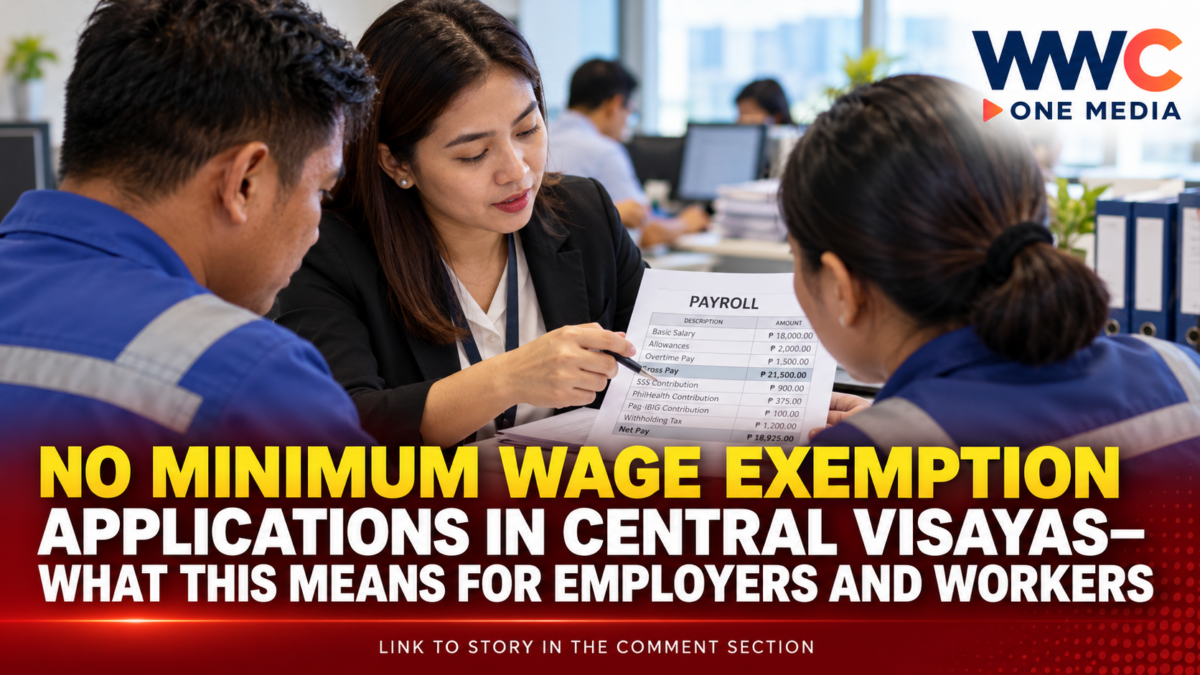
CEBU, Philippines — No applications for exemption from the latest minimum wage order had been reported in Central Visayas, according to a report by Cebu Daily News. The development comes as workers across the region begin receiving the benefits of a new daily wage increase.
The absence of exemption applications puts the spotlight on how businesses will comply with the new wage requirements, particularly small enterprises that may be adjusting to higher operating expenses.
The report concerns applications seeking relief from compliance with the regional wage order. It does not mean that employers are automatically exempt from paying the mandated minimum wage, nor does it establish that no business is experiencing financial difficulties.
New minimum wage rates reach ₱582 in covered Metro Cebu areas
The National Wages and Productivity Commission (NWPC) confirmed that Wage Order No. ROVII-27 grants private-sector workers in Central Visayas a ₱42 increase in their daily basic minimum wage.
Under the new rates, the minimum daily wage is:
- ₱582 for Class A areas, including Cebu City, Mandaue City, Lapu-Lapu City and other designated Metro Cebu localities.
- ₱542 for Class B areas, covering other cities and municipalities under the wage order.
The new rates took effect on October 14, 2026, according to the NWPC’s official regional wage information. The order also covers the designated cities and municipalities of Negros Oriental and Siquijor, which remain under this wage order despite their inclusion in the Negros Island Region.
The wage adjustment raises the previous daily minimum rates from ₱540 to ₱582 in Class A areas and from ₱500 to ₱542 in Class B areas.
Sources: NWPC and Department of Labor and Employment (DOLE).
What does the absence of exemption applications mean?
A wage exemption is a formal request for relief from a wage order under applicable rules. It is not an automatic privilege that employers can claim simply because business costs are rising.
Employers must check the specific provisions of Wage Order No. ROVII-27 and its implementing rules to determine whether their establishment qualifies, what documentary evidence is required, and whether an application can still be filed.
For workers, the lack of reported applications does not reduce their entitlement to the applicable minimum wage. Employers covered by the order must comply unless a valid exemption is granted by the proper authority.
The Regional Tripartite Wages and Productivity Board VII (RTWPB-VII), under the DOLE wage-setting system, is the relevant regional body for wage-order implementation and exemption matters.
Previous exemptions show that applications undergo review
In February 2026, the NWPC reported that RTWPB-VII had resolved 10 applications for exemption under the previous Wage Order No. ROVII-26.
Of those applications, seven were approved, two were withdrawn and one was denied. The results show that applications are assessed individually and that submitting a request does not guarantee approval.
These earlier cases involved a previous wage order, however, and should not be interpreted as the outcome or eligibility rules for applications under the new Wage Order No. ROVII-27.
What workers and employers should do next
Workers who believe they are being paid below the applicable minimum wage should keep their payslips, employment records and other relevant documents and seek guidance from DOLE or RTWPB-VII.
Employers, meanwhile, should review their payroll systems, confirm the correct wage classification for their location, and ensure that their payments comply with the current order. Businesses considering an exemption should consult the official rules and application requirements rather than assume they qualify.
The latest development comes amid broader discussions about the balance between workers’ purchasing power and the ability of businesses to absorb labor costs. The ₱42 increase followed regional wage consultations involving labor, management and other stakeholders.
For now, the key issue is not simply whether exemption applications are filed, but whether covered employers comply with the wage order and whether any future exemption requests meet the legal requirements.