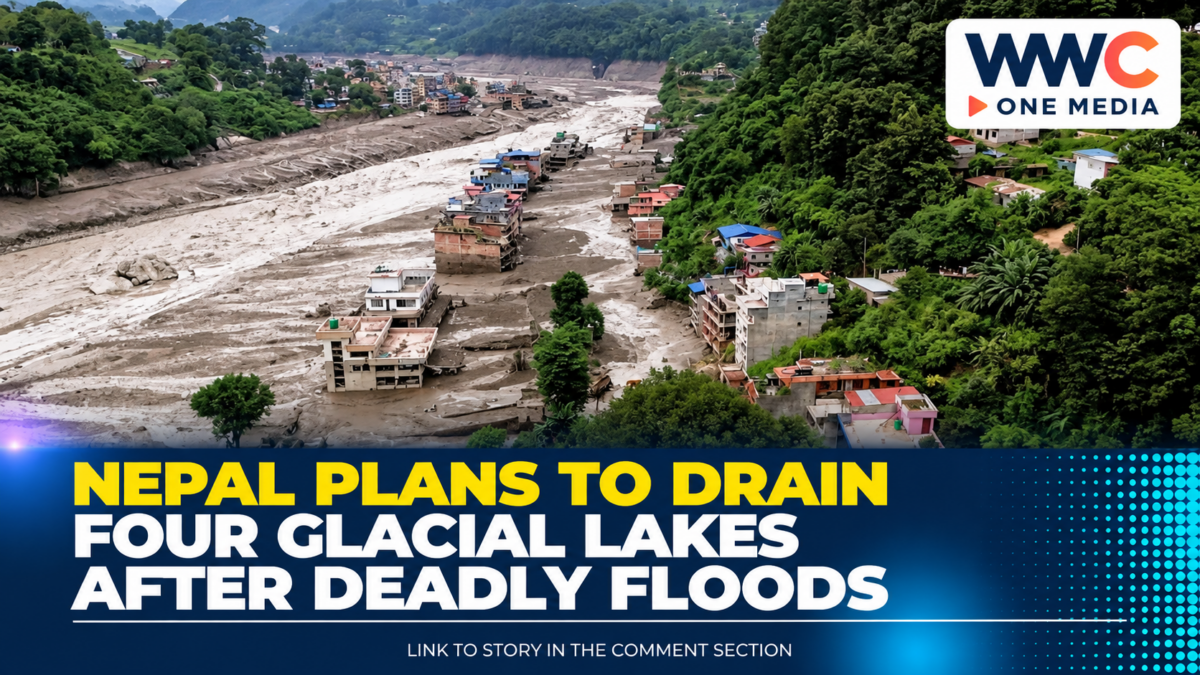
Nepal is preparing a major effort to lower the water levels of four high-altitude glacial lakes after a catastrophic disaster in August killed more than 1,400 people and left more than 5,000 others missing.
The government plans to begin detailed studies and design work during the fiscal year ending in mid-July 2027, targeting Thulagi, Lower Barun, Lumding Tsho and Hongu II. Officials say the project is aimed at reducing the risk of the lakes breaching their natural dams and sending destructive floods downstream.
The four lakes are located between about 4,050 and 5,483 metres above sea level and have been identified among Nepal’s potentially dangerous glacial lakes. Scientists have warned that unstable lakes held back by natural barriers of rock, ice and loose debris can suddenly release large volumes of water.
Under the proposed plan, water would be released through controlled drainage systems and canals leading into nearby rivers. The approach is intended to gradually lower the lakes rather than allow water levels to rise until natural barriers become overwhelmed.
The project is expected to cost about US$50 million and will be supported by the Green Climate Fund, the United Nations Development Programme and the Nepalese government. The work will also include sensors, flood forecasting and warning systems, as well as measures designed to strengthen the resilience of communities downstream.
Officials said the actual drainage work could take as long as six years after the necessary studies are completed. Workers will face difficult conditions because of the lakes’ extreme elevations, including health risks from prolonged work at high altitude and the continuing danger of sudden floods.
Nepal already has experience in reducing the risks posed by dangerous glacial lakes. Authorities lowered the water level of Tsho Rolpa by about three metres in 2000, while similar work was later carried out at Imja Lake near Mount Everest.
The new project comes after a devastating glacier-related disaster in August. A glacier collapse in Nepal’s border region with China triggered landslides and a powerful flash flood that swept through valleys, destroying homes, infrastructure and other property. Search and recovery operations have continued as authorities work to account for thousands of people still reported missing.
The disaster also caused extensive damage to roads, bridges, settlements and hydroelectric facilities. Nepal has estimated that nearly US$5 billion will be needed for early recovery from the destruction caused by the disaster.
Experts say the threat from glacial lakes is becoming more urgent as temperatures rise and Himalayan glaciers retreat. As glaciers melt, new lakes can form or existing lakes can expand, increasing the volume of water held behind unstable natural barriers.
Nepal has recorded about 26 glacial lake outburst floods over the past four decades. Such events can occur when an earthquake, avalanche, landslide or other disturbance causes a natural dam to fail, releasing water rapidly into valleys below.
Reducing lake levels by several metres can significantly lower the amount of water available during a potential breach, according to glacier and glacial-lake expert Samjwal Ratna Bajracharya. He said the targeted lakes are growing rapidly and could face risks from earthquakes, avalanches, changing climate conditions and human activity.
The drainage programme is therefore being planned not only as a response to the latest disaster but also as a longer-term effort to protect communities living downstream of vulnerable mountain lakes.
As Nepal begins the technical studies, authorities will have to balance the urgency of reducing flood risks with the challenges of carrying out large-scale engineering work in some of the world’s highest and most difficult terrain.