
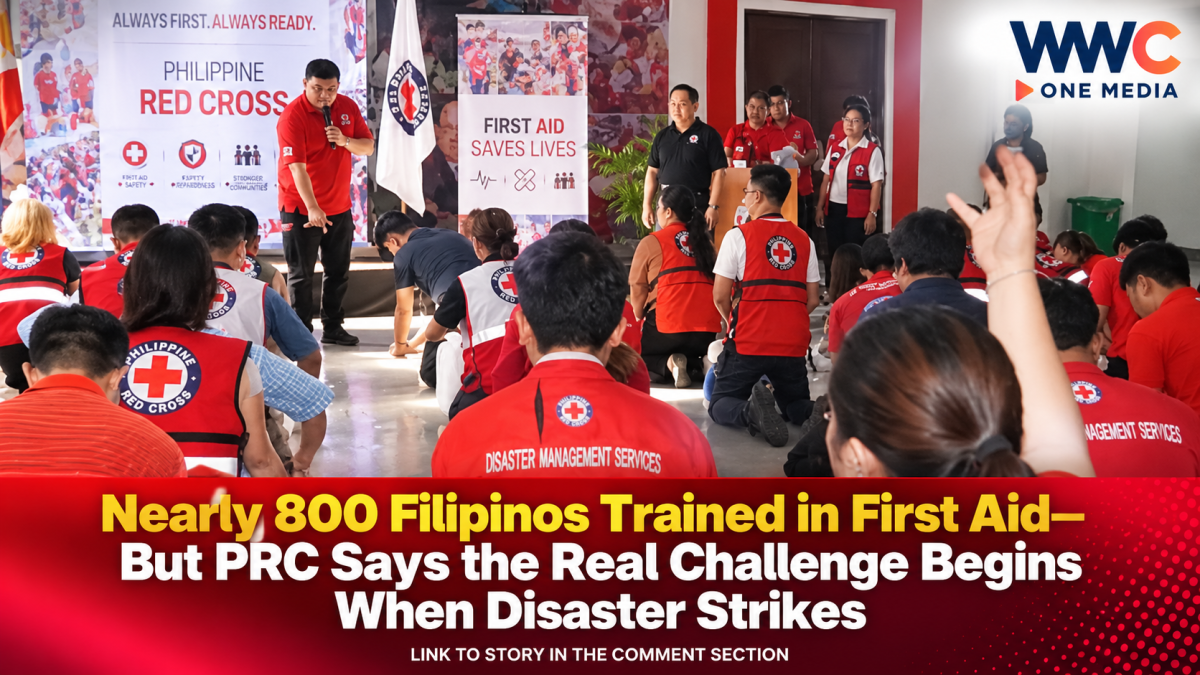
MANILA, Philippines — Nearly 800 residents of Baseco Compound in Port Area, Manila, received first-aid training as the Philippine Red Cross (PRC) marked World First Aid Day 2026, emphasizing the importance of having ordinary citizens ready to respond when emergencies happen.
The PRC conducted the community activity on Saturday, September 12, in observance of World First Aid Day, whose 2026 theme is “First Aid in Migration Contexts.” The global campaign focuses on people who are on the move, including migrants, refugees, displaced communities and others who may face emergencies while traveling, evacuating or living in unfamiliar surroundings.
According to the PRC, the Baseco initiative was designed not only to teach residents how to provide immediate medical assistance but also to strengthen their mental, emotional and physical preparedness in situations involving evacuation, displacement, temporary shelter or relocation.
“First aid is a life skill,” PRC Chairman and CEO Richard Gordon said, stressing that the first person capable of making a difference during an emergency may simply be the person who arrives first.
The training, led by the PRC Safety Services in cooperation with its Welfare Services and Manila Chapter, covered several emergencies that residents could encounter in everyday life or during disasters.
Participants were taught how to respond to bleeding and wounds, cardiac emergencies, heat-related dehydration and water-related incidents, among other situations.
The program went beyond physical injuries.
PRC Welfare Services also introduced Psychological First Aid, psychosocial support, restoring family links and referral services, recognizing that emergencies can affect entire families and communities—not just the person who has been physically injured.
Children were also included through age-appropriate activities focused on emergency preparedness and creating safer environments.
PRC Secretary General Dr. Gwendolyn Pang said humanitarian assistance must consider the wider needs of individuals and families during emergencies.
The approach reflects a broader Red Cross principle that first aid is not simply about treating an injury. It can also involve psychological support, connecting separated family members and directing people toward appropriate services.
Why World First Aid Day matters
World First Aid Day is observed every year on the second Saturday of September. In 2026, it fell on September 12. The International Federation of Red Cross and Red Crescent Societies said this year’s campaign focuses on the risks faced by people on the move and carries the message “On the move, but not alone.”
The IFRC estimates that about 304 million people were living as international migrants worldwide by mid-2024, illustrating the scale of populations that can potentially encounter emergencies while traveling or living away from established support networks.
The organization also points to the importance of Humanitarian Service Points, which provide assistance to people on the move in different parts of the world. The Red Cross and Red Crescent Movement reached about 17.9 million people through migration-related activities in 2024, including first aid, psychological first aid and connections to health and support services.
But the message extends beyond migration.
The IFRC says first aid is something that can be learned by ordinary members of the public and can provide immediate assistance while professional medical help is still on the way. Its network of 191 Red Cross and Red Crescent societies trained more than 12.4 million people in first aid in 2022.
In the Philippines, the Philippine Red Cross offers formal first-aid and Basic Life Support training, including courses covering CPR and automated external defibrillator use.
The Baseco training therefore sends a message that preparedness cannot be left solely to rescuers, doctors or emergency responders.
When disasters, accidents or sudden medical emergencies occur, the first person available to help may be a neighbor, family member, coworker or bystander.
And that is precisely why the PRC wants more communities to learn what to do before professional help arrives.
For a country regularly exposed to typhoons, floods, earthquakes and other emergencies, knowing basic first aid can turn a bystander into a potentially life-saving first responder—provided the intervention is appropriate and professional medical assistance is sought when necessary.


Leave a Reply