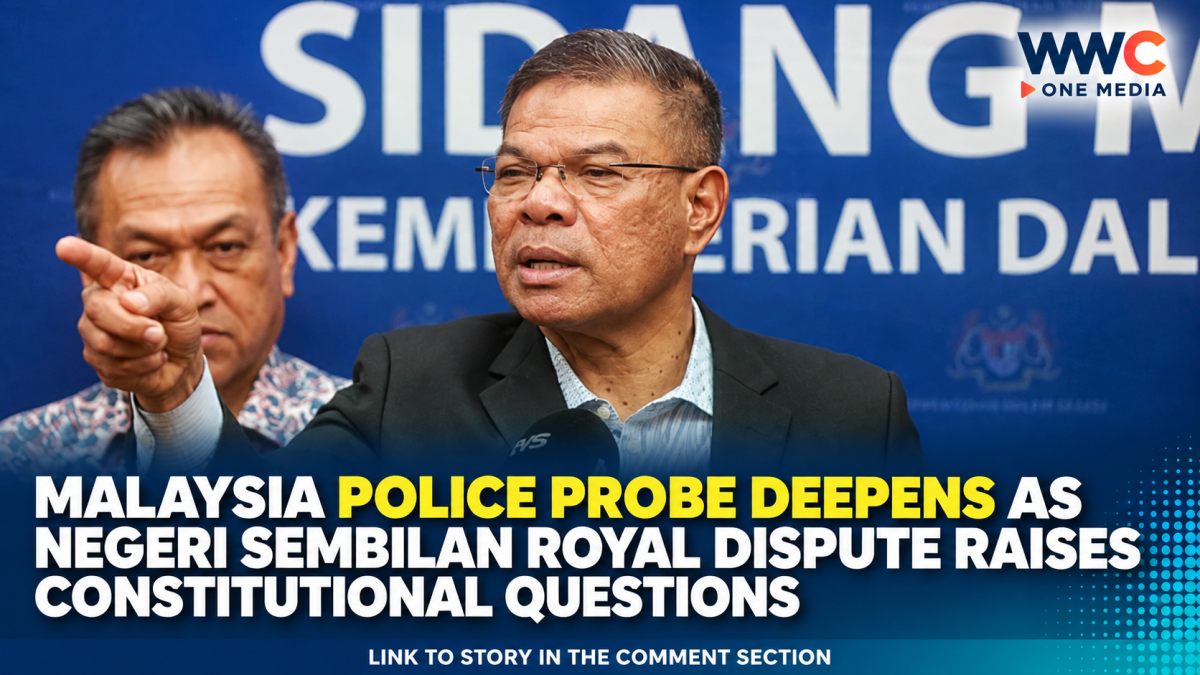
Malaysia’s police are investigating the escalating royal dispute in Negeri Sembilan from “every angle” after multiple reports were lodged over the contested removal of Yang di-Pertuan Besar Tuanku Muhriz Tuanku Munawir, adding another layer to a constitutional crisis that has been unfolding for months.
Home Minister Datuk Seri Saifuddin Nasution Ismail said police are primarily focused on maintaining public order, preventing possible confrontations and protecting the public while the investigation continues. He said operational details would not be disclosed at this stage and that any decision to refer the investigation papers to the Attorney General’s Chambers would come after police complete their work.
The dispute centres on competing claims over whether Tuanku Muhriz remains the lawful ruler of Negeri Sembilan and whether the constitutional process for removing a Yang di-Pertuan Besar was properly followed.
Negeri Sembilan has a distinctive system of succession rooted in Adat Perpatih. Unlike most Malaysian states, its ruler is selected rather than simply inheriting the throne. The four traditional chiefs, known as the Undang Yang Empat, play a central role in choosing the Yang di-Pertuan Besar.
The current dispute intensified after a faction of the Undang Yang Empat issued a proclamation on April 19 declaring that Tuanku Muhriz had been removed and naming Tunku Nadzaruddin Tuanku Ja’afar as his successor.
The legal basis and implementation of that proclamation have since been disputed.
Under Negeri Sembilan’s constitutional framework, the removal of a ruler involves specific conditions and procedures, including a full inquiry before a ruler can be deposed. The constitution also contains provisions concerning the involvement and signature of the menteri besar.
The controversy escalated further after Menteri Besar Datuk Ismail Lasim acknowledged signing a document connected to the removal proclamation. Ismail subsequently said he had signed it under duress and lodged a police report, while maintaining that the document did not satisfy the constitutional requirements.
The state government later took a different position, with its executive council saying the proclamation removing Tuanku Muhriz was valid and recognising Tunku Nadzaruddin as the new ruler.
That position has not been universally accepted within Negeri Sembilan’s traditional institutions.
The state’s Dewan Keadilan dan Undang, or DKU, reiterated on Sept. 17 that Tuanku Muhriz remains the lawful Yang di-Pertuan Besar and that there is no vacancy in the position. The council said matters involving the selection, appointment, abdication and removal of the ruler fall within its jurisdiction under the state constitution.
The Negeri Sembilan state secretary’s office also said it would not gazette or implement the disputed proclamation. The Attorney General’s Chambers had advised that the menteri besar and state executive council did not have unilateral authority to terminate the ruler’s position, with the validity and effect of the proclamation to be determined through lawful constitutional and legal processes.
The federal government has meanwhile continued to treat the dispute as a serious constitutional matter. Saifuddin said Prime Minister Datuk Seri Anwar Ibrahim regards any attempt to remove a hereditary sovereign as a grave issue within Malaysia’s constitutional monarchy.
Police have also taken preventive security measures to prevent gatherings from escalating into confrontations. Authorities have not publicly detailed which specific offences or legal provisions are being considered as part of the investigation.
The crisis has also attracted calls for the wider royal institution to become involved. A Negeri Sembilan lawyers’ group recently urged the Conference of Rulers to review the process surrounding the dispute, including the contested removal of Tuanku Muhriz.
For now, several questions remain unresolved: whether the April proclamation can legally take effect, which traditional institution has final authority in the dispute, and what role the federal government and courts may ultimately have in resolving competing interpretations of Negeri Sembilan’s constitutional and customary rules.
With police now examining the matter from multiple angles and the competing royal claims still unresolved, the bigger question is whether the investigation will help clarify the constitutional process — or become another front in an increasingly complex royal dispute.