
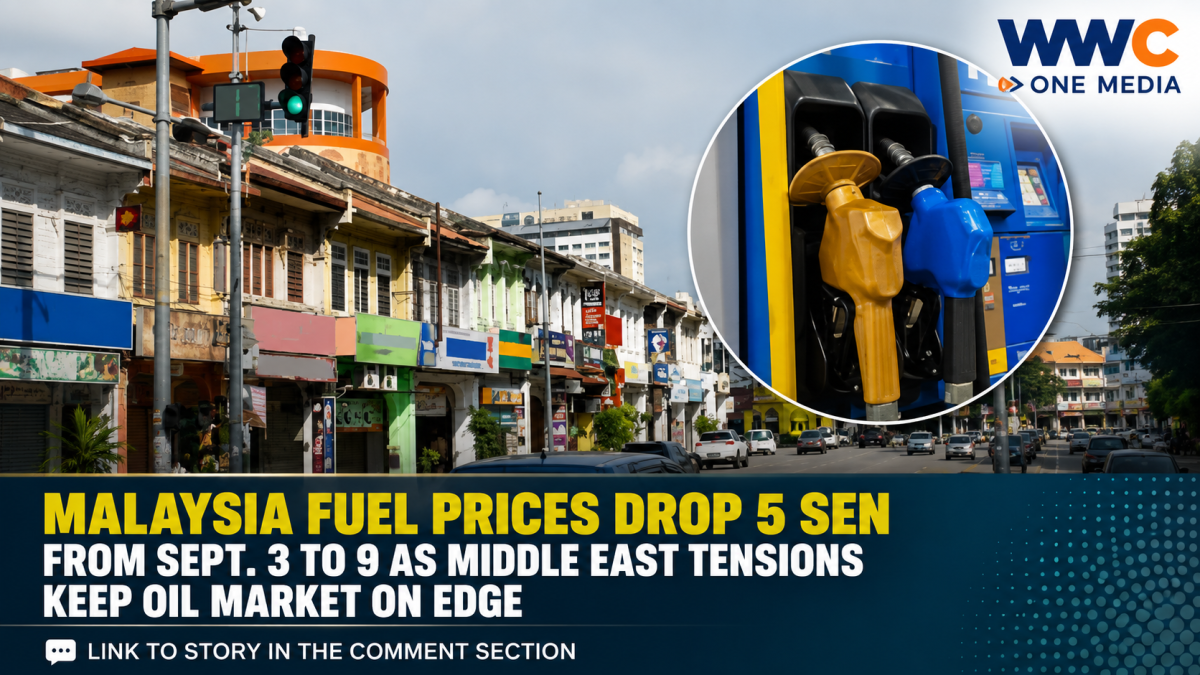
RON97, unsubsidised RON95 and diesel all become cheaper this week, but Malaysia warns fuel prices could remain volatile
Malaysian motorists are getting a small break at the pumps this week.
The prices of RON97 petrol, unsubsidised RON95 and unsubsidised diesel will each fall by 5 sen per litre from Sept. 3 to 9, 2026, according to Malaysia’s Ministry of Finance.
The reduction comes after two consecutive weeks of increases, but the government is warning that the global fuel market remains vulnerable to renewed price swings because of continuing geopolitical tensions in West Asia.
Here are Malaysia’s fuel prices for Sept. 3–9
| Fuel | New price | Previous price | Change |
|---|---|---|---|
| RON97 | RM4.25/L | RM4.30/L | Down 5 sen |
| Unsubsidised RON95 | RM3.77/L | RM3.82/L | Down 5 sen |
| Unsubsidised diesel | RM4.67/L | RM4.72/L | Down 5 sen |
The figures apply to the unsubsidised market prices.
For eligible Malaysians under the government’s targeted subsidy programmes, the prices remain substantially lower.
BUDI95 RON95 remains at RM1.99 per litre, while eligible BUDI Diesel users continue paying RM2.10 per litre. Fuel under the SKPS and SKDS programmes remains at RM2.05 and RM2.15 per litre respectively.
Why are fuel prices falling despite the Middle East conflict?
The Finance Ministry said global crude oil prices traded at lower levels for most of the latest calculation period under Malaysia’s Automatic Pricing Mechanism (APM), resulting in the 5-sen reductions.
But the decline does not necessarily signal that the energy crisis is over.
According to the ministry, oil prices moved higher again toward the end of the calculation period as geopolitical tensions in West Asia intensified.
The global refined petroleum market also remains tight, with disruptions affecting petroleum flows through the Strait of Hormuz, reduced refining capacity in some countries and restrictions on fuel exports.
Reuters reported on Sept. 3 that Brent crude was trading around US$95 a barrel, while tensions surrounding U.S.-Iran hostilities continued to create uncertainty over regional oil supplies and shipping through the Strait of Hormuz.
That means motorists may see further movement in pump prices in the weeks ahead.
China is also a factor
Malaysia’s Finance Ministry pointed to another development that could influence regional fuel supplies.
China has begun easing restrictions on exports of refined petroleum products that were introduced in March. Although exports have increased since July, the ministry said supplies of some petroleum products in regional markets have not yet returned to pre-conflict levels.
The combination of recovering supply, geopolitical risks and disruptions around major shipping routes means the outlook remains difficult to predict.
BUDI fuel quota restored to 300 litres
There is also an important change for Malaysians using targeted fuel subsidies.
From Sept. 1, the government’s monthly basic eligibility limit for BUDI95 and BUDI Diesel was restored to 300 litres.
Owners of eligible diesel-powered pickup trucks and jeeps can receive an additional 100 litres, bringing their potential monthly allocation to 400 litres.
The government has said targeted subsidies will continue to shield eligible consumers and businesses from some of the impact of international fuel-price volatility.
A small win for motorists — but uncertainty remains
The 5-sen reduction will offer some relief to motorists paying unsubsidised rates, but the broader picture remains unsettled.
Malaysia’s weekly fuel pricing system means international oil-market movements can quickly feed into the next round of pump-price calculations. The Finance Ministry has specifically cautioned that price fluctuations are expected in the near term.
For now, motorists have one piece of good news: fuel is cheaper this week.
But with Middle East tensions still affecting oil flows and global refined-fuel supplies, the next price announcement could be closely watched.
WWC ONE MEDIA J.M.D




Leave a Reply