
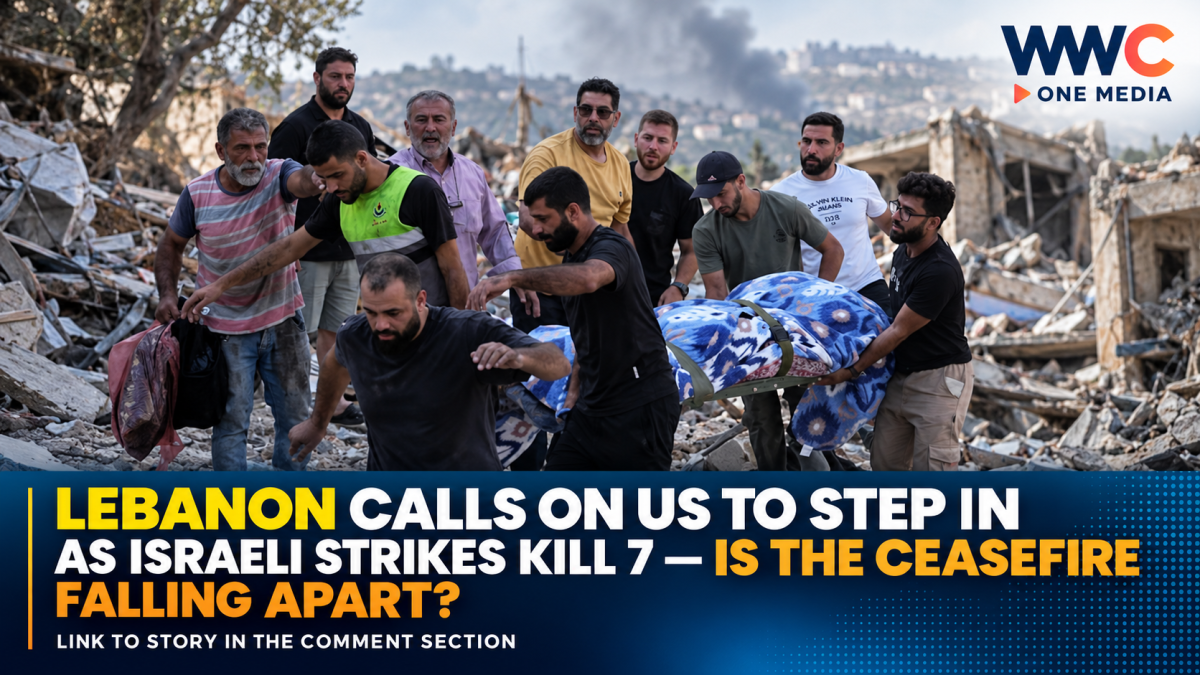
BEIRUT — Lebanon’s President Joseph Aoun has appealed to the United States and the international community to intervene after Israeli strikes across southern Lebanon killed at least seven people, including two women, and injured around 20 others, according to Lebanese authorities.
The latest escalation has raised fresh fears over the future of a U.S.-brokered ceasefire that was meant to halt fighting between Israel and Hezbollah but has come under increasing pressure from continued military operations and cross-border attacks.
Lebanese officials said the Israeli strikes hit several locations in southern Lebanon, including areas in and around Nabatieh. President Aoun described the attacks as a dangerous escalation and accused Israel of striking civilian infrastructure, including a health facility and a government building linked to the Finance Ministry.
Aoun called on Washington and the wider international community to take urgent action to stop the attacks.
Israel Says Strikes Followed Hezbollah Drone Attacks
Israel’s military said it launched the strikes in response to attacks involving Hezbollah drones and said its forces were targeting Hezbollah military infrastructure, including weapons facilities.
The Israeli military said it used precision methods intended to reduce civilian harm, but Lebanese authorities reported civilian casualties and damage to infrastructure.
The differing accounts underline the increasingly volatile situation on the ground, where Israel says it must continue acting against Hezbollah threats while Lebanese leaders argue that continued strikes are undermining efforts to stabilize the country.
Seven Dead as Casualty Reports Rise
Initial reports gave lower casualty figures, but subsequent reporting by multiple international news organizations cited the Lebanese Health Ministry as saying that seven people had been killed.
The dead included two women, while approximately 20 others were reported wounded, including children.
The strikes also prompted evacuation warnings in parts of southern Lebanon — a rare development under the current ceasefire arrangement and another sign that tensions remain dangerously high.
A Ceasefire Under Growing Pressure
The violence comes despite a U.S.-mediated ceasefire that took effect in June.
Reuters has reported that the arrangement remains deeply fragile, with Israel continuing military operations in areas it considers security threats and Hezbollah maintaining that Israeli attacks and troop positions in Lebanese territory violate the spirit of the agreement.
Lebanon and Israel have also faced major disagreements over the withdrawal of Israeli forces and the future of Hezbollah’s weapons.
Israel has linked further withdrawal and changes to its military posture to Hezbollah’s disarmament and the deployment of Lebanese state forces in southern Lebanon. Lebanese officials, meanwhile, have repeatedly called for Israeli forces to leave Lebanese territory and for the ceasefire commitments to be fully implemented.
Why President Aoun Is Turning to Washington
Aoun’s latest appeal highlights Lebanon’s dependence on U.S. diplomacy to prevent another major escalation.
The Lebanese president has repeatedly urged Washington to pressure Israel and support a political solution rather than allowing the conflict to return to full-scale war.
Earlier this year, Aoun also made a rare direct appeal for negotiations, arguing that a military solution would not provide lasting security.
But Sunday’s strikes show just how difficult that diplomatic path remains.
Hezbollah Blames Israel’s Pressure Campaign
Hezbollah has accused Israel of using continued military pressure to influence Lebanon’s political decisions and U.S.-mediated negotiations.
The group has remained a central obstacle in efforts to establish a lasting security arrangement, particularly over demands that its weapons and military infrastructure be brought under state control.
Israel, meanwhile, has maintained that it will continue acting against what it considers immediate Hezbollah threats.
That leaves Lebanon caught between competing military and political pressures — and raises a critical question over whether diplomacy can still prevent another wider conflict.
What Happens Next?
The latest strikes have created one of the most serious tests for the ceasefire in recent weeks.
With civilians killed, infrastructure damaged and both sides trading accusations, attention is now turning to Washington and other international powers.
Will the United States increase pressure to enforce the ceasefire?
Or will the continued cycle of Hezbollah attacks and Israeli retaliation push southern Lebanon closer to another major war?
For now, Lebanon’s president has made his position clear: Beirut wants international intervention before the situation escalates beyond control.
WWC ONE MEDIA J.M.S

Leave a Reply