
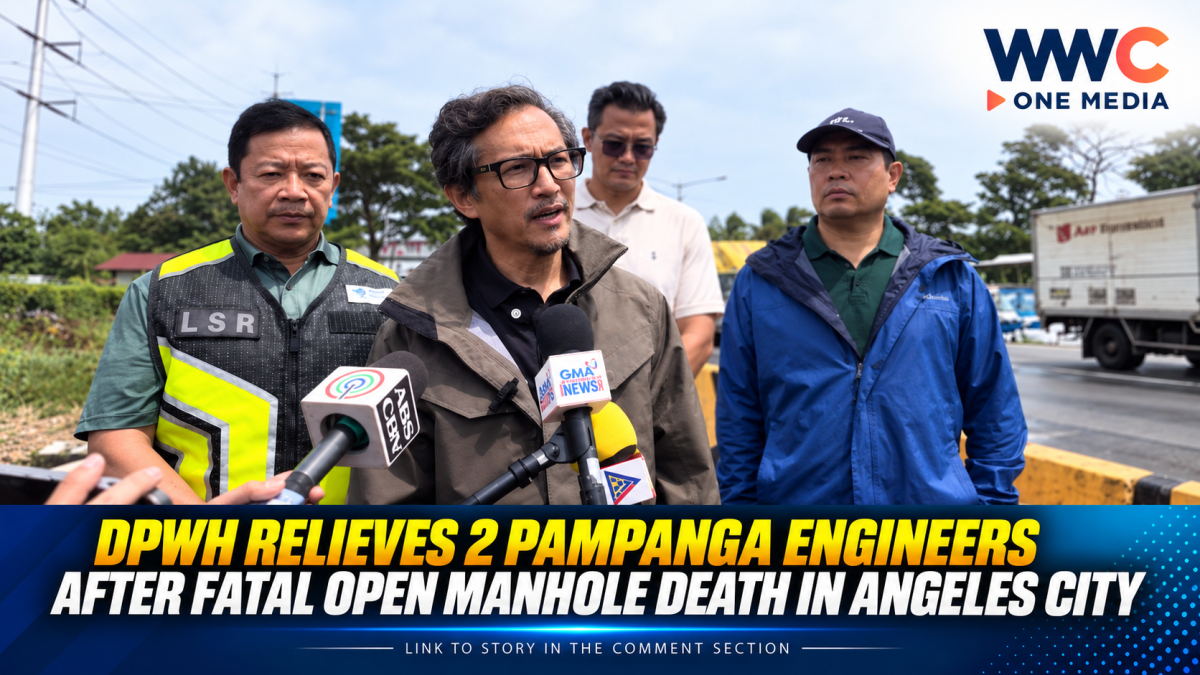
MANILA, Philippines — Two Department of Public Works and Highways (DPWH) officials in Pampanga have been relieved from their posts following the death of a 25-year-old man who fell into an open, flood-submerged manhole along a highway in Angeles City.
DPWH Secretary Vince Dizon ordered the immediate relief of Pampanga 3rd District Engineering Office OIC-District Engineer Aser S. Mallari and OIC-Assistant District Engineer Augustin R. Dagsaan Jr., citing their alleged failure to comply with required road safety measures.
The action came after the fatal incident along Fil-Am Friendship Highway in Angeles City, where the victim fell into an open drainage canal that had been submerged by floodwaters during heavy rains.
Two DPWH officials relieved effective immediately
According to the memorandum signed by Dizon, the two officials were relieved of their duties as officers-in-charge of the Pampanga 3rd District Engineering Office after the agency determined that required safety standards had not been properly implemented.
The memorandum directed the officials to complete the necessary turnover of documents, pending deliverables and other official responsibilities to ensure that government operations would continue without interruption.
The DPWH action was also reported by TV5, which said the relief orders followed the death of a 25-year-old man who fell into the open manhole during flooding on August 30.
Fatal fall happened during heavy flooding
The incident occurred as heavy rains associated with the southwest monsoon, or Habagat, caused flooding in parts of Angeles City.
The open drainage canal became difficult to see beneath the floodwater. The victim reportedly fell into the submerged opening, prompting bystanders to attempt a rescue, but the man could not be saved.
The tragedy has renewed concerns over the dangers posed by uncovered or inadequately secured drainage structures, particularly during periods of intense rainfall when roads and sidewalks can quickly become submerged.
Dizon: Safety standards must be followed
The DPWH said the disciplinary action is part of the department’s push to enforce safety and quality standards across its projects.
The agency also linked the move to President Ferdinand Marcos Jr.’s directive that government infrastructure projects must meet safety and quality requirements to protect the public.
Dizon has repeatedly emphasized accountability within the DPWH, particularly amid a broader effort to strengthen oversight of infrastructure projects and address officials accused of negligence or other violations.
The latest action follows earlier personnel changes under Dizon, who has been pursuing an internal cleanup of the department. Previous reports said the DPWH chief had already relieved several senior officials as part of efforts to improve accountability and project implementation.
The tragedy raises a bigger safety question
The incident highlights a problem that becomes particularly dangerous during flooding: hazards that disappear beneath floodwater can become deadly traps for pedestrians and motorists.
A road or walkway may appear passable even when an open drainage canal, missing manhole cover or other obstruction is hidden beneath the surface.
That makes warning signs, barricades and other safety measures especially important around construction and drainage areas.
The relief of the two DPWH officials is therefore likely to draw attention beyond the personnel action itself: authorities will also face questions over how the hazardous opening was left insufficiently protected and whether additional safety failures contributed to the tragedy.
For now, the DPWH has made one thing clear—the officials responsible for the affected district engineering office have been removed from their posts while the department addresses the incident.
But for the victim’s family and the public, the more important question remains:
How did a dangerous opening remain exposed in the first place—and what will be done to make sure another life is not lost the same way?




Leave a Reply