
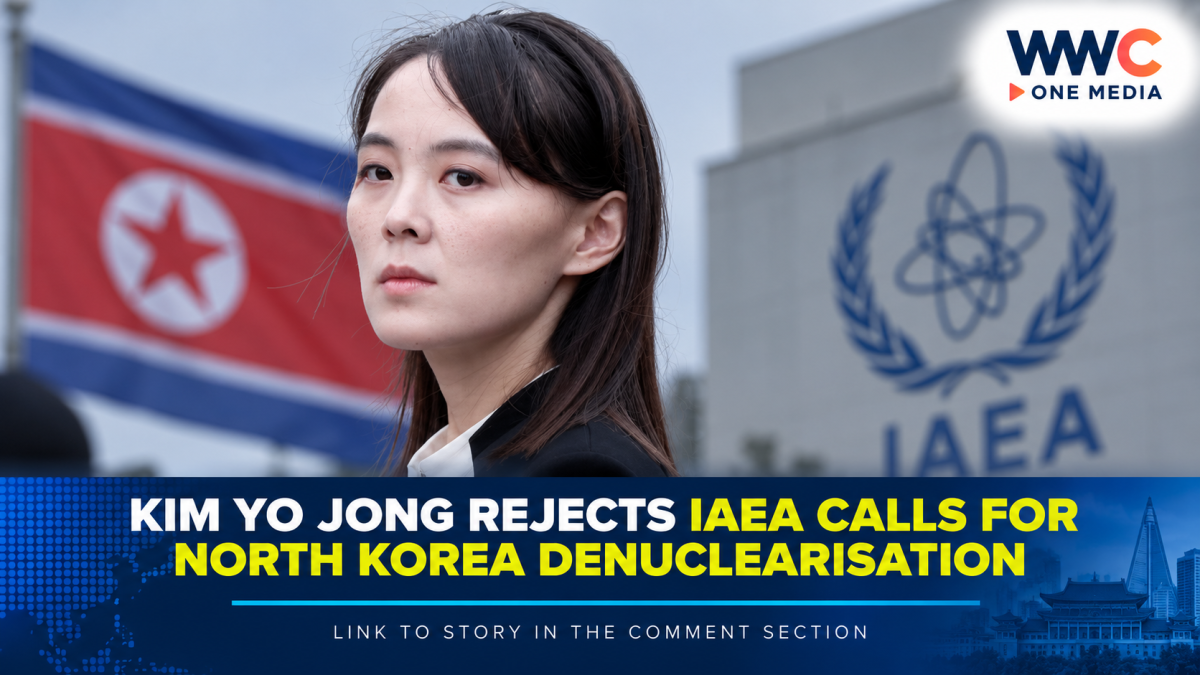
Kim Yo Jong, the powerful sister of North Korean leader Kim Jong Un, has rejected international calls for Pyongyang to give up its nuclear weapons, dismissing discussions at an International Atomic Energy Agency meeting as having no effect on the country’s position.
In a statement carried by North Korean state media on Thursday, Kim criticised the IAEA’s 70th General Conference in Vienna, where member states discussed concerns over North Korea’s nuclear programme and called for its denuclearisation.
Kim described the discussions as familiar and ineffective, saying North Korea’s status as a nuclear weapons state was absolute and could not be reversed.
She also said North Korea’s nuclear position had become established both physically and legally, arguing that international meetings and calls for denuclearisation would not change Pyongyang’s policy.
The IAEA has raised concerns about the continued expansion of North Korea’s nuclear capabilities. A recent safeguards report said the country had expanded uranium enrichment facilities at its main Yongbyon nuclear complex and at another site near Pyongyang.
The agency said the continued operation and expansion of enrichment facilities, along with the reported production of weapons-grade nuclear material, were a serious concern.
North Korea has repeatedly rejected the IAEA’s authority over its nuclear programme. Pyongyang withdrew from the Nuclear Non-Proliferation Treaty in 2003 and has continued developing nuclear weapons and ballistic missiles despite international sanctions.
Kim’s latest statement comes amid increasingly firm declarations from North Korean officials that the country will continue strengthening its nuclear forces.
North Korean officials have also criticised military cooperation among the United States, South Korea and Japan, arguing that it poses a growing security threat. Washington and its allies maintain that their military cooperation and exercises are intended to strengthen deterrence and regional security.
The latest exchange highlights the continuing divide between North Korea and the international community over its nuclear programme. While the IAEA and other governments continue to call for denuclearisation and compliance with international obligations, Pyongyang says its nuclear arsenal is essential to protecting its security and sovereignty.




Leave a Reply