
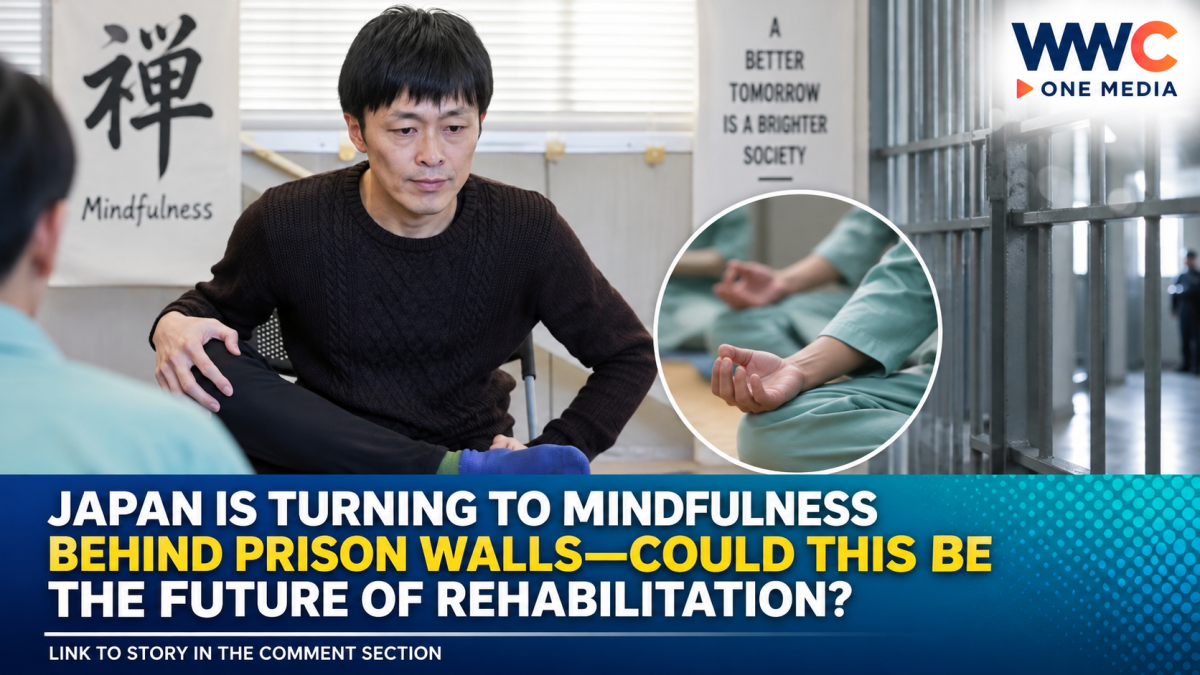
Japan is taking a different approach to prison rehabilitation: instead of relying solely on punishment and discipline, correctional facilities are increasingly placing greater emphasis on self-reflection, emotional control and programs designed to help inmates successfully return to society.
The shift comes as Japan undertakes its biggest prison-system overhaul in more than a century, with rehabilitation and preventing repeat offenses becoming central goals of the new correctional framework.
Mindfulness and meditation are among the approaches being explored in the broader effort to help inmates better understand their thoughts, emotions and behavior. Research into mindfulness-based interventions in correctional settings has found potential benefits involving stress, emotional regulation and self-control, although researchers caution that more evidence is needed to establish their long-term impact on reoffending.
Why Japan is changing its prison system
Japan’s revised penal system took effect in June 2025, merging the previous categories of imprisonment with and without mandatory labor.
The reform is significant because it gives correctional institutions greater flexibility to devote inmates’ time to education, guidance, vocational preparation and individualized rehabilitation, rather than treating prison labor as the primary component of incarceration.
Japan’s Justice Ministry says correctional treatment is intended to encourage inmates’ motivation for reform and rehabilitation while developing their ability to adapt to life after release. Programs include work, educational guidance and other forms of rehabilitation.
The ultimate objective is straightforward: help inmates leave prison without returning.
Mindfulness is about more than simply “relaxing”
Mindfulness generally involves deliberately paying attention to thoughts, emotions and sensations in the present moment without immediately reacting to them.
For people in correctional environments, the potential value is particularly relevant because incarceration can involve significant stress and emotional challenges.
A systematic review of prison-based yoga, meditation and mindfulness programs found evidence suggesting these approaches may help inmates cope with prison life, improve psychological well-being and potentially support rehabilitation. However, the review also identified gaps in the research, meaning mindfulness should not be presented as a stand-alone solution to recidivism.
One randomized controlled study involving male inmates who participated in a Transcendental Meditation program reported reductions in perceived stress and several trauma-related symptoms compared with a control group.
That does not mean meditation automatically prevents crime—but it suggests that learning to recognize and regulate emotional reactions could become one useful component of a larger rehabilitation strategy.
Japan is going beyond meditation
The country’s new correctional philosophy is broader than mindfulness.
Recent initiatives show Japanese prisons experimenting with programs that encourage inmates to communicate, understand their own behavior and develop skills needed for life outside prison.
At Osaka Prison, for example, a model program is helping inmates with developmental disabilities improve self-understanding and communication. Participants discuss their personalities, how they interact with others and how they want people to respond to them.
The Justice Ministry has also indicated that the program could eventually be introduced in other correctional facilities.
Meanwhile, Japan’s Mine Rehabilitation Program Center emphasizes education, vocational training and encouraging inmates to proactively plan for their lives after release.
Another recent initiative allows citizens to visit prisons and engage in dialogue with prison officers, reflecting the broader effort to rethink how correctional facilities connect inmates with society.
A major question remains
The important question is whether these approaches can produce lasting changes after an inmate walks out of the prison gates.
Mindfulness may help with emotional regulation and self-awareness, but successful rehabilitation also depends on education, employment opportunities, social support, treatment for underlying problems and the ability to reintegrate into the community.
Japan’s reforms therefore represent something larger than a meditation experiment.
They reflect a fundamental change in philosophy: prison is increasingly being viewed not simply as a place to punish people for crimes, but as a place where they can be prepared not to commit another one.
And if Japan’s new rehabilitation model succeeds, the consequences could extend far beyond its prison walls.




Leave a Reply