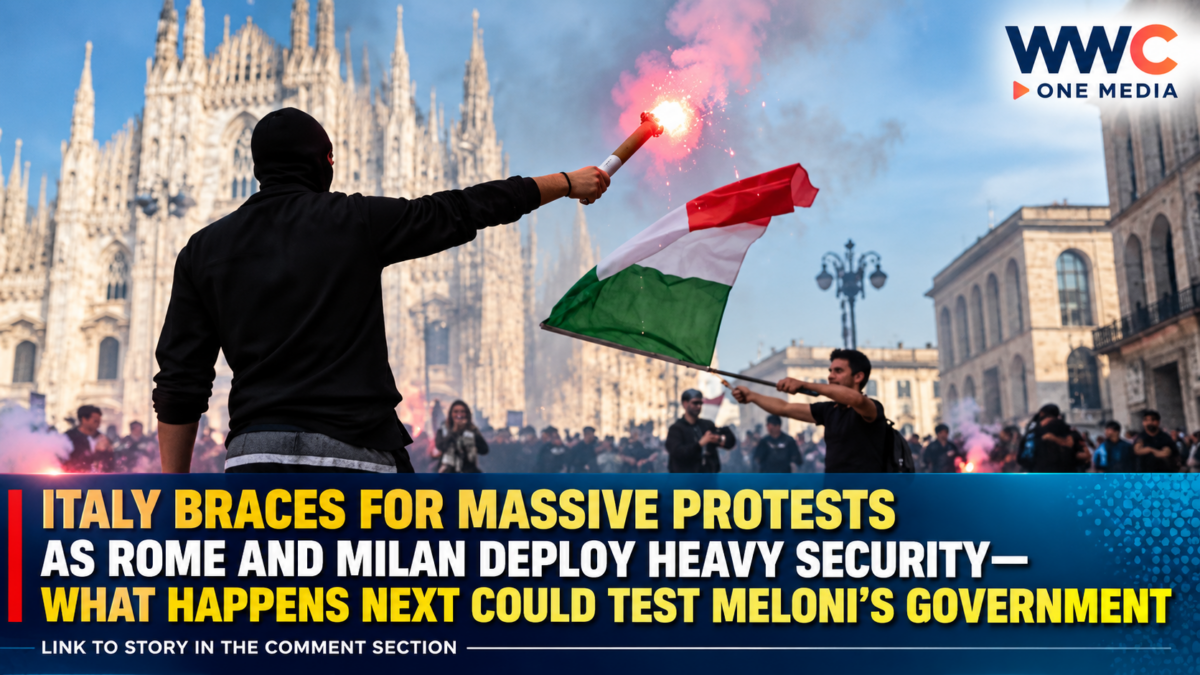
ROME, Italy — Italian authorities are stepping up security in Rome and Milan as fresh demonstrations over rising living costs and economic pressures are expected on Saturday, October 24, following a weekend of protests that escalated into clashes with police, looting and property damage.
The demonstrations are also expected in Florence, Turin, Bologna, Padua, Bari and Genoa, according to reports and advisories cited by the Philippine Embassy in Rome. Authorities are preparing for potentially large gatherings while attempting to prevent a repeat of the unrest that struck several Italian cities last weekend.
The renewed mobilization comes as frustration over expensive housing, fuel and energy costs, low wages and public services fuels wider debate about economic insecurity and the future facing younger Italians.
Heavy Security Measures in Rome and Milan
Italian authorities are preparing an extensive security operation to manage the planned demonstrations.
According to Euronews, around 1,500 officers are expected to be deployed in Rome, with police using drones, aerial surveillance and monitoring of online activity to track potential security risks.
Milan is also preparing for a substantial security presence. The operation includes police officers, Carabinieri, municipal officers and additional military personnel, following the government’s decision to send 500 more troops to the city.
The heightened precautions follow the violence reported during demonstrations last weekend, when some protesters clashed with law enforcement and groups looted shops and damaged property.
Authorities have emphasized that peaceful demonstrations remain a protected right, but they are preparing to respond to vandalism, violence and other unlawful acts.
Why Are Italians Taking to the Streets?
The protests reflect mounting public frustration over the cost of living and concerns about economic opportunity.
Housing affordability, rising fuel and energy expenses, low wages and dissatisfaction with public services are among the issues cited in reporting on the demonstrations.
Students and younger protesters have also become part of the wider debate, with concerns about job insecurity, social exclusion and limited economic prospects contributing to public discontent.
However, the demonstrations do not represent a single unified movement. Different groups have announced rallies for different reasons, including economic grievances, opposition to government policies and anti-war demands.
The diversity of organizers and causes means that the scale, character and potential impact of each gathering may differ from city to city.
Last Weekend’s Unrest Raises Fears of a Repeat
The latest security preparations follow unrest in Milan and other northern Italian cities, where demonstrations that began peacefully were followed by confrontations with police, looting and property damage.
The Associated Press reported that masked demonstrators in Milan threw objects at riot police, set barricades on fire and looted shops. Police used water cannons and tear gas to disperse crowds.
Reuters also reported that authorities responded to the unrest with plans to deploy additional troops in Milan, while some businesses took precautionary measures after shops were targeted.
The incidents have intensified concerns among local officials and business owners about public safety, disruption to commercial districts and the potential economic impact of further unrest.
Milan Mayor Giuseppe Sala has indicated that the city should respond with a stronger security presence rather than simply shutting down commercial activity.
Meloni Government Introduces Tougher Security Measures
Prime Minister Giorgia Meloni’s government has responded to the unrest with a new package of public-security measures.
According to Al Jazeera, the measures include a new offense involving violent participation in demonstrations, tougher penalties for rioting and provisions that could hold parents financially responsible for property damage caused by their children.
The decree also expands certain police powers involving minors suspected of posing a danger. The government says the measures are intended to deter violence and protect public safety.
The changes have nevertheless raised questions about the balance between law enforcement and the right to protest. Critics of increasingly restrictive security policies argue that tougher penalties alone may not resolve the economic and social problems driving public frustration.
The debate has placed the government under pressure to address both public order and the underlying grievances behind the demonstrations.
Philippine Embassy Warns Filipinos in Italy
The Philippine Embassy in Rome has urged Filipinos in Italy to exercise heightened caution ahead of the planned demonstrations.
In an advisory reported by GMA News Online, the embassy encouraged Filipino nationals to avoid areas where marches, large gatherings or confrontations are taking place and to limit unnecessary travel to protest locations.
Filipinos were also advised to monitor local news, maintain contact with family members and trusted contacts, and follow instructions issued by local authorities.
The advisory is particularly relevant to Filipinos living, working or traveling in Rome, Milan and other cities where demonstrations are expected.
Those who need to travel should check local transport updates and allow extra time for their journeys, as security operations and marches may cause road closures, traffic diversions or public transport disruption.
What Happens Next?
The immediate challenge for Italian authorities is to allow peaceful demonstrations while preventing violence and protecting residents, visitors and businesses.
The situation also presents a broader political test for Meloni’s government. A strong security response may reassure residents concerned about disorder, but the economic pressures driving public discontent remain a central issue.
Whether the demonstrations remain peaceful, expand further or lead to additional government action will depend on developments on the ground and the response of protesters and law enforcement.
For Filipinos in Italy, the priority is to remain informed, avoid affected areas when possible and follow official safety guidance as the situation develops.