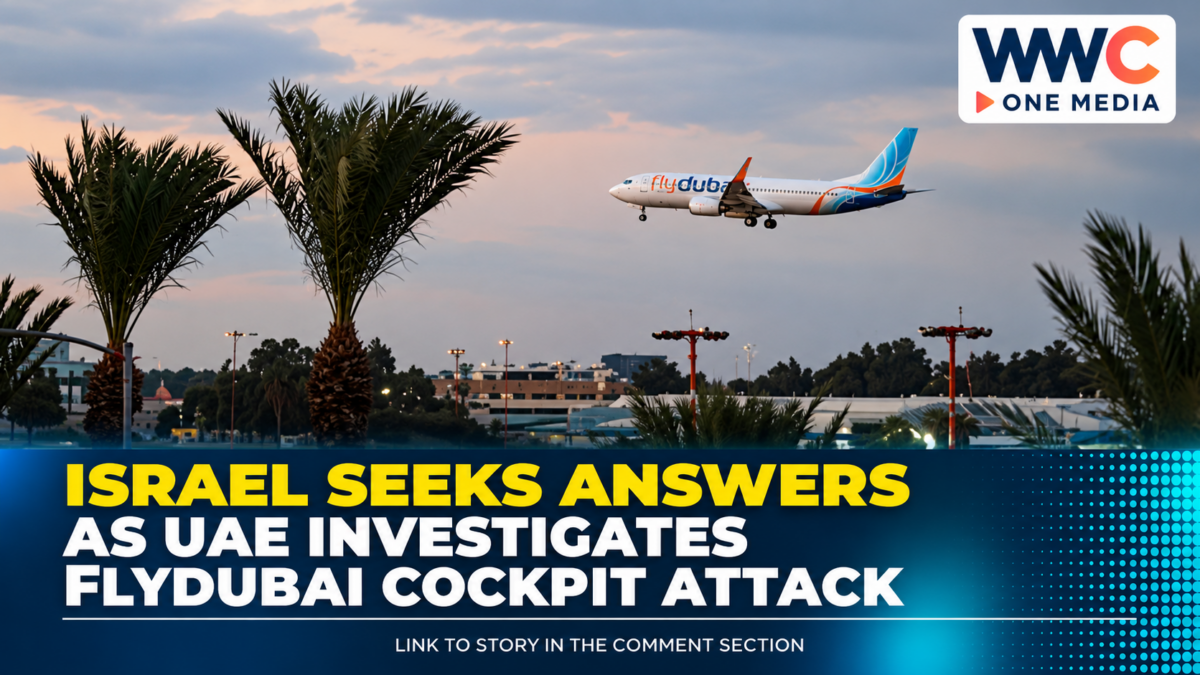
Israel is seeking answers about the background and motives of the co-pilot accused of attacking the captain of a Flydubai passenger jet bound for Tel Aviv, while the United Arab Emirates has launched an investigation into whether the incident involved terrorism, prior planning or outside direction.
The incident occurred on Sept. 30 aboard Flydubai flight FZ1073, which was travelling from Dubai to Tel Aviv with more than 170 people on board. The flight was forced to make an emergency landing in Tabuk, Saudi Arabia, after the co-pilot allegedly attacked the captain while the aircraft was in flight.
According to Israeli officials, the confrontation began when the co-pilot stabbed the captain, causing the aircraft to plunge nearly 14,000 feet in less than 30 seconds. The injured captain managed to unlock the cockpit door, allowing passengers and crew members to enter and overpower the attacker.
Passengers and a reserve crew member then helped regain control of the aircraft. The Boeing 737 MAX 8 was subsequently diverted to Tabuk, where it landed safely despite the serious incident in the cockpit. Both pilots were taken to hospital after the emergency landing.
Israeli Prime Minister Benjamin Netanyahu said Israel would work to determine the full background of the attacker and whether anyone else was involved. He said investigators would look into whether the co-pilot had accomplices or whether another party was connected to the incident.
When asked about possible Iranian involvement, Netanyahu said it was too early to determine whether Iran had any connection to the attack. There have been no official findings establishing Iranian involvement, and investigations are still underway.
Netanyahu also said the co-pilot had undergone what he described as radical Islamist indoctrination. Israeli officials have identified the attacker as an Omani national, although Omani authorities have not publicly commented on the identification.
Israeli Defence Minister Israel Katz previously said preliminary information indicated that the co-pilot intended to crash the aircraft and described the incident as a terrorist attack. Netanyahu, however, referred to it as a serious security incident while investigations continued.
The UAE has opened its own investigation to establish what happened and determine the motive behind the incident. Authorities are examining whether the attack was connected to terrorist activity or purpose, as well as whether it involved advance planning or direction from another person or organisation.
UAE judicial authorities said they have jurisdiction because the aircraft is registered in the UAE and operates under its flag. UAE law also applies to crimes committed aboard the aircraft even when they occur outside the country’s territory.
Saudi authorities are also involved because the aircraft made its emergency landing at Tabuk. The attacker was initially being investigated in Saudi Arabia, while Netanyahu said he expected the suspect to eventually be transferred to the UAE.
Saudi Arabia has not publicly released detailed findings from its investigation. The country’s Tabuk airport confirmed that both pilots were hospitalised following the incident.
Flydubai has said that the underlying reasons for the incident remain unknown and urged people not to engage in premature speculation while authorities conduct their investigations.
The airline’s flight crew and passengers played a critical role in preventing a potentially catastrophic outcome. The captain, identified as Indian national Smit Machchhar, has been praised by Israeli and Indian officials for helping avert the crash despite suffering serious injuries.
Passengers who entered the cockpit and subdued the attacker have also been publicly praised. One passenger, Yaniv Hayun, described rushing toward the cockpit as the aircraft was descending rapidly and helping remove the attacker before assisting in regaining control of the plane.
The incident has prompted renewed questions about security procedures for flight crews, particularly how pilots and other cockpit personnel are screened before being permitted to operate international passenger flights.
For now, investigators in the UAE, Saudi Arabia and Israel are working to establish the sequence of events, the co-pilot’s motive and whether anyone else was involved. Any conclusions about terrorism, outside direction or international links will depend on the findings of those investigations.