
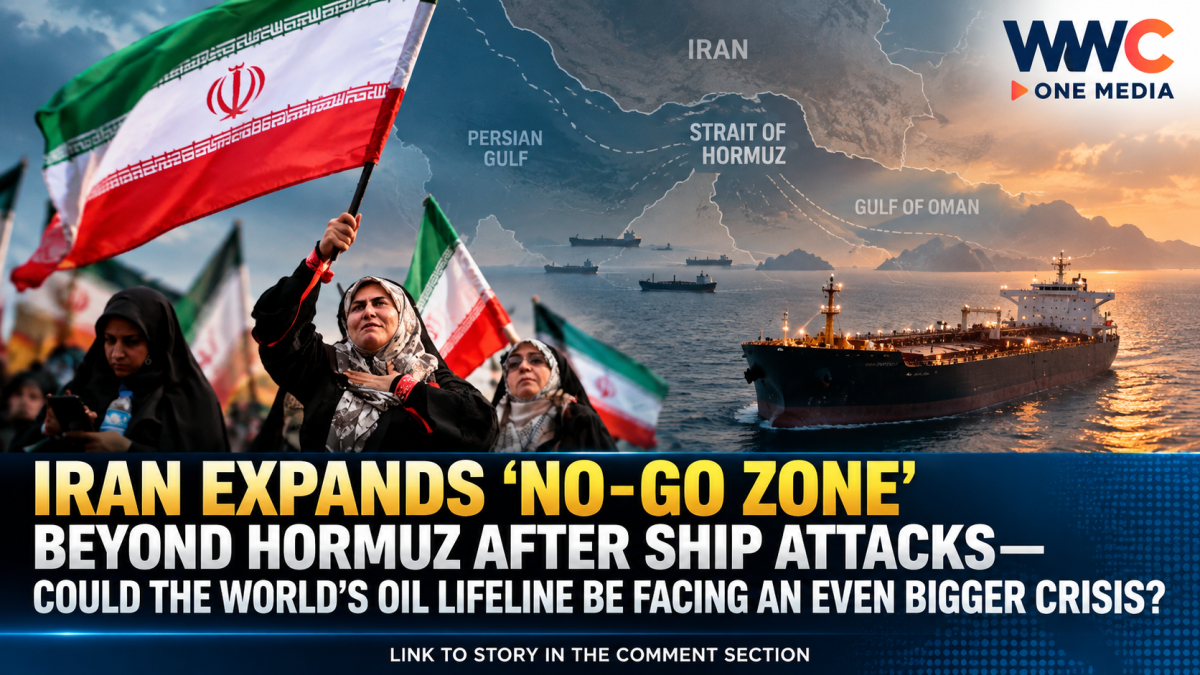
TEHRAN — Iran has widened its maritime pressure campaign beyond the Strait of Hormuz after claiming attacks on multiple vessels, raising fresh fears that one of the world’s most critical energy shipping regions could become even more dangerous.
Iran said its forces attacked more than a dozen vessels attempting to move through or near the strategic Strait of Hormuz, while also expanding a newly declared prohibited or “no-go” zone into parts of the Gulf of Oman and the Arabian Sea.
The latest escalation comes amid intensifying confrontation between Iran and the United States, with commercial shipping increasingly caught in the middle of the conflict.
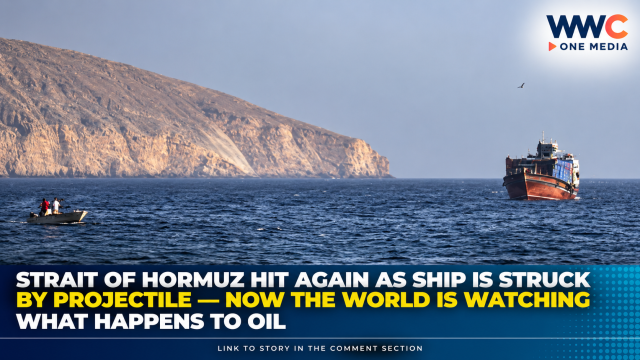
According to reports carried by ABS-CBN News and international wire services, Iran’s Revolutionary Guards claimed they targeted US vessels, oil tankers and what Tehran described as “non-compliant” ships attempting to use the strategically vital maritime route. The United Kingdom Maritime Trade Operations also reported that several vessels in the Gulf and Gulf of Oman had been subjected to disabling fire amid continuing military activity.
Iran Pushes Warning Zone Beyond the Strait of Hormuz
The most alarming development may be Iran’s decision to extend its restricted maritime zone beyond the Strait of Hormuz itself.
Iranian authorities said parts of the Gulf of Oman and Arabian Sea would now be included in the prohibited area, although precise coordinates were still expected to be announced.
That expansion could significantly increase uncertainty for commercial shipping because vessels attempting to avoid the immediate dangers around the Strait of Hormuz may now face risks farther into the surrounding waters.
The Strait of Hormuz connects the Persian Gulf with the Gulf of Oman and the Arabian Sea and has long been considered one of the world’s most important maritime chokepoints.
A major share of global oil and liquefied natural gas normally passes through the waterway, making any prolonged disruption a potential threat to energy markets and the global economy.
Tit-for-Tat Attacks Push Conflict Into Dangerous New Territory
The latest confrontation followed US military strikes against Iranian oil tankers.
Reuters reported that Iran attacked ships near the Strait of Hormuz after US forces sank five Iranian oil tankers, marking one of the largest escalations involving commercial shipping since the conflict began. Iran also claimed retaliatory attacks against US-linked vessels and military targets.
Iranian authorities described their actions as self-defense, while the United States said its operations were in response to attacks targeting American naval forces.
The increasingly rapid cycle of retaliation has raised concerns that commercial tankers and cargo vessels could face greater danger as both sides continue military operations across the region.
Oil and Shipping Costs Surge
The growing danger around Hormuz has already sent shockwaves through global energy markets.
Reuters reported that oil tanker rates have surged to record levels following attacks involving Iranian and US forces, with the cost of moving crude through the region rising sharply as shipowners and operators confront mounting security risks.
The broader conflict has also pushed oil prices above $100 per barrel in recent days, intensifying concerns about higher fuel costs and renewed inflation pressure around the world.
For major oil-importing economies, especially in Asia, prolonged disruptions could eventually translate into higher transportation and energy costs.
Another Global Shipping Chokepoint Is Also Under Pressure
The situation is becoming even more concerning because the Strait of Hormuz is not the only strategic waterway facing instability.
Reuters and AP reported that Iran-backed Houthi forces in Yemen have advanced toward and gained influence around areas near the Bab el-Mandeb Strait, another crucial maritime chokepoint connecting the Red Sea and the Gulf of Aden.
That development raises the possibility that shipping companies could face security threats on multiple major routes linking Middle Eastern energy producers with global markets.
The Bab el-Mandeb route is particularly important because it provides access between the Red Sea, the Suez Canal and the Indian Ocean.
Why the Hormuz Crisis Matters to the World
The Strait of Hormuz is not simply a regional waterway.
It is a critical passage for oil and gas exports from major Gulf producers. When traffic through the area slows or becomes dangerous, the effects can spread quickly through global oil prices, shipping costs, insurance rates and consumer fuel prices.
AP has reported that roughly 9 million barrels of oil have been moving through the region daily under normal conditions, although the ongoing conflict has severely disrupted maritime traffic.
The danger now is that Iran’s expanded restricted zone could make it even harder for commercial vessels to determine safe routes.
Could the Crisis Spread Even Further?
Iran has warned of additional action against tankers connected to US allies, while the United States has continued efforts to protect shipping and weaken Iran’s ability to control the region’s maritime routes.
Meanwhile, the conflict shows no clear sign of an immediate diplomatic breakthrough.
AP reported that despite US efforts to reopen parts of the Strait of Hormuz and restore shipping flows, the broader conflict with Iran remains unresolved, with continued fighting and regional instability threatening to prolong the crisis.
The Bigger Question: Where Can Ships Go Next?
Iran’s decision to push its maritime warning zone beyond the Strait of Hormuz could mark a significant new phase in the conflict.
For months, Hormuz itself has been at the center of the global energy crisis. Now, the danger appears to be extending into the waters beyond it.
With tanker rates climbing, oil prices under pressure and another critical shipping chokepoint in the Red Sea region facing instability, the world’s energy supply routes are confronting an increasingly uncertain future.
The question now is no longer just whether ships can safely pass through the Strait of Hormuz—but whether the crisis is expanding into the very routes vessels would normally use to escape it.

Leave a Reply