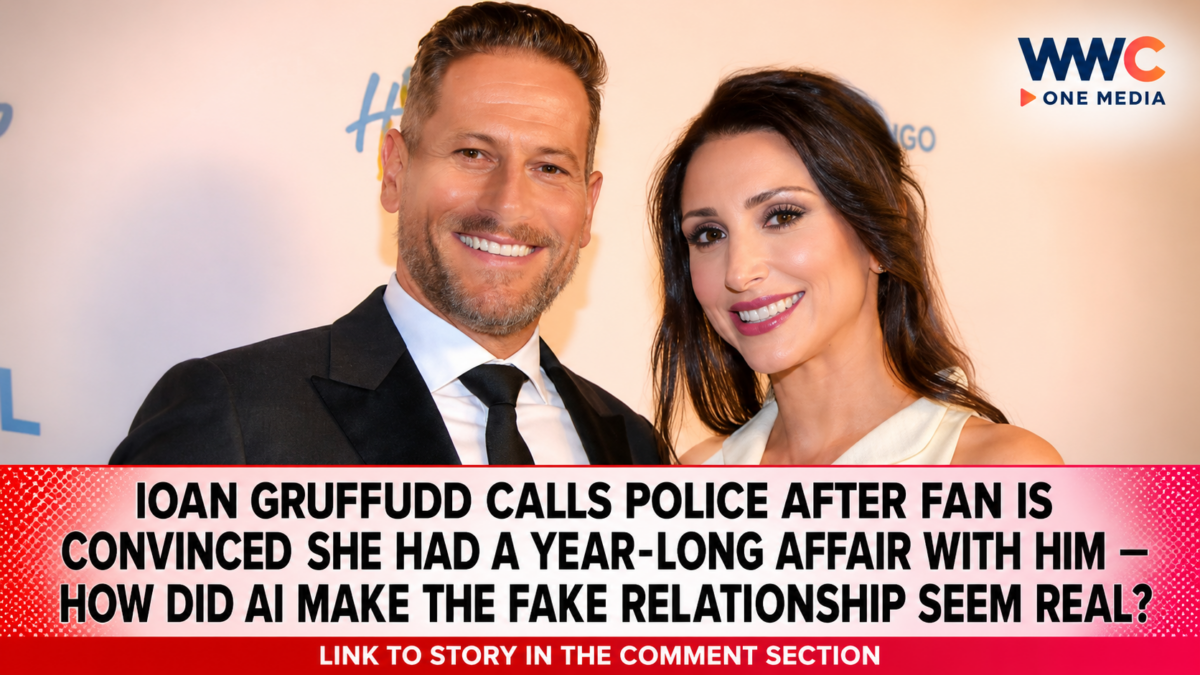
LOS ANGELES — Actor Ioan Gruffudd has reported an alleged online impersonation case to police after discovering that a woman had been led to believe she was romantically involved with him for more than a year — despite never having a real relationship with the actor.
The disturbing incident involved hundreds of explicit, AI-generated images and videos allegedly sent by someone pretending to be Gruffudd. The woman reportedly believed the material was genuine and only discovered the deception after approaching the actor at a recent fan convention.
Gruffudd, best known for playing Reed Richards in the Fantastic Four films, described the situation as deeply distressing in a series of Instagram statements. He said the woman showed him the fabricated images and videos, which had supposedly been created to convince her that she was communicating with him.
The actor confirmed that he had reported the matter to police and urged anyone who had been contacted by someone impersonating him to do the same.
The case is drawing attention not simply because a celebrity’s identity was allegedly stolen, but because artificial intelligence was reportedly used to manufacture an entire false relationship — without the usual demand for money associated with many online romance scams.
HOW THE ALLEGED AI IMPERSONATION BEGAN
According to Gruffudd’s account, the woman was initially approached through a Facebook fan page associated with Elsbeth, the crime drama in which he appeared.
The person allegedly posing as the actor then provided a mobile phone number and directed her to continue their conversations through Telegram.
Over time, the impersonator allegedly sent hundreds of AI-generated images and videos, including explicit material, claiming they demonstrated that the woman was communicating with the real Gruffudd.
The woman reportedly believed the relationship had continued for more than a year. She eventually attended a convention where she encountered the actual actor and showed him the material she had received.
Gruffudd said the images and videos were disturbing and stressed that the person behind the accounts was not him.
The incident highlights how impersonators can exploit the familiarity people develop with public figures through films, television appearances and social media. A convincing profile, sustained private conversations and fabricated visual material can create an illusion of personal access that does not exist.
The Irish News, reporting through the Press Association on November 9, also detailed the alleged Facebook-to-Telegram contact route and the actor’s warning to fans. RTE independently reported the same account, including Gruffudd’s confirmation that he had contacted police.
GRUFFUDD SAYS IT WAS NOT A MONEY-RELATED SCAM
One of the most important details in the case is the actor’s clarification that the woman was not asked to pay money and did not send any.
In a separate Instagram statement, Gruffudd explained that this was not a conventional financial scam. He said the person had specifically targeted the victim to create a false romantic relationship.
That distinction matters.
Many romance scams eventually involve requests for money, gifts, investments or assistance with supposed emergencies. In this case, however, Gruffudd said the deception was centred on making the victim believe she had a private relationship with a famous actor.
The absence of a financial demand does not make the alleged conduct harmless. A fabricated relationship can still cause emotional distress, confusion and a serious breach of personal trust.
It is also important not to assume that the impersonator’s motive has been established. The actor’s statements explain what the woman experienced, but the identity of the person responsible and the full purpose behind the alleged deception have not been publicly established.
WHY AI-GENERATED CELEBRITY CONTENT IS A GROWING CONCERN
The Gruffudd incident comes amid wider concerns about the use of artificial intelligence to create convincing fake identities, images, voices and videos.
AI tools can make it easier to produce fabricated material that appears to show a real person doing or saying something they never actually did. When combined with social media accounts and private messaging platforms, such material can be used to support impersonation attempts.
The concern extends beyond celebrities.
Public figures, business executives, government officials and ordinary social media users can all have their identities copied or misrepresented online. The technology can also make it harder for people to distinguish genuine communication from fabricated content.
WWC ONE MEDIA previously examined this wider threat in its report, INTERPOL Warns Agentic AI Could Automate Cyberattacks as Criminals Scale Scams at Machine Speed. The report explains how criminals can use AI to make impersonation and other fraudulent activity faster, more convincing and easier to scale.
Another WWC report, AI Deepfakes Could Disrupt US Midterm Elections as FBI Issues Urgent Warning to Election Officials, explored the risks posed by fabricated images, audio and video that imitate real people and institutions.
These threats are not limited to political misinformation. The same ability to imitate a person’s identity can also be exploited in private conversations, fraudulent relationships and attempts to manipulate unsuspecting individuals.
THE ACTOR ISSUES A DIRECT WARNING TO FANS
Gruffudd told followers that his genuine Instagram account is @ioangruffudd and warned that anyone claiming to communicate with him through unofficial accounts, Telegram or other messaging channels should not be trusted.
He also said he would never give his personal mobile number to someone he did not personally know.
His advice was straightforward: do not engage with suspicious accounts, do not send money, block the contact and report suspected impersonation to the police.
His wife, actress Bianca Wallace, also shared the warning and urged people to be careful about individuals pretending to be someone they are not.
Gruffudd and Wallace married in April 2025. The actor was previously married to actress Alice Evans.
The actor’s public warning is particularly significant because the woman reportedly believed the relationship was real for more than a year. It demonstrates that impersonation can involve sustained deception rather than a single suspicious message or fake profile.
WHY THE CASE MATTERS BEYOND HOLLYWOOD
The case raises difficult questions about accountability when AI-generated material is used to impersonate real people and manipulate others.
Who is responsible when fabricated images and videos are used to convince someone that a relationship exists? How quickly can platforms identify and remove accounts that use a celebrity’s identity without permission? And what protections are available to people who become victims of prolonged online deception?
WWC ONE MEDIA has also reported on the risks of digital identity theft and targeted impersonation in China-Linked Hackers Impersonate Former US Official to Target AI Experts. That report describes how attackers used a trusted person’s identity to make fraudulent communications appear legitimate.
The broader issue is that a convincing digital identity is no longer necessarily proof that the person behind an account is genuine. Photographs, videos and even familiar voices can be manipulated or generated, making independent verification increasingly important.
Gruffudd has said the alleged impersonation has been reported to police. As of November 12, 2026, the publicly available reports do not establish that an individual has been identified, arrested or charged in connection with the incident.
For now, the actor’s warning is clear: a person claiming to be a celebrity in private messages is not necessarily who they say they are — even when they appear to have photographs and videos to prove it.
And in an era when artificial intelligence can manufacture convincing evidence, the question is no longer simply whether a profile looks real. It is whether the person behind it can actually be verified.