
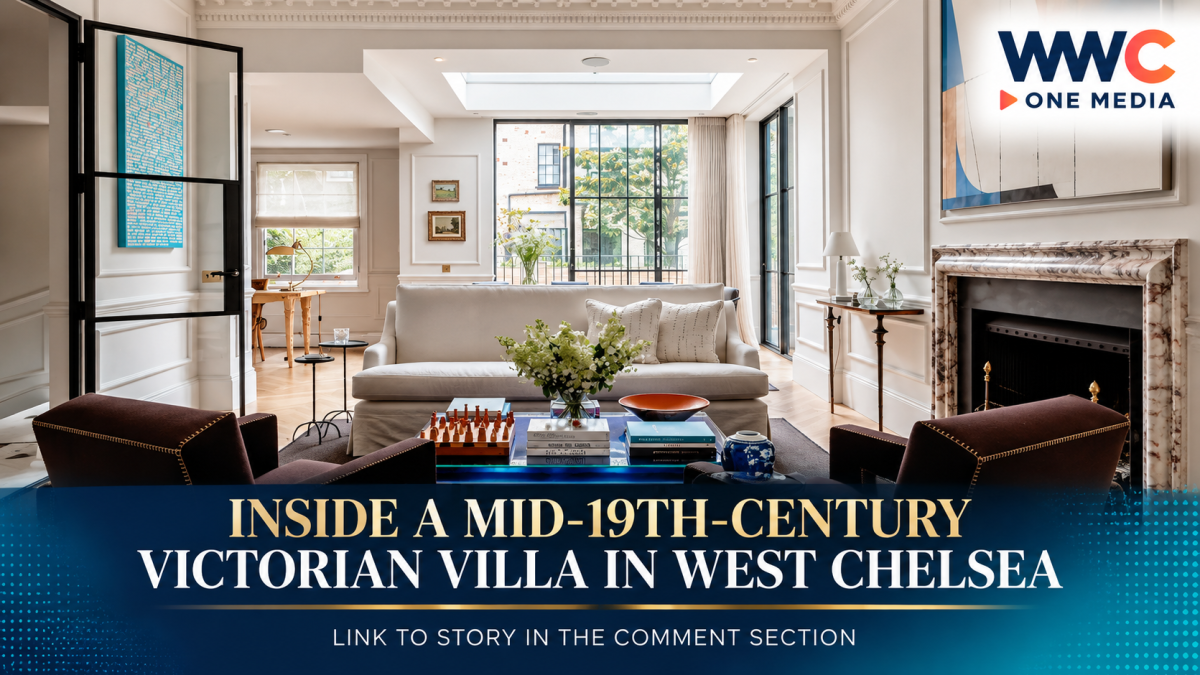
A mid-19th-century Victorian villa in London’s West Chelsea has been transformed into a sophisticated family home that balances the character of the historic property with a contemporary approach to interiors.
The project was led by designer Blyth Collinson, who worked with the architecture and proportions of the original house rather than attempting to erase its period character.
The villa retains many of the features that give Victorian homes their distinctive identity, including generous ceiling heights, traditional architectural details and a strong sense of separation between rooms.
Rather than creating a highly uniform interior, the design introduces a mix of colours, textures and materials throughout the house. Each room has its own personality while remaining connected to the wider scheme.
The approach allows contemporary furniture and decorative pieces to sit comfortably alongside historic details. Modern elements provide contrast, while carefully selected antiques and traditional references help preserve the home’s sense of history.
Natural light also plays an important role. The interiors make use of large windows and reflective surfaces to brighten the rooms, while fabrics, timber and softer finishes bring warmth and depth.
The living spaces are designed for everyday family life as well as entertaining. Comfortable seating, layered lighting and carefully considered artwork create rooms that feel polished without becoming overly formal.
In the dining areas, the designers combine functional furniture with statement details, creating spaces that can work for both intimate meals and larger gatherings.
Bedrooms are treated more softly, with tactile fabrics and restrained decorative details creating a calmer atmosphere. The use of different materials adds visual interest without overwhelming the rooms.
The kitchen similarly combines practicality with the more decorative character found elsewhere in the house, allowing it to function as a working family space while remaining integrated into the home’s overall aesthetic.
One of the defining qualities of the renovation is the dialogue between old and new. Victorian architectural elements provide the foundation, while contemporary pieces, modern colours and carefully curated objects give the property a distinctly current identity.
The result is a home that does not attempt to make a historic London villa look new. Instead, its design celebrates the building’s original character while adapting it to modern family life.
Through this balance of period architecture, contemporary furnishings and layered decoration, the West Chelsea villa demonstrates how a historic property can evolve without losing the qualities that made it distinctive in the first place.




Leave a Reply