
INDIA — India’s dining scene is having a major moment.
From a historic pavilion inside Jaipur’s City Palace to a 33-acre organic farm outside Bengaluru and a Himalayan restaurant where chefs forage ingredients from the surrounding landscape, the winners of the inaugural Tatler Best India 2026 restaurant awards reveal a country rapidly redefining what world-class dining looks like.
The biggest winner was Masque in Mumbai, which was named Restaurant of the Year.
But the wider story is even more exciting: India’s best restaurants are moving beyond familiar stereotypes and putting indigenous ingredients, regional traditions, sustainable farming and bold culinary experimentation at the centre of the table.
Masque Named Restaurant of the Year
Mumbai’s Masque took the top honour at the inaugural Tatler Best India awards.
The restaurant has built its reputation around a tasting menu that puts lesser-known indigenous Indian ingredients in the spotlight. Wild turmeric, heirloom grains and foraged greens are sourced through relationships with farmers and foragers across the country.
Its menu changes with the seasons, while the Masque Lab serves as a working space where chefs experiment with new ingredients and techniques before introducing them to diners.
Rather than relying on theatrical presentation, Masque’s approach focuses on ingredient-led cooking and precision.
That philosophy helped it secure the title of Restaurant of the Year.
Jaipur’s Historic City Palace Wins for Best Design
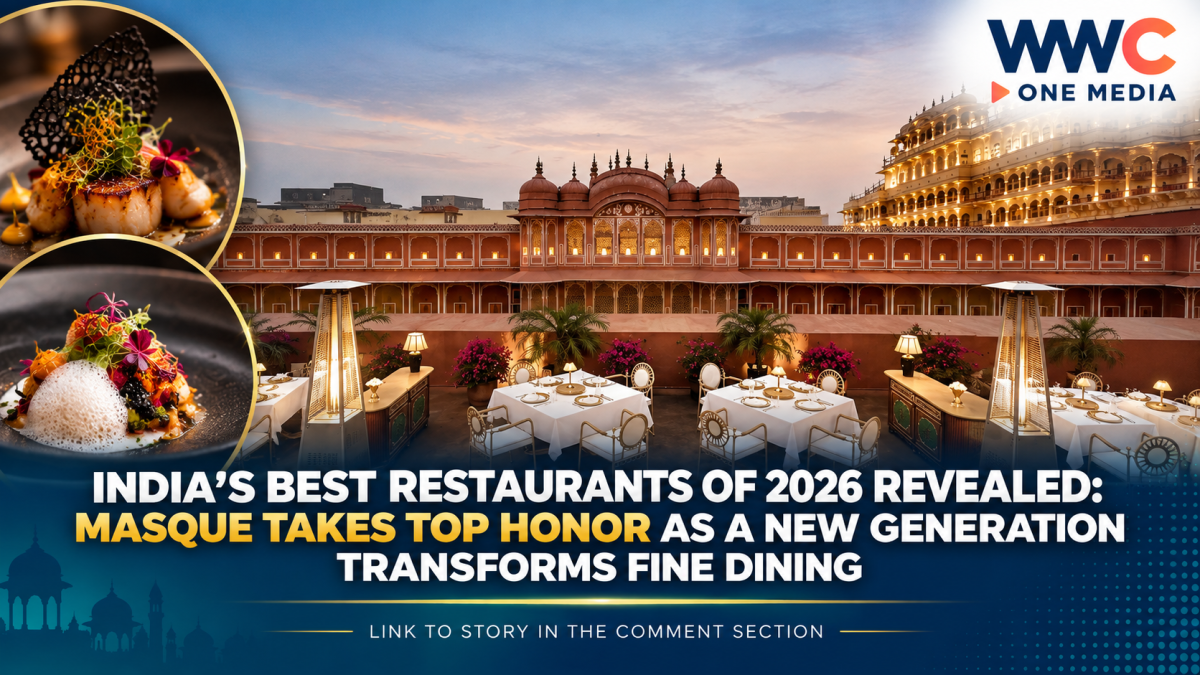
The award for Best Design went to The Sarvato in Jaipur.
The restaurant occupies a pavilion within the historic City Palace that once served as a private audience hall. Its raised terrace overlooks the Pink City, while the architecture retains centuries-old Rajputana craftsmanship.
Rather than dramatically transforming the historic setting, the design preserves the stonework, arches, lattice work and hand-carved details, adding only what is needed for a contemporary dining experience.
The result is a restaurant where the setting itself becomes part of the meal.
At sunset, the terrace opens to the sky and combines Jaipur’s royal history with modern fine dining.
Papa’s Wins Best Service With Just 12 Seats
Sometimes, the most memorable dining experiences happen in the smallest rooms.
Papa’s, led by chef Hussain Shahzad, won Best Service.
The restaurant has only 12 seats arranged around an open kitchen, creating an intimate experience where diners can watch the food being prepared just metres away.
Its tasting menu draws inspiration from Indian street food traditions, transforming dishes such as kothu parotta and nihari into contemporary plates.
But Tatler highlighted the human side of the experience.
The service team works closely with the kitchen, offering a style of hospitality designed to feel personal, intuitive and warm rather than overly formal.
Bengaluru Chef Johnson Ebenezer Named Rising Star
The Rising Star award went to chef Johnson Ebenezer of Farmlore.
Farmlore operates on a 33-acre organic farm outside Bengaluru, where the kitchen’s approach is deeply connected to the land.
The property includes tropical fruit orchards, hydroponic beds and native cows, while the menu changes according to available produce rather than following a rigid format.
Ebenezer’s ingredient-first philosophy represents one of the strongest trends emerging across India’s dining scene: chefs moving closer to farmers, growers and the landscapes that produce their ingredients.
Tatler said his approach could influence the future direction of Indian dining well beyond his own kitchen.
Indian Accent Mumbai’s Kevin Rodrigues Takes Best Sommelier
Kevin Rodrigues of Indian Accent Mumbai was named Best Sommelier.
At Indian Accent, the food is known for moving between tradition and reinvention, and Rodrigues was recognised for creating wine pairings that complement that ambitious approach.
Rather than treating wine as an intimidating or overly technical part of the experience, Tatler highlighted his ability to make wine knowledge accessible to diners.
The award also reflects the growing sophistication of India’s fine-dining culture, where the complete experience — from food and service to beverages and storytelling — is becoming increasingly important.
Pooja Dhingra Named Best Pastry Chef
The Best Pastry Chef award went to Pooja Dhingra of Le15 Patisserie.
Dhingra became widely known for introducing French-style macarons to a new generation of Indian consumers and has since built a major patisserie business.
Tatler recognised her ability to combine French pastry techniques with local flavours while maintaining consistency across multiple venues.
Her influence demonstrates how India’s food revolution extends far beyond traditional restaurant kitchens.
Pastry, baking and dessert culture are also becoming major creative spaces for Indian chefs and entrepreneurs.
Naar Wins Best Innovation in the Himalayas
Perhaps one of the most fascinating winners is Naar, which took home the award for Best Innovation.
Located in the Himalayan foothills near Kasauli, the restaurant is led by chef-founder Prateek Sadhu.
The landscape directly influences the menu.
The kitchen sources ingredients from the surrounding environment, including wild cherries, tree sap, bamboo shoots and fiddlehead ferns, while other produce comes from its own garden.
The menu also follows the rhythm of the region’s six seasons.
Tatler recognised Naar for creating contemporary food rooted firmly in the Himalayan environment without turning the experience into unnecessary spectacle.
It represents a growing movement in Indian dining: the restaurant menu as a reflection of place.
Mumbai’s Kaspers Named Best New Restaurant
The award for Best New Restaurant went to Mumbai’s Kaspers.
Behind a green door, the restaurant has developed a menu that refuses to stay within one culinary category.
The kitchen draws inspiration from Basque pintxos bars, French bistros, Italian osterias and even Bengali staff meals.
That means diners may find dishes influenced by European classics alongside Bengali flavours and unexpected combinations.
Tatler highlighted Kaspers for taking risks in a city filled with restaurants competing for attention — and, more importantly, having the technical ability to make those risks work.
The award signals that India’s new restaurant scene is becoming increasingly confident about ignoring traditional culinary boundaries.
The Tatler Best India 2026 Restaurant Winners
Here are the standout winners from the inaugural awards:
Restaurant of the Year: Masque, Mumbai
Best Design: The Sarvato, Jaipur
Best Service: Papa’s
Rising Star: Johnson Ebenezer, Farmlore
Best Sommelier: Kevin Rodrigues, Indian Accent Mumbai
Best Pastry Chef: Pooja Dhingra, Le15 Patisserie
Best Innovation: Naar
Best New Restaurant: Kaspers
India’s Best 20 Restaurants Reveal a Bigger Food Revolution
The award winners are part of Tatler’s wider Best 20 Restaurants in India 2026, an unranked selection of restaurants shaping the country’s dining culture.
The list includes venues ranging from Mumbai and Kolkata to Bengaluru, Goa and Jaipur.
Among the featured restaurants are:
- Americano, Mumbai
- Bomras, Goa
- Farmlore, Bengaluru
- Hosa, Goa
- Jamavar, Bengaluru
- The Johri Restaurant, Jaipur
- Kappa Chakka Kandhari, Bengaluru
- La Loca Maria, Mumbai
- Masque, Mumbai
- Nāvu, Bengaluru
- Sienna Calcutta, Kolkata
Tatler describes the Best 20 as a selection based on culinary creativity, cultural significance and enduring quality, with restaurants representing both experimentation and deep respect for regional traditions.
From Burmese Food to Kerala Classics, India’s Regional Cuisine Is Taking Centre Stage
One of the strongest themes across the Best 20 is diversity.
At Bomras in Goa, Burmese cuisine is presented in a lush garden setting, with fruits, herbs and chillies grown for use in the kitchen.
Hosa explores the cuisines of southern India, including culinary traditions from Kerala, Tamil Nadu, Karnataka and Andhra Pradesh.
At Kappa Chakka Kandhari, Kerala food takes centre stage without unnecessary reinvention, focusing instead on the confidence and depth of traditional flavours.
Meanwhile, Sienna Calcutta explores Bengali cuisine through seasonal ingredients, local bazaars and generational recipes.
The message is becoming increasingly clear:
India’s culinary future is not about making Indian food look more Western. It is about discovering how much more there is to explore within India itself.
Farm-to-Table Dining Is No Longer Just a Trend
Farmlore’s recognition highlights another major shift.
The restaurant operates as part of a broader ecosystem, with produce coming from its own farm and menus shaped by what the land can provide.
Tatler’s Best 20 also emphasises restaurants that source locally, follow seasonal cycles and build menus around regional ecosystems.
This approach is increasingly important as diners become more interested in where their food comes from.
At the same time, chefs are discovering that working closely with local ingredients can create flavours and stories that cannot easily be replicated elsewhere.
A dish made from a rare Himalayan ingredient, for example, can tell a story that imported luxury products simply cannot.
Why India’s Dining Scene Is Getting Global Attention
India has always been one of the world’s great food cultures.
What is changing now is the way chefs are presenting that culinary wealth.
A new generation is combining:
Ancient recipes
Indigenous ingredients
Modern techniques
Sustainable agriculture
Regional storytelling
Global culinary experience
The result is a dining scene that can move from a centuries-old palace in Jaipur to a mountain kitchen in the Himalayas and a modern Mumbai tasting menu without losing its sense of identity.
Tatler’s 2026 winners suggest that the most exciting restaurants are not trying to copy Paris, London, Tokyo or New York.
They are increasingly looking inward.
The Bottom Line
The inaugural Tatler Best India restaurant awards have crowned Masque as Restaurant of the Year, but the bigger story is the transformation happening across India’s entire dining scene.
The country’s most exciting restaurants are preserving traditions while experimenting with new ideas.
They are working with farmers and foragers.
They are rediscovering regional ingredients.
They are transforming historic buildings into unforgettable dining rooms.
And they are proving that fine dining does not have to mean abandoning cultural identity.
From Mumbai to Jaipur and Bengaluru to the Himalayan foothills, India’s restaurants are creating something increasingly rare in the global food industry:
A modern dining movement that looks forward without forgetting where it came from.
WWC ONE MEDIA J.M.D




Leave a Reply