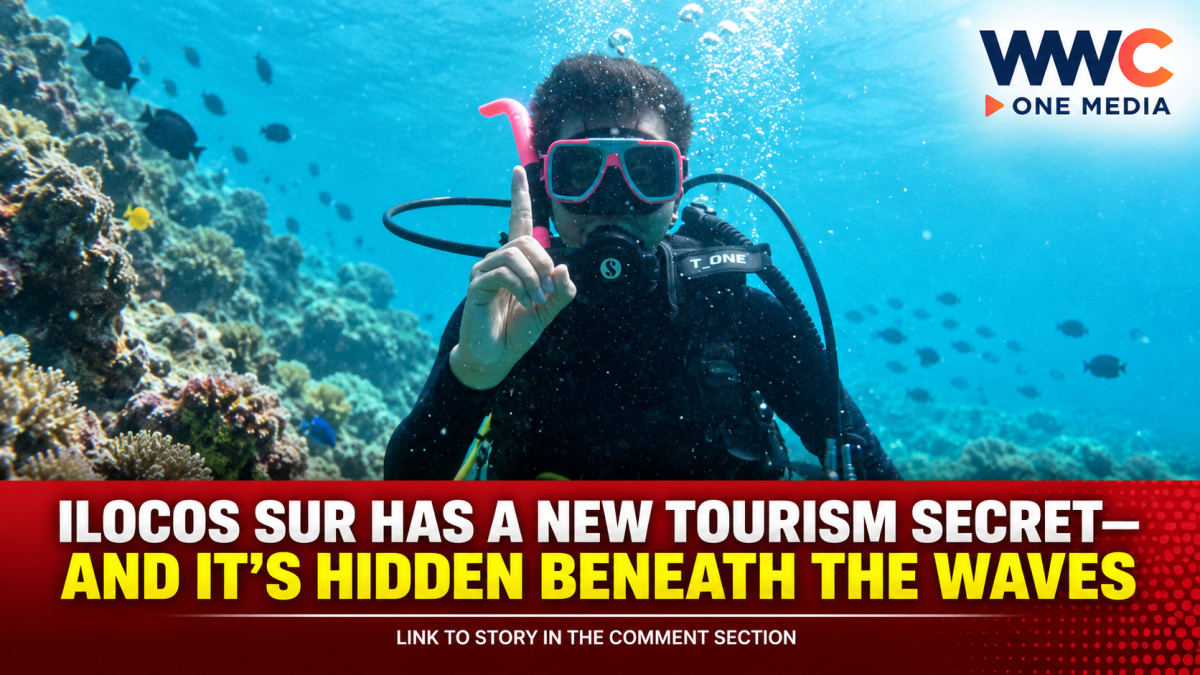
VIGAN CITY, Ilocos Sur — Ilocos Sur is looking beyond its famous heritage streets and culinary attractions as it develops another tourism draw: scuba diving and underwater adventure.
The province is now positioning its extensive coastline as a potential destination for divers, snorkelers and freedivers, with 16 identified dive sites spread across Vigan City and several coastal municipalities.
The development comes as Ilocos Sur works to diversify its tourism offerings and bring more visitors—and potentially more livelihood opportunities—to coastal communities.
16 dive sites identified across the province
According to the Philippine Information Agency, Ilocos Sur currently has 16 dive sites in Vigan City and the municipalities of Cabugao, San Juan, Magsingal, Caoayan, Santa, Narvacan, Santiago and San Esteban.
Among the sites highlighted is Salomague Island in Cabugao, where divers can encounter sea turtles, coral reefs and underwater caves.
Caoayan and Vigan City also have areas where divers can observe non-aggressive sharks in their natural environment. Santa offers underwater caves and coral formations, while Narvacan has become a potential attraction for underwater photographers because of its macro-diving opportunities.
Diving facilities upgraded to international standards
The province’s dive tourism push is also being supported by improvements in safety and equipment.
In February 2026, the provincial government’s dive center underwent validation by the Philippine Commission on Sports Scuba Diving. PIA reported that the facility’s diving equipment, staff and dive professionals passed the evaluation, while its compressed breathing air was confirmed to meet international scuba-diving standards.
The provincial dive center, established in 2017, has also been conducting underwater resource assessments to identify marine assets and determine how coastal areas can be developed for tourism while supporting local communities.
More than scuba diving
Ilocos Sur’s emerging underwater tourism industry isn’t limited to certified scuba divers.
The provincial dive center offers guided diving for certified divers and a “discover scuba diving” program for people without certification. Snorkeling and freediving are also part of the province’s offerings.
Officials are also planning island-tour packages in Cabugao that could combine diving with visits to the Sabang boardwalk and local dining experiences.
The bigger tourism picture
Dive tourism is part of a broader effort to expand Ilocos Sur beyond its established heritage attractions.
The Department of Tourism’s official destination guide continues to highlight Vigan’s UNESCO-listed heritage district, Calle Crisologo, ancestral houses, kalesa rides and Ilocano cuisine, while the province has increasingly promoted adventure, coastal and community-based tourism.
PIA reported in January 2026 that Ilocos Sur had 16 diving sites alongside its growing surf and cruise-tourism activities. The refurbished boardwalk in Cabugao has also strengthened the area’s potential as a surfing destination.
Infrastructure development is also helping improve access. In 2025, a 408.42-meter access road connecting parts of Cabugao to Pug-os and other tourism areas was completed under the government’s Tourism Road Infrastructure Program, reducing travel time from the town proper to Pug-os Beach to about 10–13 minutes.
From heritage tourism to coastal adventure
The province has increasingly framed tourism as an economic opportunity for communities, not simply as a way to attract visitors.
In September 2026, provincial officials emphasized the role of tourism in supporting local livelihoods, agriculture, cultural preservation and community enterprises during the Ilocos Sur Tourism Festival 2026.
The province has also promoted its 18 coastal municipalities and cities through its broader tourism strategy, including water-based experiences under its “Intayon” tourism campaign.
The challenge now is ensuring that the growth of dive tourism goes hand in hand with marine conservation, diver safety and responsible management of underwater resources.
For Ilocos Sur, the opportunity is clear: the province already has the heritage of Vigan and its coastal communities. Increasingly, it is discovering that another attraction may be waiting just offshore—under the waves.
Why this matters
If the province can successfully develop its dive sites while protecting coral reefs, marine wildlife and coastal ecosystems, Ilocos Sur could add a new dimension to its tourism identity—giving travelers another reason to stay longer, explore beyond Vigan and spend in coastal communities.
The underwater attractions are still an emerging tourism product, but with 16 identified dive sites, upgraded diving facilities and plans for additional coastal experiences, Ilocos Sur is clearly signaling that its next tourism story may not be found on Calle Crisologo.
It may be found beneath the sea.