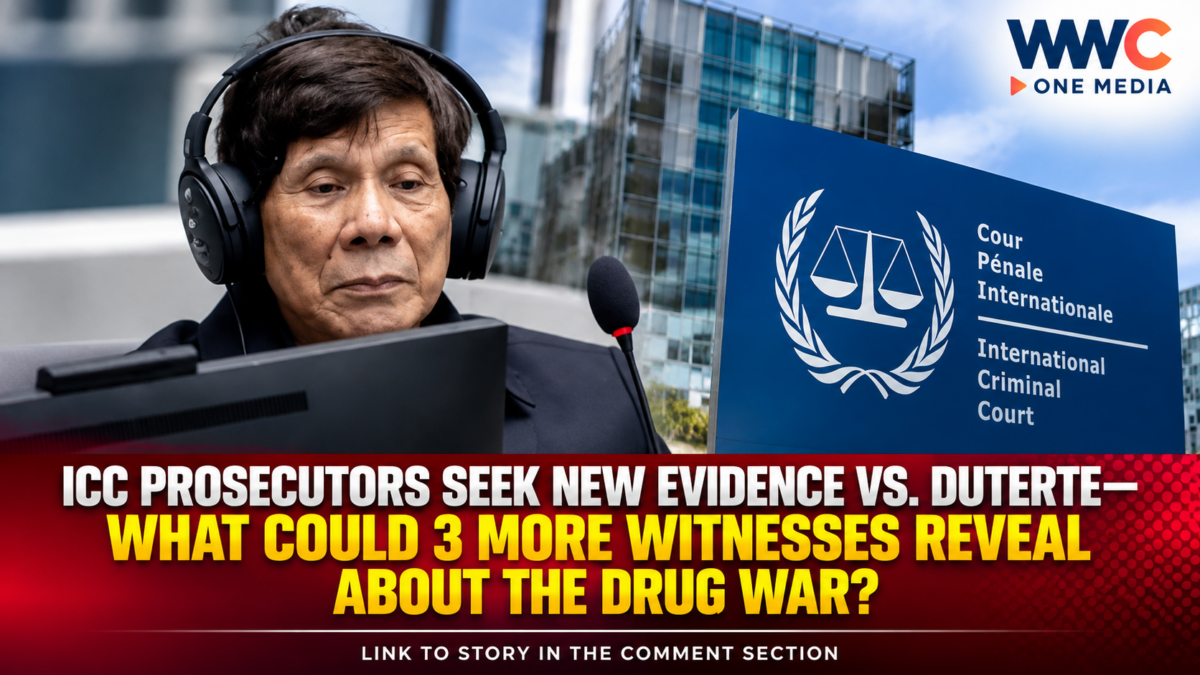
MANILA, Philippines — Prosecutors at the International Criminal Court are seeking to strengthen their case against former president Rodrigo Duterte by asking judges to admit an expert report and the previously recorded testimonies of three additional witnesses in proceedings involving alleged crimes against humanity linked to the Philippines’ war on drugs.
In two public redacted filings dated October 23, the prosecution asked the ICC’s Trial Chamber III to accept the materials as evidence under Rule 68(3) of its Rules of Procedure and Evidence. The requests are intended to help streamline proceedings ahead of Duterte’s scheduled trial opening on November 30.
The latest applications put renewed attention on what prosecutors say the evidence could establish about alleged killings, police operations and the possible chain of responsibility behind the campaign against suspected criminals.
However, the judges have yet to rule on the requests, and the publicly available documents conceal important details about the witnesses and the expert report.
What could the three witnesses reveal?
The three witnesses, identified only as P-1155, P-1156 and P-1157, are being presented by prosecutors as sources of evidence concerning alleged murders covered by Count 3 of the case.
According to the prosecution’s filings, the witnesses’ accounts address different aspects of the alleged incidents:
- Witness P-1155: The recorded testimony reportedly discusses alleged orders “from above,” instructions to police officers and a reward connected to one incident.
- Witness P-1156: The account concerns alleged orders, planning, preparations and payments associated with the killings.
- Witness P-1157: The testimony reportedly covers a killing and a planned police operation against the targets.
Prosecutors argue that the accounts are internally consistent and support one another. They also contend that the testimony could help establish the alleged policy of neutralizing suspected criminals through violent acts, including murder.
The prosecution further maintains that the evidence from P-1155 and P-1156 could help address Duterte’s alleged knowledge and intent. The specific incidents and other details remain partly redacted in the public filings.
These are allegations and descriptions advanced by the prosecution, not judicial findings that the alleged events occurred as described.
Why does the prosecution want an expert report admitted?
In a separate application, prosecutors asked judges to admit an expert report prepared by a witness identified as P-1400, along with 15 associated items.
The expert’s field of specialization and much of the report’s subject matter were redacted from the public document. Consequently, the available information does not establish the full scope of the expert’s proposed evidence.
The prosecution says the report is relevant, reliable and probative of issues the judges must resolve.
It has also proposed a shorter examination of the expert in court. Instead of spending an estimated five hours on direct examination, prosecutors want the witness to adopt the written report and undergo approximately two hours of supplementary questioning focused on matters needing clarification.
The prosecution argues that this would save court time without eliminating the defense’s opportunity to challenge the evidence. The defense, victims’ representatives and judges would retain opportunities to question the witness under the proposed arrangement.
Duterte’s defense rights remain part of the process
The prosecution’s applications are based on Rule 68(3), a provision governing the admission of qualifying previously recorded testimony under specified conditions.
The prosecution argues that using recorded testimony can make proceedings more efficient while allowing the witnesses to appear in court for questioning and cross-examination.
The distinction matters: seeking to admit evidence is not the same as having that evidence accepted by the court. Trial Chamber III must decide whether the requests satisfy the applicable legal requirements.
The latest applications also do not establish Duterte’s guilt. His defense retains the right to contest the evidence and challenge the prosecution’s case. The ICC recognizes the presumption of innocence and the right to a fair trial.
A broader pattern of prosecution evidence
The latest requests follow earlier efforts to introduce additional witness accounts.
In separate reporting published October 24, Philstar.com reported that prosecutors had also sought admission of recorded testimony from three other witnesses—P-0008, P-1164 and P-1303—in an earlier filing made public October 21. Prosecutors said those accounts could help establish an alleged pattern of police killings.
Meanwhile, VERA Files reported on an earlier application involving five more witnesses, identified as P-1087, P-1151, P-1158, P-1161 and P-1204. That filing was dated October 16 and formed part of the prosecution’s broader effort to introduce previously recorded evidence ahead of trial.
Taken together, these applications show the prosecution seeking to organize and present multiple strands of evidence before the trial begins. Whether the material will be admitted, how much weight the judges will give it and how the defense will respond remain matters for the court.
What happens next in Duterte’s ICC case?
The ICC has scheduled a final status conference for November 2, 2026, to address outstanding preparations before the scheduled opening of the trial on November 30, 2026.
The court’s official case information confirms that Duterte faces three counts of crimes against humanity involving alleged murders and attempted murders committed in the context of the war on drugs between November 1, 2011, and March 16, 2019. The allegations cover the period when he served as Davao City mayor and later as president.
Duterte was transferred to ICC custody in The Hague in March 2025. In April 2026, the ICC confirmed the charges and committed him to trial. The court’s case page lists November 30 as the scheduled opening date.
The next significant developments will include judicial decisions on pending evidence applications and further trial preparations.
For now, the central question is whether the court will admit the proposed expert report and witness accounts—and how the evidence, if accepted, will be assessed alongside the rest of the prosecution’s case and the defense’s response.