
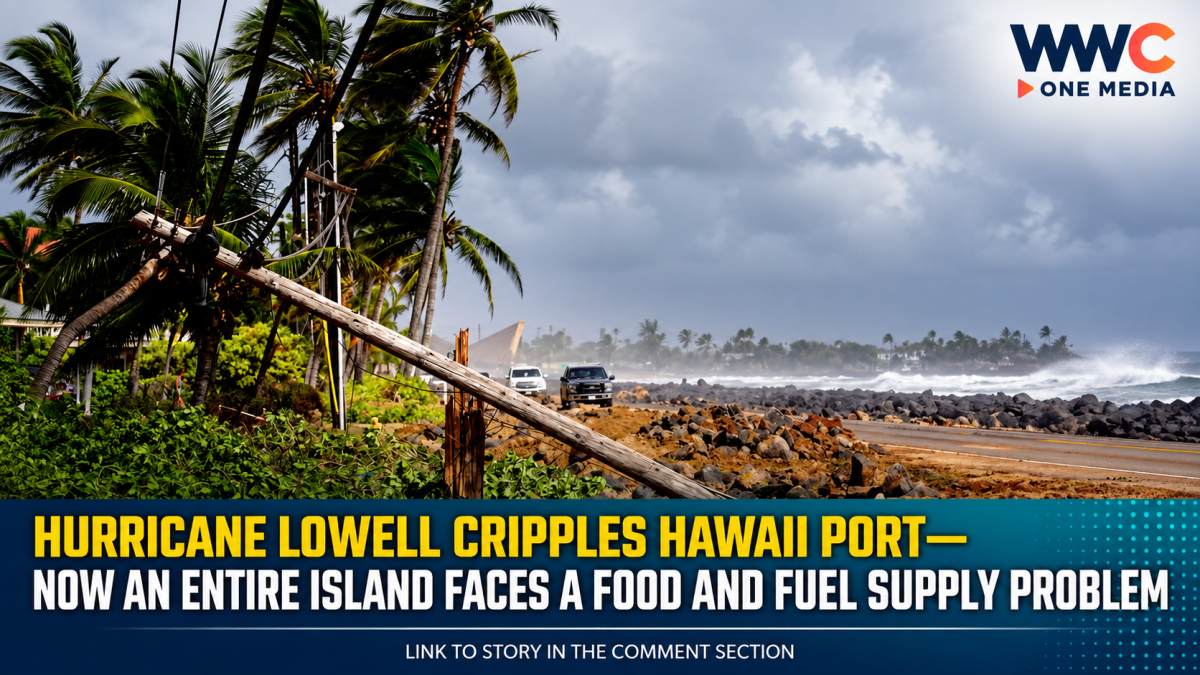
LĀNAʻI, Hawaii — Hurricane Lowell has turned a critical supply lifeline for one of Hawaii’s smaller islands into a major recovery challenge, after severe storm damage shut down Lānaʻi’s only commercial cargo harbor and disrupted deliveries of food, fuel and other essential goods.
Kaumālapaʻu Harbor, which serves as the primary maritime gateway for Lānaʻi’s roughly 3,000 residents, was rendered inoperable after Hurricane Lowell battered Hawaii’s western islands with powerful winds, heavy surf and storm surge.
State transportation officials now estimate that repairs will take about two weeks, raising concerns about how the island will receive its next shipments while the harbor remains closed.
The harbor is particularly important because Lānaʻi relies on a once-a-week barge service to bring in supplies. Hawaiʻi Public Radio reported that the latest barge delivery was canceled after the storm damage made the harbor unsafe for vessel operations.
Fuel lines grow as residents rush to prepare
The disruption has already been felt at the island’s gas stations and grocery stores.
Hawaii News Now reported long lines for gasoline, with some residents waiting as long as two hours. A $50 fuel limit was also imposed as authorities and residents tried to conserve available supplies.
Stores also saw a rush of customers stocking up on food and other necessities as uncertainty grew over when the next cargo shipment could arrive.
Local officials have warned that the situation is especially serious because the harbor is not simply a commercial facility—it is effectively a lifeline for the island.
According to Hawaiʻi Public Radio, Lānaʻi had an estimated 25 days of fuel supplies at the time, but residents were already lining up at gas stations following the harbor shutdown.
What happened to the harbor?
The hurricane caused extensive physical damage to Kaumālapaʻu Harbor.
Hawaii Department of Transportation officials said repairs include fixing a sinkhole, repairing the pier apron and clearing shipping containers and other debris from the waterway before vessel operations can safely resume.
Hawaiʻi Public Radio reported that storm-driven waves damaged the concrete structure, while heavy equipment used to secure barges was also displaced. Some shipping containers were swept away, with at least one believed to have ended up across the harbor or potentially underwater.
The damage means reopening the port is not simply a matter of clearing debris. Crews must first ensure that the harbor is structurally safe for cargo vessels.
Hawaii looks for alternative ways to move supplies
With Lānaʻi’s main cargo gateway closed, state officials are exploring alternative ways to get essential goods to residents.
The Hawaiʻi Department of Transportation said it was working with community partners on alternatives for delivering consumer goods while repairs continue.
Governor Josh Green has also asked the federal government for an expedited major disaster declaration covering the areas affected by Hurricane Lowell.
The request specifically identifies Lānaʻi’s damaged harbor as a major concern and seeks federal assistance that could include emergency power, commodity deliveries and temporary marine cargo capability for Lānaʻi.
The damage extends far beyond Lānaʻi
The harbor crisis is only one part of Hurricane Lowell’s impact on Hawaii.
Kauaʻi was among the hardest-hit islands. At the height of the storm, approximately 33,000 of the island’s 36,000 utility accounts—about 90%—experienced power outages, according to the governor’s office.
Roads were blocked by flooding, fallen trees and damaged utility infrastructure, while ports and Līhuʻe Airport were also temporarily closed during the height of the storm.
The Associated Press reported that Hurricane Lowell caused extensive coastal damage on Kauaʻi, including damaged roads, flooded properties and power outages. At least two deaths have been linked to the storm.
The storm did not need to make a direct landfall on the islands to cause significant destruction. Its powerful winds, enormous waves and storm surge were enough to damage coastal infrastructure and disrupt transportation and essential services.
Officials warn recovery will take time
Hawaii officials are now racing against time to restore transportation links and essential services while preventing shortages from becoming more severe.
For Lānaʻi, the immediate priority is finding a safe way to bring in food, fuel, medical supplies and other necessities while Kaumālapaʻu Harbor undergoes repairs.
Governor Green said the scale of the damage requires rapid federal assistance, arguing that Hawaii should not have to wait for every damaged road, utility line and harbor to be fully assessed before emergency help begins.
As crews begin rebuilding, residents on Lānaʻi are facing an unsettling reality: their island’s main supply gateway is out of service, and the next few weeks could test how quickly Hawaii can keep essential goods moving after a major storm.

Leave a Reply