
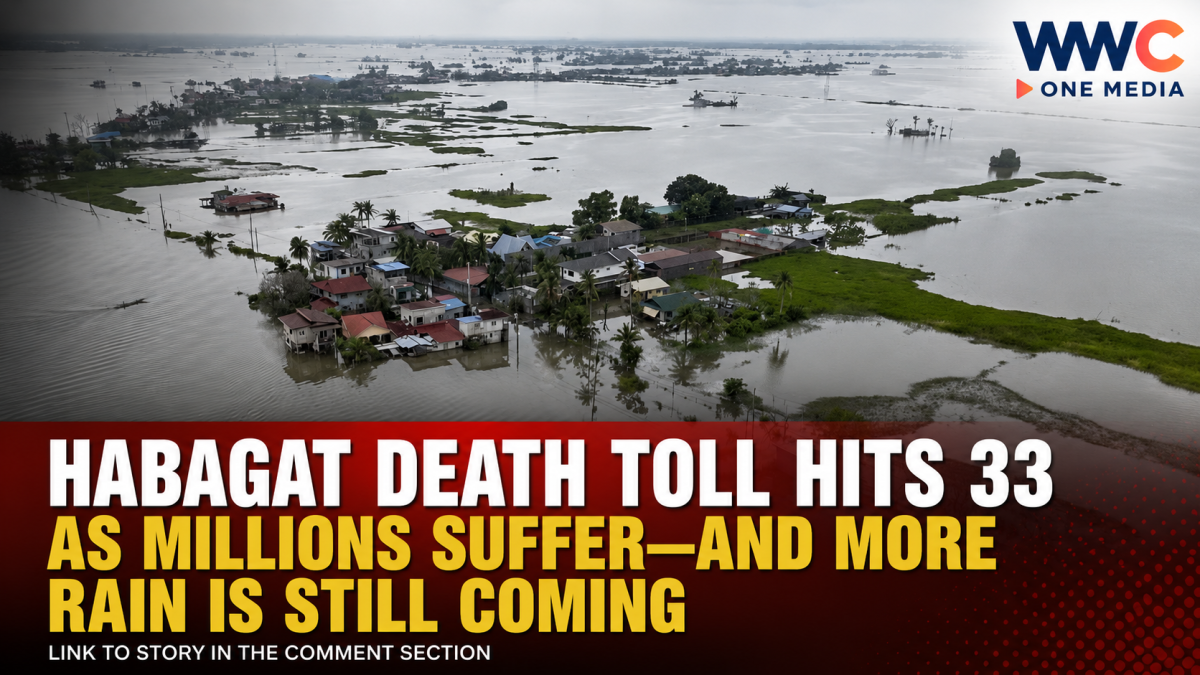
MANILA, Philippines — The deadly impact of the southwest monsoon, locally known as habagat, continues to unfold across the Philippines, with the death toll rising to 33 and an estimated 8.8 million people affected nationwide, according to the Office of Civil Defense (OCD).
OCD Director Gregorio Tomas said on Monday that aside from those who died, 19 people were injured while three others remain missing, underscoring the widespread human toll of weeks of heavy rains, flooding and rain-related disasters.
The latest figures mark another increase from the 32 deaths and around 8 million affected individuals reported by the OCD just two days earlier, as authorities continue to assess and validate casualties and damage in hard-hit communities.
Millions Hit by Weeks of Flooding and Disaster
The crisis has stretched across multiple regions, with the combined effects of the southwest monsoon and recent tropical weather systems leaving communities vulnerable to floods, landslides, drowning incidents and other weather-related hazards.
Earlier OCD data showed that Benguet recorded the highest number of reported fatalities, many linked to landslides, while deaths were also reported in areas including Rizal, Batangas, Mindoro, Quezon, Negros Occidental and Caloocan. The disaster agency had also reported thousands of damaged homes and billions of pesos in infrastructure and agricultural losses.
The scale of the disaster has forced thousands of residents to seek safety in evacuation centers, while local governments and national agencies continue relief and response operations.
In Central Luzon alone, the situation has been particularly devastating. Recent reports documented deadly flooding, landslides and strong currents, including a boat tragedy involving members of an Aeta community in Zambales and separate landslide incidents in the region.
More Rain Could Bring More Danger
The threat is far from over.
The Philippine Atmospheric, Geophysical and Astronomical Services Administration (PAGASA) said the habagat continues to affect Metro Manila, much of Luzon and the western section of the Visayas, bringing cloudy skies and scattered rains and thunderstorms.
Adding to concerns, Tropical Depression Pilandok is expected to enhance the southwest monsoon, potentially bringing additional rainfall to areas already saturated by weeks of bad weather.
With rivers swollen, soil weakened and many communities still recovering from previous flooding, authorities are urging the public—particularly those living in flood-prone and landslide-prone areas—to remain alert to weather advisories and evacuation orders.
A Disaster That Continues to Grow
The rising casualty count highlights a grim reality: the disaster is not measured only by the number of lives lost. Behind the figure of 8.8 million affected Filipinos are families displaced from their homes, farmers facing damaged crops, communities cut off by floods and residents wondering whether the next round of rain will bring another emergency.
As the country watches the skies once again, the question is no longer simply how much rain has already fallen.
It is how many more communities can withstand what may still be coming.



Leave a Reply