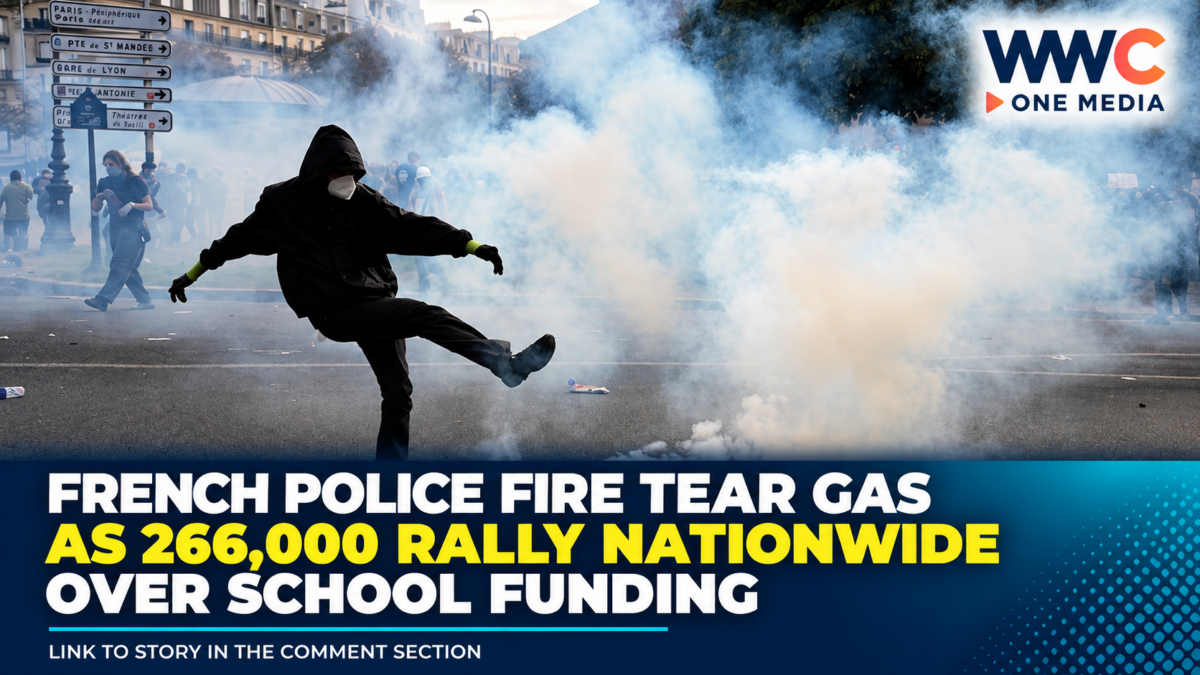
Police fired tear gas and used water cannons in several French cities on Tuesday as more than a quarter of a million people joined nationwide demonstrations demanding greater funding and better conditions in schools.
France’s Interior Ministry estimated that 266,000 people, including about 56,000 in Paris, took part in the rallies on Oct. 6. The demonstrations marked the biggest escalation yet in a student-led movement that began in the Paris region in mid-September and has since spread across the country.
The protests are putting further pressure on the government of Prime Minister Sébastien Lecornu and President Emmanuel Macron as France grapples with mounting public anger over education, government spending and deteriorating public services.
Tear gas and clashes erupt in several cities
Most of Tuesday’s demonstrations were peaceful, but confrontations broke out on the fringes of marches in Paris, Strasbourg, Rennes and Toulouse.
Riot police deployed tear gas and water cannons as some protesters threw objects, set fires or clashed with officers. In Paris, small groups confronted police near the end of an otherwise largely peaceful march.
Nearly 500 people were detained on Tuesday, according to the Interior Ministry.
Interior Minister Laurent Nuñez defended the police response, saying officers had acted proportionately in almost all cases and that some demonstrations had crossed into rioting, requiring intervention.
The use of riot-control measures against young protesters has nevertheless intensified criticism from parents, teachers and political groups, particularly following a series of serious injuries during the unrest.
Students say schools are being left behind
At the centre of the demonstrations are complaints about underfunded and overcrowded schools, staff shortages and deteriorating facilities.
Students have described classrooms lacking basic equipment, excessive workloads and buildings that can become extremely hot during summer. Some have also reported poor maintenance and unsanitary conditions.
Teachers and parents have increasingly joined the movement, arguing that students’ complaints reflect wider problems within France’s education system.
At the Hélène Boucher high school in Paris, parents stood between students and police during Tuesday’s unrest.
One parent supporter, Emilia Sichili Suriam, said young people had a legitimate right to demonstrate and demand better conditions.
The students’ demands are primarily focused on education rather than immigration or religion, with concerns including understaffing, overcrowding, school infrastructure and government funding.
More than 6,500 arrests since protests began
The scale of the police response has become a major source of controversy.
Authorities said more than 6,500 people had been arrested since the protests began, with most of those detained being minors.
The government says police have been forced to intervene because some blockades have involved vandalism, fires and attacks. Protesters and rights advocates, however, have accused authorities of using excessive force against teenagers.
The debate intensified after a 15-year-old boy lost a hand in an incident involving a police stun grenade on Monday.
Prime Minister Lecornu told lawmakers that at least 215 teenagers and 85 education staff had been injured, while more than 700 police officers had also suffered injuries during the unrest.
Lecornu described the injuries affecting the education system as the country’s heaviest toll in decades and said the government needed to listen to students’ concerns.
He also said allegations of police misconduct would be investigated.
Nearly 900 schools affected
The unrest has disrupted education across France.
The Education Ministry said classes were totally or partially suspended at 891 schools on Tuesday, as authorities attempted to prevent further clashes and damage.
The government has also launched an online platform allowing high school students to anonymously report problems at their schools and explain what changes they want.
The move is intended to demonstrate that authorities are listening while giving students a formal channel to raise concerns beyond street demonstrations.
Student organisations, however, have indicated that protests could continue unless they see concrete action.
Some groups have already called for further demonstrations later this week.
Budget pressures fuel anger
The protests come as the French government faces difficult choices over public spending.
The proposed 2027 budget would increase education spending by 1.7 per cent to €65.53 billion, excluding teacher pensions. That increase is below the rate of inflation.
At the same time, France’s debt-servicing costs are expected to reach about €74.5 billion, potentially making debt payments the government’s largest budget expense next year.
That has made it harder for the government to respond to demands for substantially more resources for schools.
Students argue that the financial constraints are being felt directly in classrooms through shortages of teachers, overcrowding and ageing infrastructure.
For many protesters, the dispute is therefore about more than a single year’s education budget. It reflects concerns about whether young people are receiving sufficient support and opportunities ahead of their entry into university and the workforce.
Protests add pressure ahead of presidential election
The demonstrations are also unfolding against a highly charged political backdrop.
Macron cannot seek a third consecutive presidential term, and France is heading towards its next presidential election in the spring.
The unrest has therefore become another major challenge for a government already dealing with weak public support, political divisions and pressure to control the country’s finances.
The protests have also become politically contested. Some government officials and intelligence assessments have alleged that the far-left France Unbowed party has helped drive the movement, while the party has rejected accusations that it is responsible for the unrest.
Meanwhile, some teachers’ unions have backed industrial action in solidarity with students.
Students vow to keep protesting
The demonstrations have grown substantially since they first emerged at schools around the Paris region in September.
What began as complaints from teenagers about classroom conditions has developed into a nationwide movement involving students, parents, teachers and unions.
Suzanne Nijdam, president of a federation of student associations, said protesters would continue demonstrating until authorities addressed their complaints.
For the government, the challenge now is to distinguish between legitimate student grievances and violence that has accompanied some demonstrations.
With hundreds of thousands of people now taking to the streets, the school protests have become one of the most significant domestic challenges facing the French government in the final months before the presidential election.
The question is whether the government can turn the growing anger into negotiations and reforms before the unrest escalates further.