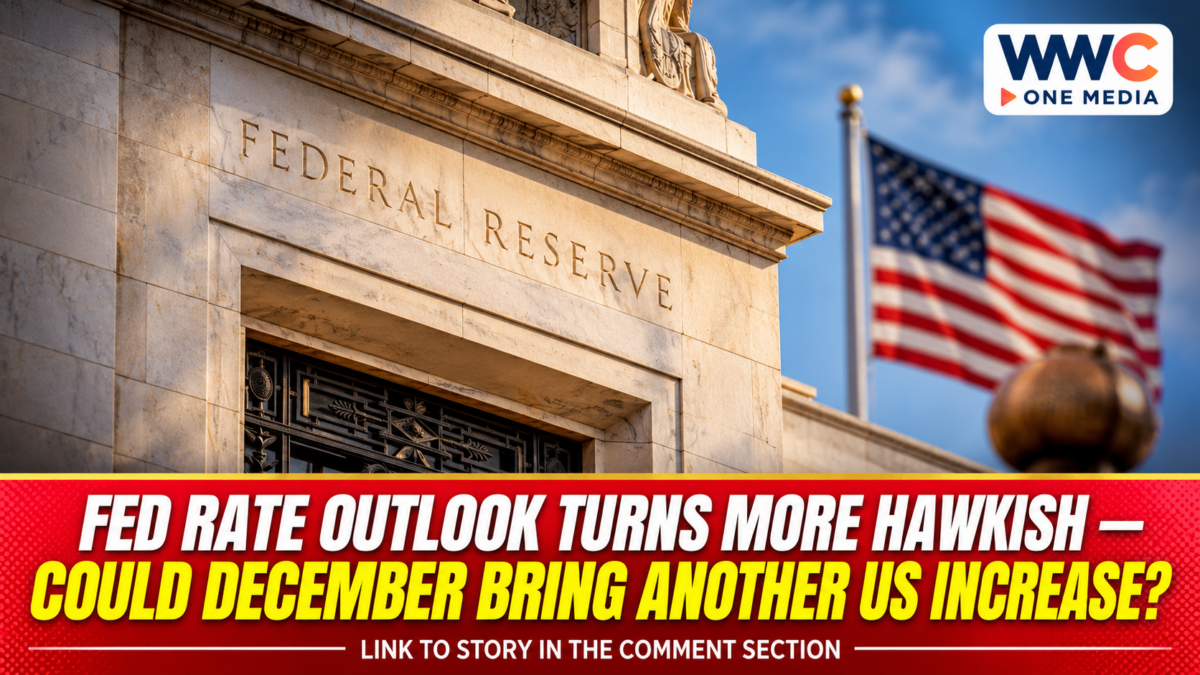
The Federal Reserve’s latest meeting minutes show that almost all participating policymakers considered further interest-rate increases likely to be appropriate, even after the central bank chose to hold its benchmark rate steady in October. Released on Nov. 18, the record also reveals that some officials were open to considering a larger increase if incoming inflation figures proved unfavourable.
The Fed rate outlook has therefore become more complicated ahead of the December policy meeting. Policymakers are weighing persistent price pressures against the possibility that additional tightening could place greater strain on borrowing, investment and interest-sensitive parts of the economy.
For Philippine readers, the timing is notable. The Bangko Sentral ng Pilipinas separately raised its own benchmark rate by 50 basis points on Nov. 19, taking the target reverse repurchase rate to 5.50%. The two central-bank decisions are distinct, but both underline the importance of inflation and financial conditions in current policy discussions. Monetary Policy:+1
Fed rate outlook: Why policymakers are still considering increases
The Federal Open Market Committee (FOMC) maintained its federal funds target range at 3.75% to 4% during its Oct. 27–28 meeting. The decision passed by a 10–2 vote.
The two members who opposed the decision, Lisa D. Cook and Beth M. Hammack, preferred an increase of 0.25 percentage point at that meeting. Their dissent shows that the committee was not unanimous about whether to pause, even as most members supported holding the range temporarily. Monetary Policy:
The minutes provide a more detailed picture of the discussion. Almost all participants judged that, under their baseline expectations for inflation and employment, further action to raise the federal funds rate would likely be appropriate to bring inflation back to the committee’s 2% objective.
That language is important, but it does not amount to a scheduled increase. The minutes describe policymakers’ assessment at the October meeting; the committee must still consider subsequent economic information and vote on its next policy action. Monetary Policy:
Inflation remains the central concern
Policymakers identified several sources of continuing price pressure. The minutes describe inflation as broad-based, with high energy costs remaining a significant contributor.
They also discussed the effect of investment in artificial intelligence infrastructure. Demand for products associated with the AI buildout was placing pressure on supply and pushing up prices for some technology-related consumer goods. Some participants warned that these pressures could spread beyond industries directly involved in data-centre construction. Monetary Policy:+1
The concern is not limited to a temporary increase in individual product prices. Some policymakers worried that prolonged inflation above target could become embedded in the expectations of households and businesses, making it more difficult to restore price stability.
The committee also acknowledged that inflation expectations over the medium and longer term remained consistent with its 2% objective. This creates a more complicated picture: officials are concerned about current inflation, but they have not concluded that longer-term expectations have become unanchored. Monetary Policy:
WWC has previously examined the inflation pressures surrounding the debate in its report on US producer prices reaching a 6.5% annual increase. The latest FOMC minutes add a policy dimension to that discussion by showing how officials are interpreting the broader inflation risks.
Why some officials considered a larger increase
The October minutes also reveal that a few participants believed an increase of more than 25 basis points could warrant consideration at the next meeting if incoming inflation data were unfavourable.
This is not confirmation that the FOMC intends to deliver a half-percentage-point increase. It records a possibility raised during the discussion, with the eventual decision still dependent on the data and the economic outlook.
Some participants argued that delaying action could allow high inflation to become more entrenched or require a larger adjustment later. Others supported holding rates to gather more information and assess how the September increase was affecting the economy.
That disagreement reflects the difficult balance facing the central bank. Raising rates can restrain demand and help contain inflation, but higher borrowing costs can also weigh on businesses, housing activity and investment. Monetary Policy:+1
The minutes show that policymakers were already observing tighter financial conditions in some areas. Higher mortgage rates and wider credit spreads for certain riskier borrowers were among the developments discussed. Participants also noted that borrowing costs and more selective lending had weighed on residential investment, commercial real estate and small-business borrowing. Monetary Policy:
The debate has also featured in individual officials’ public remarks. WWC previously covered Federal Reserve Bank of San Francisco President Mary Daly’s discussion of further tightening and the housing concerns raised in the wider rate debate. Individual speeches and regional bank presidents’ views, however, should not be mistaken for formal FOMC decisions.
What the latest Fed discussion means for the Philippines
The Federal Reserve’s policy path matters to international markets because US interest rates influence the relative appeal of dollar-denominated assets and the cost of financing in global markets.
If US rates rise, some investors may find dollar assets more attractive. That can contribute to currency pressure in emerging markets, although exchange rates also respond to domestic economic conditions, trade flows, investor sentiment and other global developments.
For Philippine businesses, changes in international financing conditions can matter when they borrow in foreign currencies, import dollar-priced goods or manage overseas obligations. A stronger US dollar could raise peso-denominated costs for some importers, but the size and timing of any effect cannot be inferred from the Fed minutes alone.
The domestic policy picture also changed on Nov. 19. The BSP raised its target reverse repurchase rate by 50 basis points to 5.50%, while adjusting the overnight deposit and lending facility rates to 5.00% and 6.00%, respectively. The central bank said the adjustment would tighten monetary conditions, help contain spillover effects and anchor inflation expectations. BSP+1
This was a separate Philippine monetary policy decision, not an automatic response to the Federal Reserve’s minutes. The BSP has its own inflation and economic conditions to assess. Its latest action nevertheless makes the global interest-rate environment particularly relevant for local borrowers and businesses.
What happens next
The next scheduled FOMC meeting is Dec. 8–9, 2026. Before then, policymakers will assess additional economic information and consider whether inflation is easing sufficiently or remains a risk to the 2% objective. Monetary Policy:
The minutes do not settle whether the committee will raise rates in December, how large any increase might be, or whether it will choose to hold again. They establish that further tightening was widely considered appropriate under policymakers’ baseline outlooks at the October meeting.
For markets and businesses, the central issue is therefore not simply whether a rate increase is possible. It is whether incoming evidence will strengthen the case for another move, or give officials enough reason to wait.
Frequently asked questions
Did the Federal Reserve raise interest rates in October 2026?
No. The FOMC maintained its target range at 3.75% to 4% at its Oct. 27–28 meeting, with two members dissenting in favour of an increase. Monetary Policy:
Do the Fed minutes confirm a December rate hike?
No. They show that almost all participants considered further increases likely to be appropriate under their baseline outlooks. The December decision remains pending. Monetary Policy:
Could the Fed raise rates by more than 0.25 percentage point?
A few participants said an increase larger than 25 basis points could warrant consideration if incoming inflation data were unfavourable. That was a discussion point, not an approved policy decision. Monetary Policy:
When is the next Federal Reserve meeting?
The next scheduled FOMC meeting is Dec. 8–9, 2026. Monetary Policy:
Did the Federal Reserve directly cause the BSP’s Nov. 19 rate increase?
The available official records do not establish that. The BSP announced its own 50-basis-point increase and cited the need to tighten monetary conditions and contain spillover effects. The Fed minutes and BSP decision are separate policy records.