
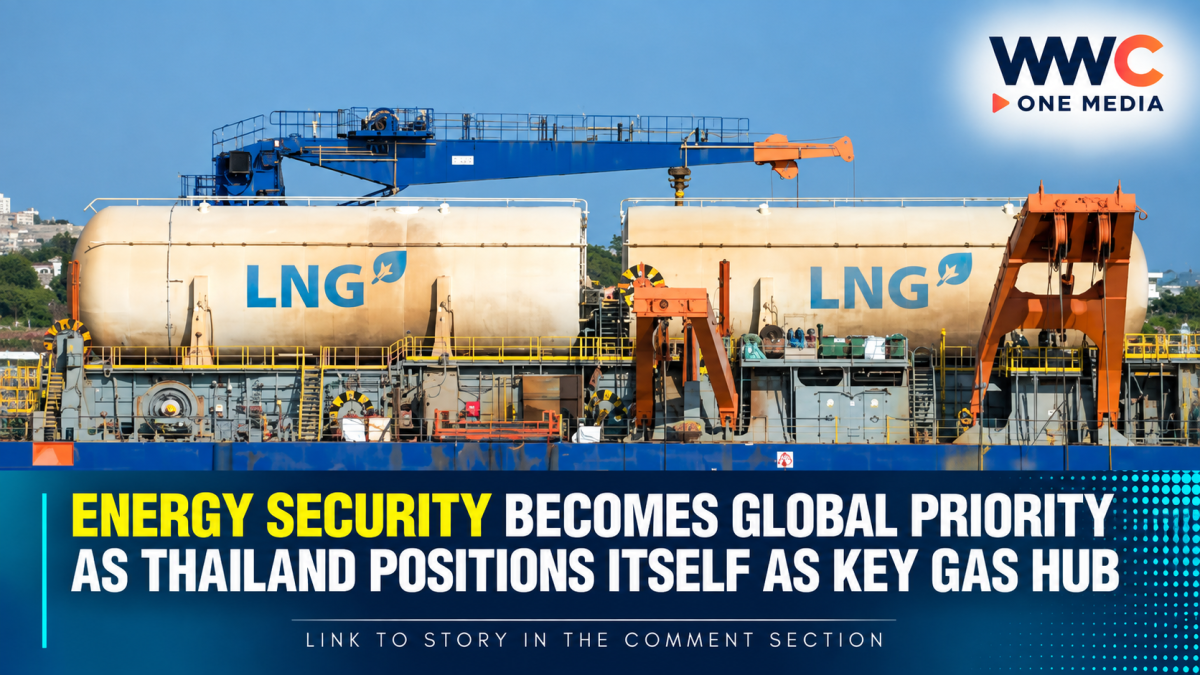
Energy security has become a top priority for governments around the world as geopolitical tensions, supply disruptions and volatile fuel prices expose the risks of relying too heavily on limited energy sources.
The shift is putting natural gas and liquefied natural gas at the centre of efforts to secure reliable energy supplies, while also creating new opportunities for Thailand to strengthen its position as a regional energy hub.
The issue is receiving renewed attention as the global energy market faces heightened uncertainty. Disruptions to major shipping routes and conflicts affecting oil and gas-producing regions have demonstrated how quickly energy shortages can spread across borders.
For countries that depend heavily on imported fuel, the risks are particularly significant.
Thailand is among the Asian economies seeking to strengthen its energy resilience by diversifying supply sources, expanding gas infrastructure and improving its ability to respond to sudden changes in global energy markets.
Natural gas remains particularly important because it can provide relatively flexible electricity generation while countries gradually increase their use of renewable energy.
Unlike some renewable sources, gas-fired power plants can be adjusted according to demand, helping electricity systems manage periods when solar or wind generation is unavailable.
That flexibility is becoming increasingly valuable as countries add more renewable energy to their power grids.
Thailand has also been expanding its role in the LNG market as domestic natural-gas production faces long-term constraints.
Greater access to LNG imports can help compensate for declining domestic supplies and provide another source of fuel for power generation and industry.
However, greater dependence on imported LNG also exposes Thailand to international price volatility.
When global demand surges, Thailand must compete with other Asian buyers for available cargoes, potentially pushing up electricity-generation costs and putting pressure on consumers and businesses.
That makes energy diversification increasingly important.
Thailand is looking at a combination of domestic resources, LNG, renewable energy and improved infrastructure to reduce the risks associated with relying on any single source.
The country’s strategic location also gives it an opportunity to play a wider role in regional energy trade.
As Southeast Asia’s economies expand, demand for electricity and industrial energy is expected to continue rising.
Thailand could potentially serve as a hub connecting energy suppliers with markets across the region, particularly as infrastructure and cross-border power and gas networks develop.
The global energy transition is adding another layer of complexity.
Countries are under pressure to reduce carbon emissions, but they cannot afford to sacrifice reliability or economic competitiveness.
Natural gas is therefore increasingly being viewed by many governments as a transitional fuel that can support economic growth while renewable-energy capacity expands.
The challenge is ensuring that new gas infrastructure does not lock economies into long-term dependence on fossil fuels.
Thailand will need to balance energy security, affordability and environmental commitments as it makes investment decisions that could shape its energy system for decades.
The current global situation has made that balance more urgent.
Oil and gas prices can rise sharply when geopolitical risks threaten major production areas or shipping routes. At the same time, extreme weather and climate-related disruptions can affect both energy demand and infrastructure.
Energy security is consequently no longer simply a question of having enough fuel.
It increasingly involves maintaining diversified supply chains, resilient infrastructure, strategic reserves, flexible power generation and strong international partnerships.
For Thailand, that means developing an energy system capable of absorbing global shocks without passing the full impact on to households and businesses.
The country’s participation in the global energy industry could also create opportunities for investment, infrastructure development and new energy partnerships.
But competition for LNG, rising investment costs and the transition towards cleaner energy will require careful long-term planning.
As governments reassess their energy strategies, the central lesson from recent market disruptions is becoming increasingly clear: energy security and economic security are closely linked.
Thailand’s challenge will be to secure enough affordable energy today while building a cleaner and more resilient system for the future.
If it can successfully balance those competing priorities, the country could emerge not only as a major energy consumer but also as an increasingly important energy hub for Southeast Asia.




Leave a Reply