
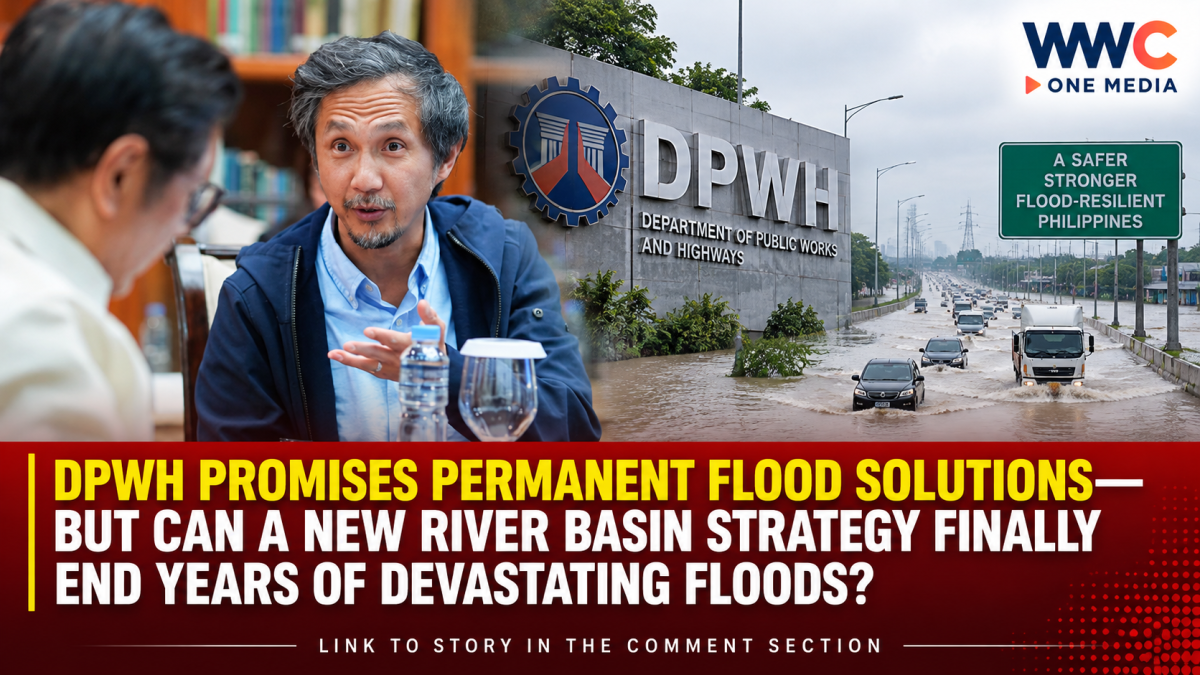
The Department of Public Works and Highways (DPWH) is moving away from piecemeal flood-control projects and toward what officials describe as a more permanent, science-based solution to the Philippines’ worsening flooding crisis.
The push comes after weeks of severe flooding in several parts of the country, particularly in Central Luzon, where prolonged heavy rains once again submerged communities, disrupted major highways and exposed long-standing weaknesses in the country’s flood-control infrastructure.
DPWH officials are now focusing on permanent and more effective interventions, with a growing emphasis on managing entire river basins rather than relying solely on isolated drainage systems, dikes and other localized projects.
From Temporary Fixes to Permanent Flood Solutions
The government’s new direction centers on a holistic approach to flood management.
According to recent government statements, the DPWH is updating flood management master plans for the country’s 18 major river basins and other critical rivers. As of May 31, 2026, updated master plans and feasibility studies had already been completed for 16 major basins, while plans covering the Cagayan River Basin and the Pasig-Marikina-Laguna de Bay system are targeted for completion by the end of the year.
The move reflects a major shift in how the government plans to address flooding.
Rather than treating each flooded road, barangay or city as a separate problem, officials are increasingly looking at how water moves through entire watersheds and river systems.
The Palace said the river basin approach is considered more appropriate for the Philippines because flood risks vary dramatically depending on geography, terrain and local conditions.
Central Luzon Flooding Puts Pressure on DPWH
The renewed focus on permanent solutions comes as Central Luzon continues to suffer from recurring and widespread flooding.
DPWH has announced plans to implement more permanent flood-control measures in provinces affected by prolonged inundation, as communities face repeated damage from heavy rains and overflowing waterways.
The flooding has also affected critical infrastructure.
Earlier this month, the DPWH began implementing solutions in the flood-prone section of the North Luzon Expressway in San Simon, Pampanga, after floodwaters caused kilometers-long traffic congestion and disrupted motorists.
But infrastructure experts and observers have warned that isolated projects may not be enough.
An Inquirer analysis on the recent Central Luzon flooding argued that the crisis demonstrated the limitations of fragmented and short-term flood-control responses, strengthening calls for a more integrated approach to managing waterways, drainage and development.
Marcos: Flood Control Must Be Based on a Master Plan
President Ferdinand Marcos Jr. has also pushed for a more comprehensive response to flooding.
The President said the Philippines already has flood-control master plans, but many of them were not properly implemented for decades and now need to be updated to reflect present-day realities, including increasingly intense rainfall and climate change.
However, the government has also clarified that there is no single consolidated national flood-control plan covering the entire country in one document.
Instead, DPWH Secretary Vince Dizon has explained that the department’s strategy relies on separate master plans for major river basins, following recommendations from technical and international partners.
This means the long-term solution could look very different from one region to another.
A flood-control system suitable for Metro Manila may not work in Central Luzon, Mindanao or mountainous areas in Northern Luzon.
Science and Data at the Center of New Flood Plans
The DPWH says its updated flood management master plans will rely more heavily on scientific data.
The department is working with the University of the Philippines’ Project NOAH, local government units and other agencies to integrate hazard mapping and scientific information into future flood-management projects.
Government guidelines also call for flood-control infrastructure to be supported by hydrologic studies, geospatial data, vulnerability assessments and environmental analysis.
That could mean future flood projects will go beyond simply building higher walls or wider canals.
Potential solutions may include:
- Improved and expanded drainage systems
- River and waterway rehabilitation
- Pumping stations
- Dredging where appropriate
- Detention and catchment basins
- Underground water-storage systems
- Nature-based flood mitigation
- Better coordination with local governments
- River basin-wide planning and land-use management
Metro Manila Also Tests New Approaches
The search for permanent flood solutions is not limited to Central Luzon.
In Metro Manila, the government is also studying catchment and nature-based projects under the MMDA’s Sponge City initiative. Officials have identified priority locations and completed feasibility studies for dozens of proposed flood-mitigation sites.
DPWH has also explored detention basins in Quezon City and major drainage improvements in flood-prone areas such as España Boulevard in Manila.
Meanwhile, existing emergency and maintenance measures continue.
DPWH-NCR has been carrying out declogging and drainage-cleaning operations under Oplan Kontra Baha, removing thousands of cubic meters of waste and sediment from drainage systems in Metro Manila.
But officials acknowledge that cleaning drains and responding after floods occur cannot be the country’s only answer.
The Real Test: Can the Plans Finally Be Executed?
The Philippines has had flood-control plans for years.
The bigger question now is whether the latest strategy can finally be implemented consistently, transparently and at a scale large enough to protect communities.
Recent controversies involving flood-control projects have also intensified public scrutiny over how government funds are spent and whether infrastructure projects are actually completed and built to the required standards.
The challenge for DPWH is therefore bigger than constructing new infrastructure.
It must ensure that flood projects are based on sound science, coordinated with local governments, designed for changing climate conditions and properly implemented from planning to completion.
For millions of Filipinos who experience flooding year after year, the promise of permanent solutions will ultimately be measured not by the number of plans announced, but by one question:
When the next extreme rains come, will the water finally stop returning?
As the DPWH updates river basin master plans and rolls out new flood-mitigation projects, the government is betting that a more integrated, science-driven approach can finally replace decades of fragmented solutions.
But with extreme weather becoming increasingly unpredictable and many communities still vulnerable, the race to build a truly flood-resilient Philippines may be far from over.



Leave a Reply