
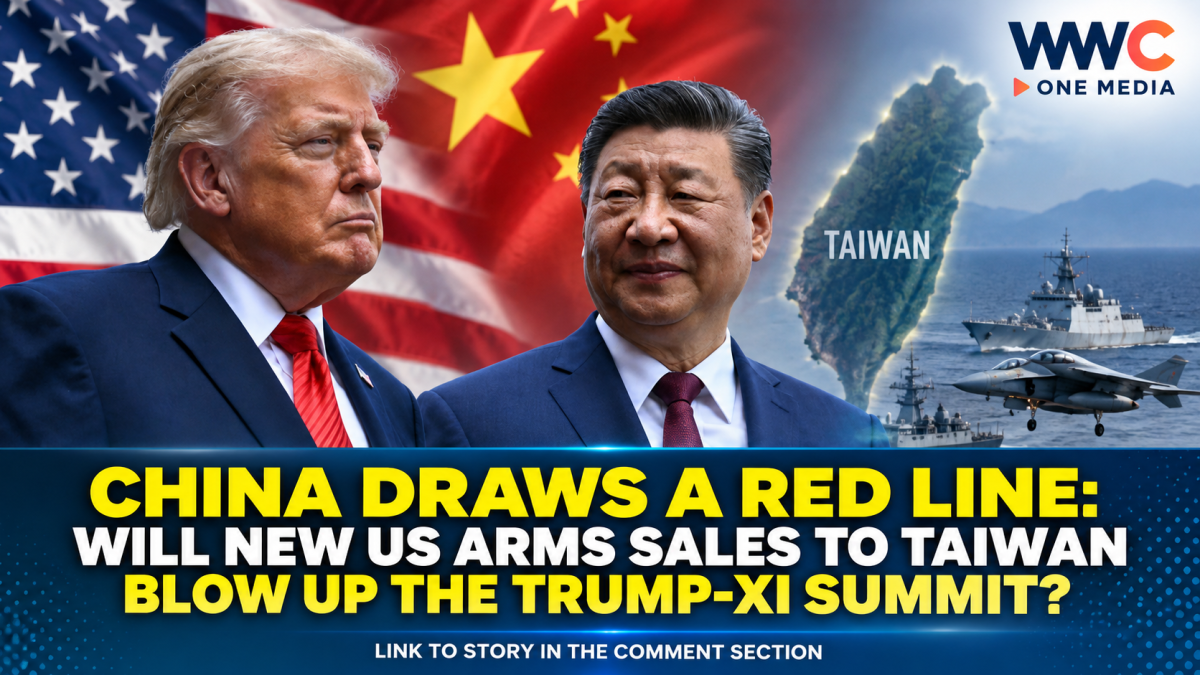
BEIJING/WASHINGTON — A planned meeting between U.S. President Donald Trump and Chinese President Xi Jinping could be headed for a diplomatic showdown after Beijing reportedly warned Washington that approving a new package of arms sales to Taiwan could prompt China to cancel the leaders’ upcoming summit.
The warning, reported by Japan’s Kyodo News and cited by multiple international outlets, comes as Washington prepares for Xi’s expected visit to the United States later this month. Trump has said he plans to host Xi at the White House on September 24, but Beijing has yet to formally confirm the Chinese president’s trip.
The reported message underscores just how sensitive the Taiwan issue remains in U.S.-China relations—and how quickly it could disrupt efforts by Washington and Beijing to stabilize ties.
Taiwan becomes the summit’s biggest potential flashpoint
According to sources cited in the Kyodo report, Chinese officials have reiterated that Taiwan is a “red line” for Beijing and warned that fresh U.S. arms sales to Taipei could jeopardize Xi’s participation in the summit.
China claims Taiwan as part of its territory and has repeatedly opposed U.S. military support for the democratically governed island.
During Trump’s meeting with Xi in Beijing in May, the Chinese leader reportedly described Taiwan as the most important issue in U.S.-China relations and warned that mishandling the issue could lead to confrontation.
Trump, meanwhile, has previously suggested that U.S. arms sales to Taiwan could serve as a bargaining tool in his broader negotiations with Beijing—a position that has added another layer of uncertainty to Washington’s Taiwan policy.
Billions of dollars in weapons are already in play
The dispute is not simply theoretical.
The Trump administration announced an approximately $11-billion arms package for Taiwan in December 2025, described by reports as the largest U.S. arms package for the island at the time.
In addition, Congress approved another arms package worth roughly $14 billion in January 2026, although the deal still requires formal action from the Trump administration before it can move forward.
Taiwan has continued pressing Washington to strengthen its defense capabilities as Chinese military and diplomatic pressure around the island increases.
Taiwanese President Lai Ching-te said in June that Taiwan’s efforts to protect its security and democratic system should not be viewed as a provocation against China. He also expressed hope that a new U.S. arms package could be approved soon.
Why the timing matters
The latest warning comes at a particularly delicate moment for Washington and Beijing.
Both governments have been working to stabilize relations after years of trade disputes, technology restrictions, military tensions and disagreements over Taiwan.
A September Trump-Xi meeting would provide an opportunity to discuss not only Taiwan but also trade, technology, Iran and other major areas of disagreement.
South China Morning Post reporting has indicated that Washington has been carefully managing sensitive contacts with Taiwan ahead of Xi’s expected visit, with sources previously saying that the administration was unlikely to announce new Taiwan arms sales in the immediate period leading up to the summit.
That makes the latest Chinese warning especially significant.
Beijing appears to be signaling that even an announcement of a new weapons package could carry consequences for the highest-level diplomatic engagement between the two countries.
Washington faces a difficult balancing act
The United States has long maintained a policy of helping Taiwan maintain the capability to defend itself.
Under the Taiwan Relations Act, Washington provides Taiwan with defensive weapons despite not having formal diplomatic relations with Taipei.
At the same time, U.S. policy toward Taiwan has traditionally attempted to deter both Chinese military action and unilateral moves toward formal Taiwanese independence.
The issue became even more complicated after Trump discussed Taiwan arms sales with Xi during their May meeting.
The Associated Press noted that such consultations have raised questions among analysts because one of the Reagan-era Six Assurances states that Washington did not agree to consult Beijing about arms sales to Taiwan.
Beijing’s warning could put Trump’s Taiwan strategy to the test
For Beijing, the issue is about sovereignty and what it considers a core national interest.
For Washington and Taipei, military assistance is viewed as an important component of deterrence and Taiwan’s ability to defend itself.
That creates a difficult choice for Trump.
Moving ahead with new arms sales could reinforce U.S. support for Taiwan but risk angering Beijing and potentially complicating the September summit.
Delaying the sale could help preserve the diplomatic opening with Xi—but could also raise questions in Taiwan and among U.S. allies about Washington’s long-term security commitments in the region.
Reuters previously reported that Taiwan has been seeking additional U.S. weapons as Beijing increases military and diplomatic pressure around the island.
The biggest question: Will Xi actually come?
Despite the reported warning, there is an important caveat.
China has not officially confirmed Xi Jinping’s September 24 visit to Washington.
Trump has said that he plans to host Xi at the White House, but Beijing’s formal confirmation remains pending.
That means the reported threat should not yet be interpreted as a confirmed cancellation.
Instead, it signals the growing pressure surrounding the proposed summit—and demonstrates that Taiwan could determine whether the two leaders meet as planned.
With September 24 approaching, Washington now faces a delicate calculation: approve new weapons for Taiwan and risk provoking Beijing, or hold back and preserve a summit that Trump hopes can deliver another diplomatic breakthrough.
And with Taiwan firmly established as Beijing’s stated “red line,” the next U.S. decision could determine whether the Trump-Xi meeting moves forward—or becomes the latest casualty of the escalating U.S.-China rivalry.




Leave a Reply