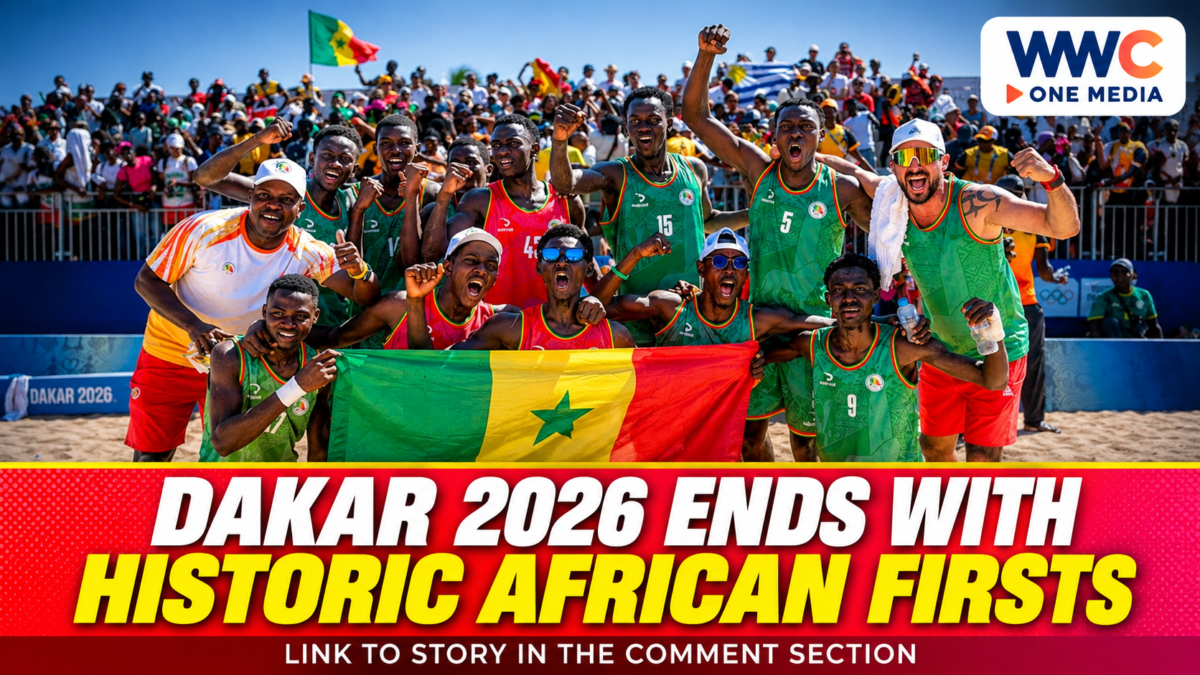
The Dakar 2026 Youth Olympic Games concluded on Nov. 13, closing a landmark two-week event that brought the Olympic movement to African soil for the first time. Senegal’s hosting achievement was accompanied by historic performances by its young athletes, while the International Olympic Committee (IOC) highlighted education, skills development and upgraded sports facilities as parts of the event’s longer-term legacy.
The closing ceremony took place at the Youth Olympic Village in Diamniadio. The Games brought together approximately 2,655 athletes aged 14 to 17, representing 204 National Olympic Committees alongside the Youth Refugee Olympic Team. IOC Newsroom+1
But the most important measure of Dakar’s success will emerge after the international delegations have departed. Senegal now faces the challenge of turning the attention, facilities and experience generated by the event into opportunities that remain available to young people.
Senegal’s basketball achievement gave the host nation a historic moment
One of the most memorable results for the host country came in men’s 3×3 basketball.
Senegal defeated Lithuania 14-13 in overtime to win the men’s gold medal on Nov. 9. The result made Senegal the first African nation to win a medal in 3×3 basketball at a Youth Olympic Games.
The women’s team also reached the podium, securing bronze. The two results gave Senegal a significant achievement in a sport with a strong following across the country. IOC Newsroom
The victories added a sporting dimension to the country’s historic role as host. Senegal was not simply providing venues for international competitors; its young athletes were also producing results on the court.
That distinction matters. A successful international event can raise a country’s profile, but homegrown performances can help create role models for young people who may be considering taking up sport.
The Games brought more than 2,600 young athletes to Africa
Dakar 2026 featured 25 competition sports, 153 medal events and 10 engagement sports. Competitions and activities were spread across Dakar, Diamniadio and Saly, with eight competition venues serving the event.
The Games also marked two important developments in youth sport. They were the first Olympic sporting event held in Africa and the first Youth Olympic Games to achieve full gender equality across athlete quota places, sports, disciplines and events.
A Youth Refugee Olympic Team also participated for the first time in the Youth Olympic Games, with six athletes based in Africa. Olympics+1
These features gave the event significance beyond its medal table. It provided a platform for young competitors from different countries and backgrounds to take part in an international sporting programme.
For the Philippines, the event also offered a stage for developing athletes. Filipino sprinter Pi Durden Wangkay’s Youth Olympic bronze medal and wushu competitor Angel Polo’s experience in Dakar illustrated how the competition could provide both medal opportunities and valuable international exposure.
Senegal’s legacy plan puts people alongside sports facilities
The IOC’s post-event assessment places considerable emphasis on skills and education.
More than 300 young professionals gained experience through the Dakar 2026 Learning Academy, which trained participants in areas connected with organising and delivering major sporting events. The programme included participants from 21 African National Olympic Committees.
The Olympic values education programme, known as the Brevet Olympique Civique et Sportif, reached more than one million schoolchildren, exceeding its initial target of 900,000. Another initiative, Jeunesse en Jeux, provided opportunities for approximately 300,000 young people to participate in sports, cultural and educational activities. Olympics+1
These figures matter because major sporting events require expertise that extends beyond athletes and coaches. They also need people who can manage venues, logistics, transport, accreditation, broadcasting and event operations.
Training local professionals could strengthen Senegal’s ability to organise future competitions and support the wider African sports industry.
However, the long-term value will depend on whether those skills lead to continuing employment and further opportunities after the organising committee completes its work.
What happens to the Olympic Village and venues?
The Youth Olympic Village was established on the campus of Amadou Mahtar Mbow University in Diamniadio. The IOC’s venue information identifies the site as university accommodation that is intended to return to student use after the Games.
Organisers also made use of existing venues where possible, with refurbishment carried out where necessary. This approach was intended to limit the need for large numbers of new facilities that might be difficult to maintain after the event. Official Information+1
The legacy programme also includes upgraded sports facilities and community initiatives designed to make sporting activities more accessible.
These plans are important, but the existence of renovated facilities does not automatically guarantee that local athletes will be able to use them regularly. Continued maintenance, operating budgets, qualified coaches and affordable access will determine whether the infrastructure delivers lasting benefits.
Local businesses also had a stake in the event
The economic legacy extends beyond the sports sector.
The IOC’s legacy report states that Senegalese companies accounted for 56% of the organising committee’s committed procurement expenditure in 2025. This indicates that local suppliers received a substantial share of the procurement commitments made during that period. Olympics
That figure should not be mistaken for the total economic impact of the Games or the amount of money permanently retained by Senegalese businesses. It is a measure of committed procurement expenditure, not a complete accounting of tourism revenue, employment or long-term commercial benefits.
Still, directing procurement towards local companies can help spread some event-related opportunities beyond international contractors.
The next question is whether those businesses can build on the experience and relationships developed during the Games.
What happens next?
The closing ceremony has ended, but the work of measuring Dakar 2026’s legacy is only beginning.
The Youth Olympic Village is expected to return to university use, while renovated facilities and community programmes are intended to support sporting participation beyond the competition period.
Senegal will also need to maintain the training and education opportunities created through the event. The more than 300 young professionals who gained Games-delivery experience represent a potential pool of expertise for future sporting events in the country and elsewhere in Africa.
Dakar has demonstrated that an African nation can host an Olympic sporting event and give young athletes a major international platform. Senegal’s basketball results added a memorable home-team achievement to that milestone.
But a historic first is only the beginning. The lasting test will be whether the facilities remain active, young people retain access to sport and local professionals and businesses continue benefiting from the experience.
Dakar 2026 has put Africa on the Olympic map. Senegal’s next challenge is to make sure the benefits remain long after the medals have been awarded.