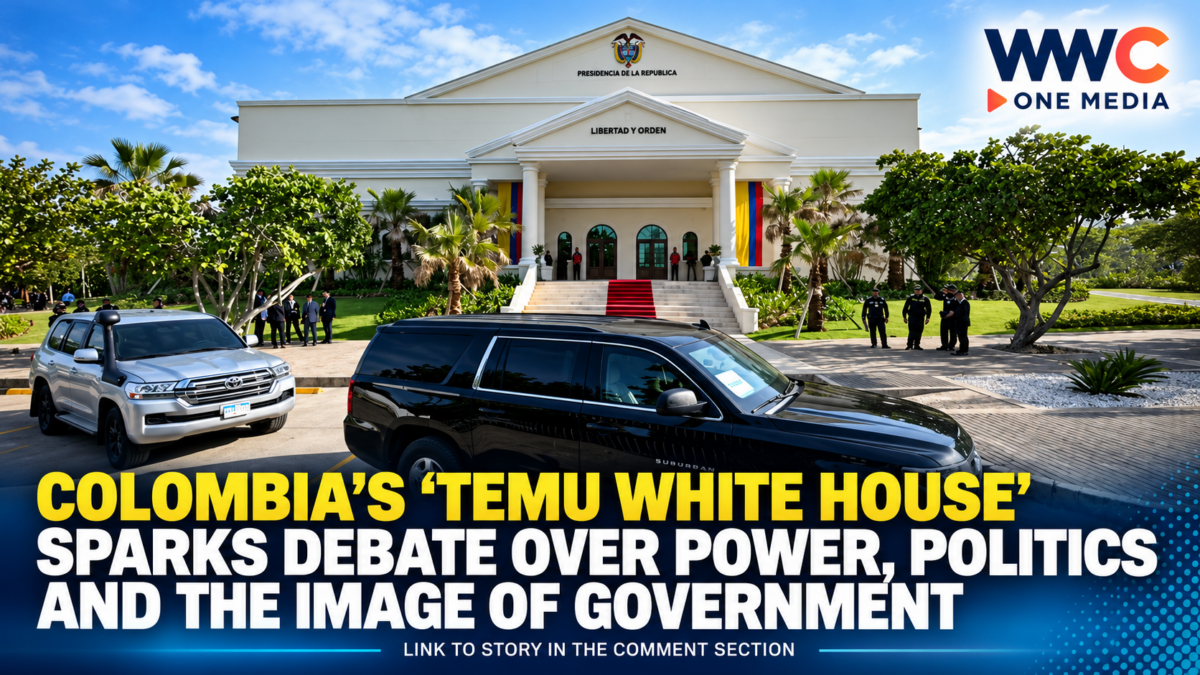
COLOMBIA — A new development involving what has been described as Colombia’s “Temu White House” is drawing attention to questions about political power, public perception and the symbolism of government institutions.
The phrase, featured in a report by Inquirer Global Nation, uses the name of the online shopping platform Temu as a comparison. The headline signals a debate over the country’s seat of power, although the precise circumstances behind the nickname and the criticism surrounding it require confirmation from the full report.
Beyond the catchy label, the issue raises a broader question: how much does the appearance and symbolism of a government’s seat of power influence public perceptions of its leaders?
More Than Just a Building
Government buildings are not merely places where officials conduct business. They can also represent a country’s political identity, institutional authority and relationship with its citizens.
Consequently, changes to a government’s physical headquarters, its appearance or the way it is presented to the public can become subjects of political discussion.
However, whether criticism is justified depends on the specific circumstances, including the project’s purpose, its cost, the source of its funding and the explanations provided by the officials involved. Those details must be established before drawing conclusions about the Colombian case.
Why the Debate Matters
Political controversies surrounding government facilities can extend beyond architecture or aesthetics. Questions about public spending, transparency and accountability may become relevant when public resources are involved.
Still, the nickname “Temu White House” should be understood as a characterization rather than an established finding about the building’s quality, cost or legality.
The distinction matters because viral political labels can shape public opinion before readers have access to the full facts.
The Bigger Picture
The controversy also highlights the influence of social media in modern political communication. A memorable nickname can quickly attract attention, but understanding the underlying issue requires more than a headline or a viral comparison.
For now, the key questions are what prompted the nickname, what the relevant authorities have said, and whether verified information supports the criticism.
Those answers are essential to determining whether the debate is primarily about appearance, public spending or a wider question of political accountability.