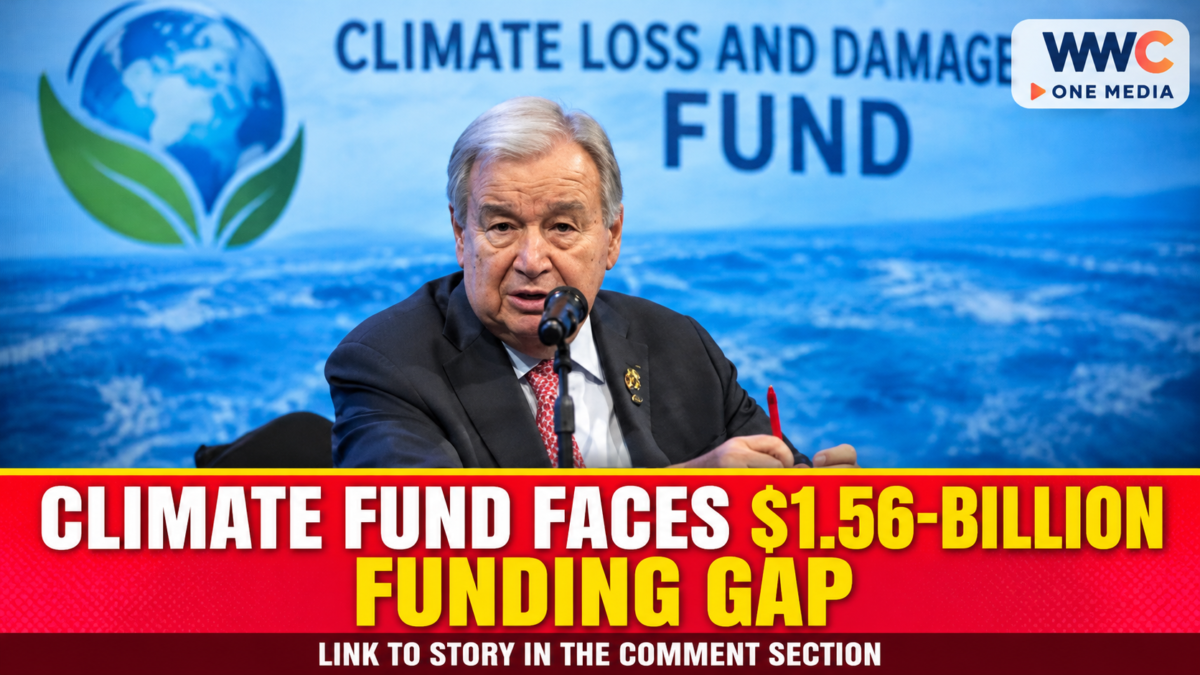
The global Fund for Responding to Loss and Damage is facing a widening gap between the money available and the support developing countries are seeking, with funding requests reaching US$1.9 billion against an allocation of just US$342 million. As climate negotiations continue at COP31 in Antalya, Türkiye, the figures are adding pressure on wealthier nations to turn financial pledges into resources that vulnerable countries can actually access.
A draft negotiating text dated Nov. 12, 2026, records 176 funding requests from 119 developing countries under the fund’s Barbados Implementation Modalities. It also calls for developed countries to provide new, substantial, predictable and grant-based contributions as the fund prepares for its first replenishment in 2027. 【turn577403view0】
The figures highlight a central problem in international climate policy: announcing funding targets is not the same as delivering money when communities need it. For countries exposed to severe storms, flooding, drought and rising seas, the speed, affordability and accessibility of climate finance can be as important as the total amount promised.
Loss and Damage Fund: Requests Far Exceed Available Money
The Fund for Responding to Loss and Damage was established to help developing countries address the economic and non-economic consequences of climate change. Its Barbados Implementation Modalities provide an initial channel through which eligible countries can request support.
The draft COP31 text puts the scale of demand into perspective. Developing countries submitted US$1.9 billion in requests during the funding window, while the total allocation stood at US$342 million.
That leaves a difference of approximately US$1.558 billion between requests and the available allocation. The gap does not mean every request has been approved or that every applicant will receive funding. It shows that the amount sought is substantially greater than the resources set aside under the initial arrangement. 【turn577403view0】
The same document records 176 requests from 119 developing countries. It also recognises the need to speed up reviews and approvals, improve geographical balance and ensure that assistance is delivered according to need.
For countries seeking help after climate-related disasters, these details matter. A funding mechanism can exist on paper, but its value depends on whether eligible applicants can secure approval and receive assistance in time to support recovery.
Pledged Contributions Are Not the Same as Money Received
The fund’s financial position also raises questions about the difference between pledges and actual contributions.
The draft text states that US$822.71 million had been pledged to the fund, but only US$485.77 million had been received as of July 31, 2026. That means approximately US$336.94 million in pledged contributions had not yet been received by that date. 【turn577403view0】
The distinction is important because a pledge is a stated commitment, while a received contribution is money that has reached the fund under the applicable arrangements.
The draft therefore urges developed country parties to convert outstanding pledges into contributions as soon as possible. It also calls for a broader resource-mobilisation strategy that can attract new contributors and encourage support from multiple funding sources.
The fund is scheduled to begin its first replenishment process in 2027. That process will be important in determining whether its resources can grow beyond the initial funding window and respond to the level of demand already recorded. 【turn577403view0】
The Climate Finance Target Is Much Larger Than One Fund
The funding pressure surrounding loss and damage is part of a much wider international financing challenge.
Under the new collective quantified goal agreed at COP29 in 2024, developed countries are expected to take the lead in providing at least US$300 billion annually for developing countries by 2035. Governments also agreed to work towards scaling up climate finance from all public and private sources to at least US$1.3 trillion a year by 2035. 【turn196540view1】
These targets serve different purposes. The US$300-billion goal places a leading responsibility on developed countries, while the US$1.3-trillion ambition covers a wider pool of financing sources.
The United Nations’ 2026 Sustainable Development Goals report says climate finance provided and mobilised for developing countries reached US$136.7 billion in 2024, following US$132.8 billion in 2023. However, the report notes that nearly two-thirds of the 2024 amount went to mitigation, while adaptation finance remained at around one-quarter. 【turn577403view1】
Mitigation covers efforts to reduce greenhouse gas emissions. Adaptation finances measures that help communities and economies prepare for climate impacts, while loss and damage addresses consequences that cannot be fully prevented or avoided.
The distinctions matter because a country may need funding for renewable energy, flood protection and post-disaster recovery at the same time. A headline figure for total climate finance does not automatically show how much is available for each of those needs.
UN Climate Chief Says Financing Must Not Deepen Debt
The debate is not only about how much money is raised. It is also about the terms under which developing countries receive it.
At a climate finance ministerial dialogue during COP31 on Nov. 13, UN Climate Change Executive Secretary Simon Stiell said financing arrangements must reflect countries’ circumstances and debt sustainability.
He argued that grant-based and highly concessional finance would remain critical, particularly for least developed countries, small island developing states and other vulnerable economies. He also called for simpler procedures and better coordination among financial institutions. 【turn196540view1】
This is a significant concern for countries that already face high borrowing costs or have limited fiscal room after disasters.
Loans may help finance major infrastructure and energy projects, but they also create repayment obligations. If a government must borrow heavily to rebuild after repeated climate-related disasters, debt servicing can compete with spending on health, education, infrastructure and future resilience.
Stiell’s remarks did not reject private finance, loans or guarantees. Instead, they called for a mix of financing instruments suited to the financial position and needs of recipient countries. 【turn196540view1】
Why the Funding Debate Matters to the Philippines
The Philippines has a direct interest in how global climate finance is distributed. Its exposure to tropical cyclones, flooding, coastal hazards and drought makes both disaster preparedness and recovery financing important national concerns.
The country’s climate policy also depends on reliable information about emissions, adaptation measures and financial support received. The Philippines’ first Biennial Transparency Report underwent a technical review involving climate experts and government agencies, an exercise intended to improve the quality of national climate reporting. WWC ONE MEDIA has previously examined that climate transparency review and its implications for Philippine climate policy.
The wider financing debate also connects to private-sector investment. Philippine banks and businesses are developing financing instruments for environmental and social projects, although these transactions are not substitutes for public international climate commitments. One example is BPI’s sustainability bond programme, which illustrates how domestic capital markets can support eligible green and social activities.
At the same time, reducing emissions remains essential to limiting future climate risks. The global transition away from fossil fuels and the financing needed to support it are closely connected to the climate commitments being discussed at COP31. WWC ONE MEDIA has also examined the global emissions outlook and the challenges facing the energy transition.
For the Philippines, the practical question is whether international funding arrangements can help deliver measurable protection and recovery support, rather than remain distant diplomatic commitments.
What Happens Next
COP31 is scheduled to run through Nov. 20, 2026. Negotiators are considering draft guidance for the Fund for Responding to Loss and Damage, including how to strengthen its long-term operating model, mobilise contributions and improve access for developing countries.
The document dated Nov. 12 remains a draft negotiating text. Its proposals should not be treated as a final COP31 decision unless and until governments adopt them.
The fund’s first replenishment is expected to begin in 2027. Its success will depend on whether existing pledges are converted into contributions, new resources are secured and the process provides a reliable basis for future support.
For developing countries, the test will be whether funding can be accessed without excessive delays or debt burdens. For wealthier nations, the challenge is turning agreed commitments into predictable financial support.
The gap between US$1.9 billion in requests and US$342 million in available funding makes that challenge difficult to ignore.
Frequently Asked Questions
What is the Fund for Responding to Loss and Damage?
It is an international fund established to help developing countries address the economic and non-economic consequences of climate change.
How much money was requested under the fund’s initial funding window?
The COP31 draft text records US$1.9 billion in requests from developing countries under the Barbados Implementation Modalities.
How much funding was available?
The same draft records a total allocation of US$342 million for the funding window.
How much of the fund’s pledged money had been received?
As of July 31, 2026, the fund had received US$485.77 million out of US$822.71 million pledged, according to the draft negotiating text.
When will the fund begin its first replenishment?
The fund is expected to begin its first replenishment process in 2027, with the aim of strengthening its resources for future support.