China’s Singles’ Day Shopping Festival Hits a Wall as Consumers Refuse to Spend — Is Its Biggest Retail Event Losing Its Power?
HONG KONG, November 11, 2026 — China’s biggest online shopping festival is facing an uncomfortable reality: even the world’s largest shopping discounts are struggling to convince consumers to spend more.
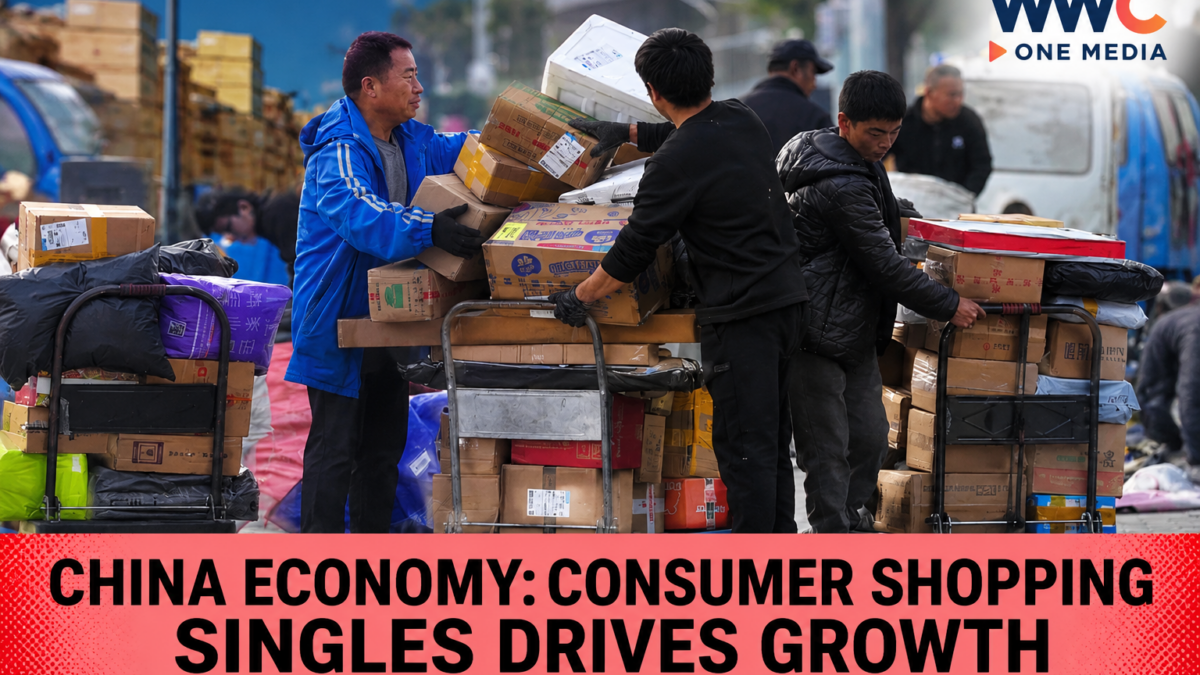
Singles’ Day, the annual November 11 shopping event also known as Double 11, has become one of the biggest indicators of China’s consumer economy. Retailers traditionally use the festival to attract millions of shoppers through massive discounts, livestream promotions and limited-time offers.
But this year’s early numbers suggest that the excitement is fading.
Cumulative Singles’ Day sales reached just over 1 trillion yuan (approximately US$154 billion) as of October 31, according to retail data platform Syntun. That was broadly in line with the same period last year, showing little improvement despite retailers extending their promotional campaigns.
The festival’s record sales in 2025 reached nearly 1.7 trillion yuan, but the longer promotional period helped boost the total. This year, retailers are again competing for attention, yet many consumers appear more interested in protecting their savings than filling their online shopping carts.
The reasons go beyond shopping habits.
A prolonged property market downturn has weakened household confidence, income growth remains under pressure, and consumers are increasingly questioning whether promotional discounts offer genuine savings.
Meanwhile, China’s exports continue to perform strongly, creating a striking contrast between factories selling more products overseas and households at home becoming increasingly cautious.
The bigger question is no longer whether China’s shopping platforms can offer enough discounts.
It is whether China’s consumers still feel financially secure enough to spend.
Singles’ Day 2026 Shows Little Early Sales Growth Despite Massive Discounts
Singles’ Day began in 2009 when Alibaba transformed November 11 into a major online shopping event.
The date originally referenced singlehood, with the four ones in 11/11 symbolizing people who are not in relationships. It eventually developed into a nationwide retail phenomenon, attracting participation from major e-commerce platforms, retailers and international brands.
Today, the event resembles the Black Friday and Cyber Monday shopping campaigns in the United States, although China’s version has expanded into a much longer promotional season.
Platforms including Alibaba’s Taobao and Tmall, JD.com, Douyin and Kuaishou now compete through price reductions, livestream shopping, special product launches and technology-driven recommendations.
But the latest figures suggest that the longer campaigns are not necessarily producing stronger consumer demand.
Syntun reported that cumulative sales had exceeded 1 trillion yuan by October 31, roughly matching the same period in 2025.
That is an important distinction: the available figure does not show that sales have collapsed. It shows that early campaign sales have largely stagnated compared with the previous year.
The record 2025 total of almost 1.7 trillion yuan also needs context. Retailers extended the campaign, giving shoppers more time to make purchases and increasing the period covered by the sales figures.
As a result, headline totals do not always provide a straightforward comparison of consumer enthusiasm from one year to another.
For China’s e-commerce industry, the challenge is now finding ways to encourage shoppers to spend more without depending entirely on longer promotions and increasingly aggressive discounts.
Why Chinese Consumers Are Becoming More Careful With Their Money
One of the biggest reasons behind the slowdown is the prolonged downturn in China’s property market.
For many Chinese households, residential property represents a major portion of personal wealth.
When home prices decline, homeowners can feel financially poorer even if their salaries remain unchanged.
The Associated Press reported that home prices have fallen roughly 20% or more from their 2021 peak, with some smaller cities and the secondhand housing market experiencing particularly difficult conditions.
That decline has affected confidence and encouraged families to prioritize savings, debt reduction and essential purchases.
Consumers are also becoming more selective about nonessential products.
Some shoppers who previously used Singles’ Day to purchase skincare, electronics, fashion and other discretionary goods are now cutting back.
The problem is not necessarily that people have stopped shopping altogether.
Instead, they are questioning whether a purchase is necessary, whether the discount is genuinely attractive and whether spending today could create financial pressure later.
This change is especially important for retailers selling expensive products.
Luxury fashion, electronics and other big-ticket purchases depend heavily on consumer confidence. When households become uncertain about employment, income or property values, these purchases are often among the first expenses to be postponed.
For many Chinese shoppers, keeping money in the bank has become more attractive than chasing another promotional offer.
China’s Retail Sales Reveal a Bigger Problem for the Economy
The Singles’ Day figures reflect a wider weakness in China’s domestic consumption.
China’s economy expanded by 4.6% year-on-year during the first nine months of 2026, according to figures cited by the Associated Press.
However, retail sales of consumer goods increased by only 1.1% over the same period.
The difference highlights an important imbalance.
China continues to produce and export enormous quantities of manufactured goods, but households are not increasing their spending at the same pace.
This creates pressure for businesses that depend on domestic customers.
Retailers may have access to large inventories and competitive prices, but those advantages do not automatically translate into higher sales when consumers are reluctant to spend.
The government has repeatedly emphasized the importance of strengthening domestic demand. Yet the prolonged property downturn, cautious household behavior and concerns about future income continue to make that objective difficult.
For additional context, WWC One Media previously examined how China’s manufacturing strength is masking weaker household demand in its report, China’s Factory Boom Masks Growing Strain as Consumer Spending Slows.
The central issue is straightforward: a country can manufacture more products without necessarily having consumers willing or able to buy them.
Discount Fatigue Is Changing How Chinese Shoppers Buy Online
Another problem facing Singles’ Day is what analysts describe as discount fatigue.
The event originally attracted shoppers because November 11 offered some of the most anticipated deals of the year.
But e-commerce platforms gradually extended their promotional periods.
Instead of waiting for a single day, shoppers can now encounter discounts weeks before the official event.
Other major shopping campaigns throughout the year have also reduced the sense of urgency surrounding Double 11.
Consumers have become more familiar with promotional tactics, complex coupons and limited-time offers.
Some shoppers now believe that similar discounts can be found outside the official shopping festival.
This makes it harder for retailers to convince customers that they should purchase something immediately.
Channel NewsAsia reported that China’s Singles’ Day has evolved from a concentrated shopping frenzy into a longer promotional season.
The report also described how platforms have simplified discount structures and moved away from complicated coupon systems in an effort to make shopping less stressful.
But simpler promotions do not automatically solve the underlying problem.
When consumers are worried about their financial situation, even an attractive discount may not be enough to encourage an unnecessary purchase.
For retailers, the challenge is shifting from simply offering lower prices to demonstrating why a product deserves the customer’s money.
Alibaba and JD.com Are Turning to Artificial Intelligence to Win Back Shoppers
China’s major e-commerce companies are also changing how they attract customers.
Alibaba has integrated its Qwen artificial intelligence technology into its shopping ecosystem, allowing consumers to use AI-powered assistance for product recommendations and shopping-related tasks.
The strategy reflects a broader effort to make online shopping more convenient and personalized.
Instead of browsing thousands of listings, consumers can increasingly use AI assistants to compare products, discover options and receive recommendations.
Livestream shopping is also evolving.
Influencers and online personalities remain important, but retailers are experimenting with professionally produced broadcasts, brand-focused presentations and more informative product demonstrations.
Channel NewsAsia reported that platforms are moving away from the aggressive selling style that once defined many livestream campaigns.
Some consumers have grown tired of constant countdowns, pressure to buy immediately and claims that a product is available for only a limited time.
Brands are therefore experimenting with formats that focus more on product quality, design and customer engagement.
The changes suggest that China’s online shopping industry is entering a new phase.
Technology is still important, but retailers increasingly need to build trust rather than rely exclusively on promotional pressure.
WWC One Media also examined this shift in China’s Lipstick King Ditches Beauty Products for AI — 100,000 Subscriptions Sold in Just 30 Minutes.
The report highlights how AI-related products are becoming part of China’s evolving livestream commerce market.
China’s Export Boom Contrasts With Weak Consumer Spending at Home
Perhaps the most important economic contradiction is that China’s overseas sales are performing much better than its domestic retail market.
Reuters reported on November 10 that China’s trade surplus reached approximately US$1.04 trillion during the first ten months of 2026.
October exports increased 35.2% year-on-year, supported by strong international demand for high-tech products and equipment associated with artificial intelligence infrastructure.
Semiconductor exports also recorded significant growth.
This performance demonstrates the continued strength of China’s manufacturing and export industries.
However, it also highlights the country’s dependence on overseas buyers.
Domestic demand remains comparatively weak, forcing many manufacturers to compete aggressively for international customers.
The automotive industry provides another example.
Passenger car sales inside China declined by almost 25% during the first nine months of 2026, according to industry data cited by the Associated Press.
Meanwhile, passenger car exports increased by approximately 71% over the same period.
The contrast demonstrates how manufacturers can find stronger demand abroad while struggling to convince consumers at home to purchase additional products.
For Beijing, this imbalance creates a long-term economic challenge.
Exports can support manufacturing, employment and economic growth, but relying too heavily on international demand exposes the country to trade restrictions, geopolitical tensions and changes in global consumer spending.
China needs a stronger domestic market to make its economic growth more balanced and sustainable.
Not Every Shopping Category Is Struggling
Although many consumers are reducing discretionary purchases, some categories are showing stronger demand.
Health, wellness and lifestyle products are among the areas attracting interest.
According to data from Beijing-based consultancy WPIC Marketing + Technologies, online sales of imported fish oil increased nearly 43% year-on-year during the 12 months ending in September.
Other imported supplements targeting sleep, joint health and bone strength recorded growth between 28% and 37%.
These figures suggest that consumers are not necessarily abandoning spending.
Instead, they are becoming more selective about where their money goes.
Products associated with health, personal well-being and everyday needs may be more appealing than expensive fashion items or unnecessary electronics.
There is also growing interest in experiences, including travel, outdoor recreation and leisure activities.
This reflects a change in consumer priorities.
Rather than spending heavily on products that may lose their appeal quickly, some households are focusing on purchases they believe offer practical or personal value.
The shift creates opportunities for retailers that understand changing consumer preferences.
However, it also means that traditional shopping categories cannot assume that the same promotional strategies will continue producing strong results.
Government Subsidies Are Supporting Some Major Purchases
China has also used government subsidies to encourage household spending.
The country’s consumer trade-in program supports purchases of selected products, including household appliances and computers.
The National Development and Reform Commission announced in late September that it had released the fourth and final 62.5 billion yuan installment of its 2026 consumer trade-in subsidy program, bringing the year’s total allocation to 250 billion yuan.
These programs are designed to encourage consumers to replace older products and purchase new equipment.
They can provide support to specific retail categories, especially when households receive financial incentives to upgrade appliances or electronics.
However, subsidies cannot necessarily resolve the deeper reasons behind weak consumer confidence.
If households remain worried about property values, employment and future income, they may continue postponing purchases even when government assistance is available.
The broader question is whether policymakers can create conditions that make consumers confident enough to spend without depending on temporary incentives.
What China’s Singles’ Day Slowdown Means for Global Businesses
China remains one of the world’s largest consumer markets.
Its population, digital infrastructure and extensive retail networks create enormous opportunities for domestic and international businesses.
But the latest Singles’ Day figures show why companies cannot assume that a large market automatically guarantees strong sales.
Brands entering China must understand changing household budgets, local competition and consumer preferences.
Premium international products may face greater resistance when households are cutting back on expensive purchases.
At the same time, local manufacturers are competing aggressively on price and product quality.
Foreign companies may also need to rethink their promotional strategies.
Instead of relying on deep discounts, they may need to emphasize product durability, customer service, practical benefits and brand differentiation.
The same issue matters to businesses across Asia.
Changes in Chinese consumer demand can affect suppliers, exporters, luxury brands, manufacturers and regional tourism operators.
WWC One Media has also examined China’s efforts to attract international companies in China’s $85.45 Billion Import Expo Breaks Records as 4,142 Foreign Companies Chase Buyers.
The event demonstrated that international businesses continue to see China as an important market, even as domestic consumers become more cautious.
For companies seeking long-term growth, understanding China’s household spending behavior may be just as important as understanding its manufacturing capacity.
What Happens Next for China’s Consumer Economy?
The performance of Singles’ Day will provide another indication of how Chinese households are responding to economic uncertainty.
But the long-term outlook will depend on developments beyond a single shopping festival.
Several factors will matter:
1. Household confidence
Consumers need greater confidence in their income, employment prospects and financial security before they are likely to increase discretionary spending.
2. The property market
Further declines in home values could continue affecting household wealth and purchasing decisions.
3. Government support
Policies aimed at strengthening household income, improving social protection and encouraging consumption could influence future retail demand.
4. E-commerce competition
Platforms will need to offer more than discounts, including convenient services, reliable products and personalized shopping experiences.
5. Export performance
Strong international demand can support manufacturing, but excessive dependence on overseas markets could expose China to external economic risks.
6. Changing consumer preferences
Retailers will need to adapt to stronger demand for health, lifestyle and practical products while recognizing that expensive discretionary purchases may remain under pressure.
The final Singles’ Day results will provide a more complete picture of the campaign’s performance. The early figures alone do not establish the final outcome.
The Bottom Line: China’s Biggest Shopping Festival Is Facing a Bigger Economic Problem
Singles’ Day remains one of the world’s largest online shopping events, but its early 2026 performance highlights a growing challenge for China’s economy.
Consumers are becoming more cautious as the property downturn, uncertain income prospects and weaker confidence influence household spending.
Retailers have responded with longer promotions, AI-powered shopping tools, livestream campaigns and government-supported incentives.
Yet none of these strategies can fully replace the confidence households need before making major purchases.
China’s export industry continues to demonstrate impressive strength, but domestic consumption remains an important weakness.
The country needs consumers who are willing to spend, not simply manufacturers capable of producing more goods.
The latest Singles’ Day figures offer a warning that even massive discounts cannot guarantee stronger demand.