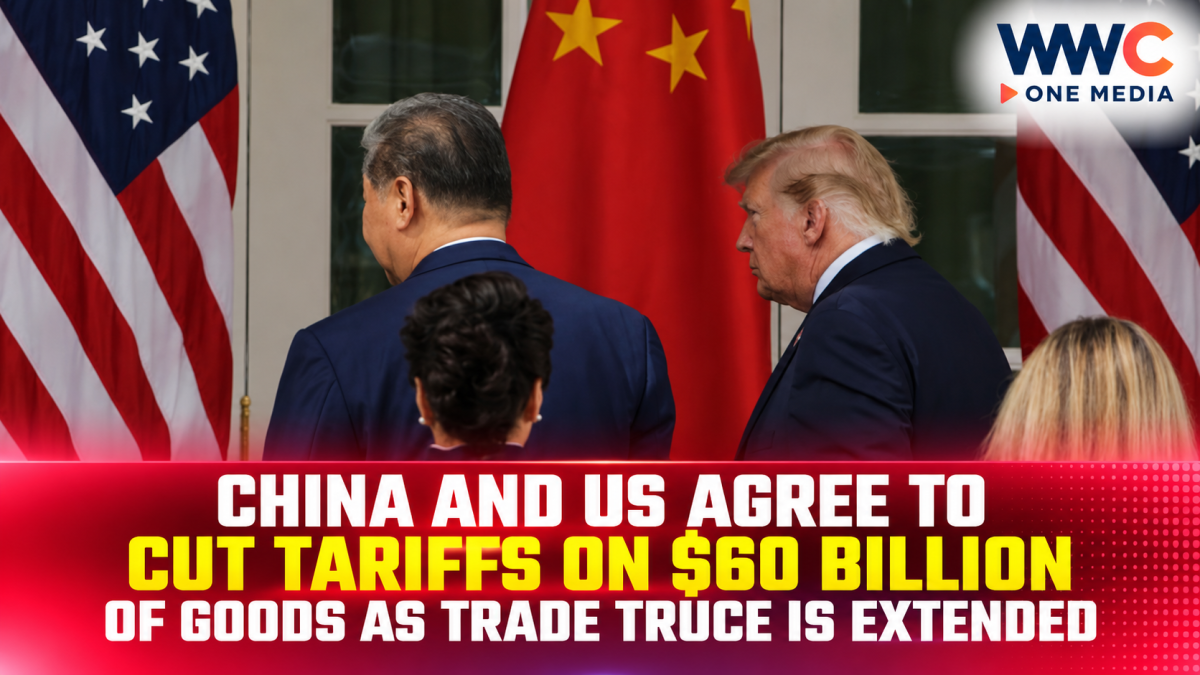
China and the United States have agreed to reduce tariffs on about US$60 billion worth of goods traded between the two countries, covering products ranging from American agricultural commodities to Chinese household appliances, toys and other consumer goods.
The agreement is one of the clearest economic outcomes from the latest meeting between US President Donald Trump and Chinese President Xi Jinping, as Washington and Beijing seek to stabilize trade relations while leaving major disagreements unresolved.
Under the arrangement, each country has identified roughly US$30 billion worth of non-sensitive goods that will receive more favourable tariff treatment. The US Trade Representative said the move could improve market access for about 30 per cent of American exports to China.
China’s list includes a broad range of American agricultural products, including corn, wheat, sorghum, meat, dairy products, vegetable oils and meals. Seafood, timber, cosmetics and medical devices are also included.
Notably absent from China’s list are US soybeans, one of America’s most important agricultural exports to the Chinese market. Soybeans remain subject to a 10 per cent tariff, although Chinese state-owned companies have already purchased substantial quantities of American soybeans under broader trade commitments.
The United States will reduce reciprocal tariffs on selected Chinese products including small household appliances such as coffee makers and toasters, tableware, blankets, bed linens and other household goods.
The American list also covers toys, fireworks, artificial flowers, Christmas-tree lights, holiday decorations and children’s car seats. More than 90 per cent of the products covered by the arrangement will receive treatment based on standard most-favoured-nation tariff rates, effectively removing many of the additional country-specific duties.
The products covered are deliberately concentrated in non-sensitive sectors. Major strategic industries such as semiconductors, electric vehicles and batteries were excluded, meaning the agreement does not resolve some of the most contentious areas of the broader US-China economic relationship.
The two countries are also extending their existing trade truce. China’s Commerce Ministry said the arrangement will remain in place through Jan. 10, giving both governments additional time to assess the agreement and continue negotiations on unresolved economic and trade issues.
Beijing and Washington have agreed to maintain regular discussions on investment opportunities, market barriers, regulatory transparency and business concerns. An agriculture working group will also be established, with its first meeting expected before the end of the year.
The agricultural talks could become particularly important because food and farm products have repeatedly been used as leverage during periods of heightened trade tension between the two countries. The new working group is intended to address market access and regulatory issues affecting agricultural trade in both directions.
The latest agreement also includes a commitment for China to import 10 million metric tons of US coal annually in 2027 and 2028. The volume represents roughly 2 per cent of China’s annual coal imports.
Beyond tariffs, Washington and Beijing reached several other understandings during the latest round of talks. The two sides agreed to establish a communication channel for artificial-intelligence-related incidents and continue discussions on financial services.
China will also examine applications from foreign financial institutions, including US-linked companies, seeking to conduct business and open branches in the Chinese market. Both governments also said they would continue discussions on expanding direct flights between the two countries.
Despite the tariff reductions, financial markets have shown that investors remain cautious about the durability of the broader improvement in relations. Chinese stocks fell sharply on Monday, with technology shares under pressure amid continued concerns about US restrictions on Chinese technology and data-centre components.
The scale of the tariff arrangement is significant, but it represents only a portion of overall US-China trade. The two countries exchanged roughly US$415 billion worth of goods in 2025, meaning the US$60 billion covered by the new lists accounts for only a fraction of bilateral commerce.
For American farmers and manufacturers, the lower Chinese tariffs could provide improved access to one of the world’s largest consumer markets. For American households, lower duties on selected Chinese consumer goods could also reduce some import costs, although the eventual effect on retail prices will depend on businesses and supply chains.
For China, the arrangement provides improved access to selected American agricultural and industrial products while securing lower US tariffs on a range of consumer goods exported by Chinese manufacturers.
The agreement therefore represents a limited but tangible step toward stabilizing one of the world’s most important trading relationships. It does not remove tariffs across the board, nor does it resolve the deeper disputes surrounding technology, industrial policy, market access and strategic competition.
The bigger test now is whether the latest tariff reductions can survive the next round of negotiations and develop into a more durable US-China trade framework, or whether unresolved disputes will once again push the world’s two largest economies toward higher trade barriers.