
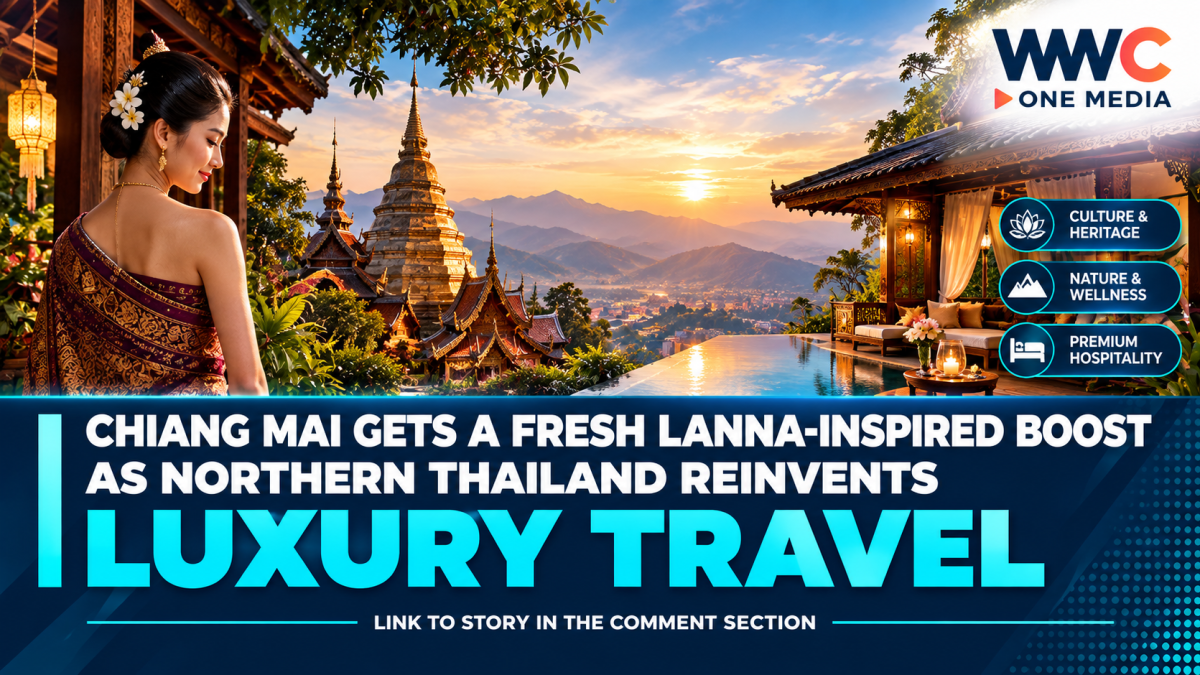
CHIANG MAI, Thailand — Chiang Mai’s tourism landscape is entering a new chapter as developers and hospitality brands increasingly turn to the region’s rich Lanna heritage for inspiration.
A new Lanna-inspired wing and wider destination developments are helping reshape how visitors experience Thailand’s northern capital — blending traditional design, local culture and contemporary comfort as Chiang Mai competes for a growing share of the luxury and experiential travel market.
The trend reflects a major shift in Thailand’s tourism industry.
Modern luxury is no longer just about bigger rooms and higher buildings. In Chiang Mai, it is increasingly about identity.
Lanna Heritage Takes Centre Stage
The ancient Lanna Kingdom remains one of northern Thailand’s most powerful cultural influences.
From temple architecture and woodcarving to textiles, food and traditional craftsmanship, Lanna identity continues to define Chiang Mai’s appeal to both Thai and international travellers.
That heritage is now becoming an increasingly important part of new tourism and hospitality developments.
Rather than simply reproducing traditional architecture, many modern projects are combining Lanna influences with contemporary design, creating spaces intended to feel rooted in northern Thailand while meeting the expectations of modern travellers.
The strategy is also visible in major development plans across Chiang Mai, including projects designed around the unique heritage of the former Lanna Kingdom. Asset World Corp’s long-term development plans include the Lannatique Destination project, which is intended to blend Lanna heritage with new hospitality, retail and lifestyle experiences.
Chiang Mai’s Luxury Travel Scene Is Changing
Chiang Mai has traditionally attracted travellers looking for a very different experience from Bangkok or Thailand’s beach destinations.
The city offers:
- Ancient temples
- Mountain landscapes
- Lanna culture
- Traditional crafts
- Northern Thai cuisine
- Wellness experiences
- Boutique hotels
- Coffee and creative communities
But the market is evolving.
Major hotel groups and developers are increasingly investing in higher-end experiences while trying to preserve a strong connection to Chiang Mai’s cultural identity.
That balancing act is becoming central to the city’s tourism future.
How can Chiang Mai modernise without losing the culture that made travellers fall in love with it in the first place?
More Than Just a New Wing
The growing focus on Lanna-inspired architecture is about more than aesthetics.
For hotels and tourism developers, local design can help create an experience that cannot simply be copied in another country.
A luxury hotel in Bangkok can compete with properties in Singapore or Hong Kong.
A beach resort can compete with destinations across Southeast Asia.
But Chiang Mai has something different.
Its strongest competitive advantage is its cultural identity.
That is why northern Thai design, local craftsmanship and Lanna storytelling are increasingly being incorporated into hospitality projects.
From architecture and interiors to food, wellness and cultural activities, developers are betting that travellers want experiences that feel connected to the destination.
Chiang Mai Marriott Shows the Direction of Travel
Chiang Mai’s hotel sector has already been undergoing significant changes.
The Chiang Mai Marriott Hotel, which opened following the rebranding of the former Le Méridien Chiang Mai, has continued expanding and refining its facilities, including new spaces dedicated to events and entertainment.
The Bangkok Post previously reported on the hotel’s broader transformation as part of the changing hospitality landscape in Chiang Mai.
The trend reflects a wider movement across Thailand’s hotel industry.
Hotels are no longer competing only on rooms.
They are competing on:
- Architecture
- Food
- Wellness
- Cultural experiences
- Events
- Entertainment
- Local identity
The Rise of ‘Experience-First’ Travel
Today’s travellers increasingly want more than a place to sleep.
They want a story.
That has helped fuel the growth of experience-focused tourism.
In Chiang Mai, that could mean:
- Learning traditional crafts
- Exploring historic neighbourhoods
- Sampling northern Thai cuisine
- Visiting local markets
- Experiencing temple culture
- Joining wellness programmes
- Discovering mountain communities
A Lanna-inspired development fits naturally into this trend because it can become part of the travel experience rather than simply serving as accommodation.
The hotel itself becomes part of the destination.
Lannatique Could Transform Chiang Mai’s Tourism Map
One of the biggest long-term projects connected to Chiang Mai’s heritage-focused development is Lannatique.
Asset World Corp has identified the project as part of its future pipeline, with development expected to unfold in multiple phases.
Company and analyst documents point to Phase 1 and further phases being developed over the coming years, alongside a broader plan involving hospitality, commercial and lifestyle components.
The project has also been linked to plans for an Okura Resort Chiang Mai, combining northern Thai cultural heritage with Japanese hospitality.
According to Asset World Corp’s disclosures, the planned resort is intended to be part of the Lannatique Destination project and blend the heritage of the Lanna Kingdom with Japanese refinement.
That could give Chiang Mai another major international luxury brand while reinforcing the city’s distinctive northern identity.
Why Lanna Design Matters to Modern Travellers
The global tourism industry is becoming increasingly crowded.
Travellers can find luxury hotels almost anywhere.
But authentic cultural experiences are harder to replicate.
That is why heritage has become an increasingly valuable asset.
A Lanna-inspired property can offer visitors visual and cultural connections to northern Thailand through:
- Traditional patterns
- Local materials
- Regional architecture
- Handcrafted details
- Northern landscapes
- Cultural storytelling
When done well, heritage-inspired design can give modern developments a stronger sense of place.
When done badly, however, it can become little more than decoration.
The challenge for developers is therefore authenticity.
Travellers want to feel they are in Chiang Mai — not inside a generic luxury hotel with a few northern Thai decorations.
Chiang Mai Faces a Delicate Balancing Act
The city’s tourism growth also raises important questions.
More development can bring investment, jobs and new business opportunities.
But rapid growth can also place pressure on local communities, heritage areas and infrastructure.
Chiang Mai’s future success may therefore depend on how well the city manages the relationship between development and preservation.
The growing popularity of Lanna-inspired projects suggests developers understand the importance of that identity.
After all, protecting the destination’s uniqueness is also good business.
Northern Thailand Is Becoming a New Luxury Battleground
Bangkok and Phuket have traditionally dominated Thailand’s international luxury hotel market.
But Chiang Mai is increasingly attracting attention from brands and developers looking for something different.
The appeal is clear.
Chiang Mai offers:
Culture + Nature + Wellness + Food + Heritage
That combination is becoming increasingly attractive as travellers look for more meaningful and personalised experiences.
Major developers are now positioning northern Thailand not simply as a secondary tourism destination, but as a place capable of supporting high-end resorts, international hotel brands and large-scale lifestyle developments.
The Bigger Picture: Thailand Is Selling Stories, Not Just Stays
The rise of Lanna-inspired developments reflects a broader change in Thai tourism.
The country is moving beyond a simple focus on visitor numbers.
Increasingly, the goal is to attract travellers who stay longer, spend more and seek distinctive experiences.
That means culture is becoming part of the tourism economy in a new way.
Heritage is no longer simply something to preserve.
It is becoming something that can shape the future of travel — if it is developed responsibly.
The Bottom Line
The latest Lanna-inspired development is another sign that Chiang Mai’s tourism industry is evolving.
New hotels, lifestyle destinations and cultural projects are increasingly using northern Thailand’s heritage as a foundation for modern experiences.
The strategy could help Chiang Mai stand out in an increasingly competitive global tourism market.
But the real test will be authenticity.
Can new developments preserve the spirit of Lanna while creating something genuinely new?
For Chiang Mai, that may be the key to its next chapter.
The city already has the history.
It already has the culture.
It already has the landscapes.
Now, developers are building the next generation of experiences around them.
In northern Thailand’s new tourism boom, the future may be modern — but its inspiration comes from the past.
WWC ONE MEDIA J.M.D



Leave a Reply