Local government units across Cebu are strengthening their capacity to support individuals recovering from drug use through the Department of Social Welfare and Development’s Yakap Bayan Program.
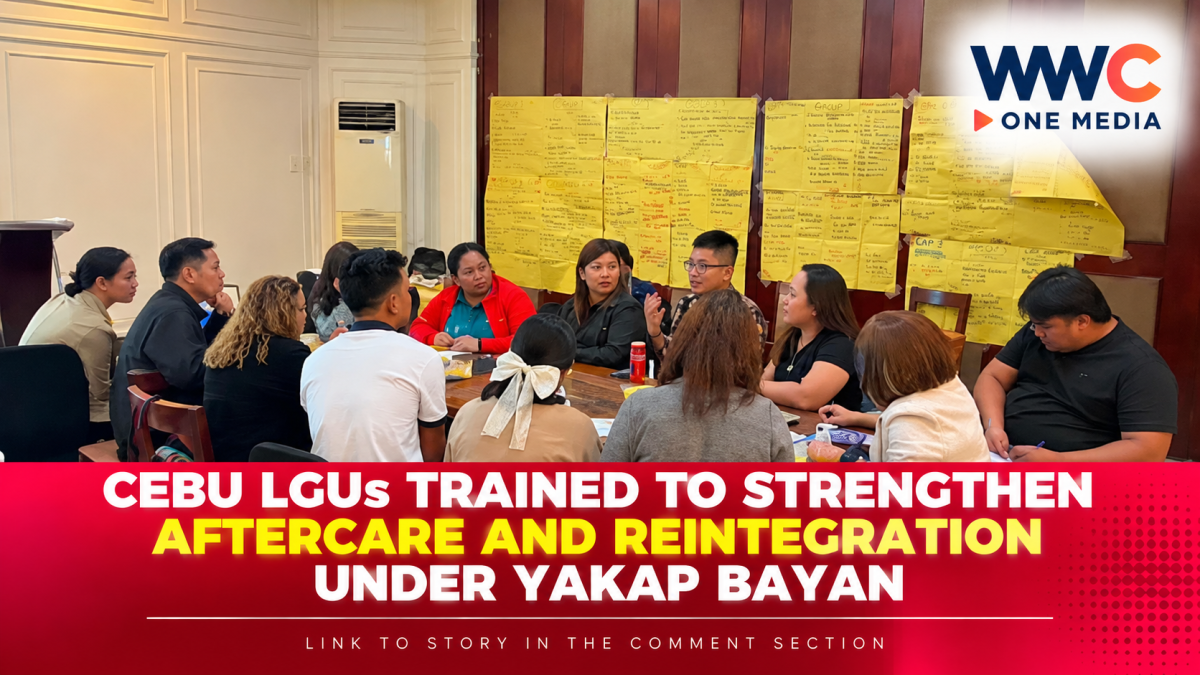
DSWD Field Office 7 conducted a five-day Training of Trainers from August 24 to 28, 2026, in Cebu City, bringing together local government representatives, particularly Municipal and City Social Welfare and Development Officers who handle programs for recovering persons who use drugs (RPWUDs).
The training focused on giving LGU personnel the technical knowledge and practical tools needed to implement Yakap Bayan in their respective communities. Sessions covered program guidelines, case management strategies and legal considerations in providing assistance to people recovering from drug dependency.
Participants also completed return demonstrations involving 12 Yakap Bayan Aftercare Modules. These exercises were designed to familiarize LGU implementers with the tools and approaches they can use when providing continued support after a person completes primary treatment or rehabilitation.
The Yakap Bayan Program is designed as an aftercare and reintegration intervention. Its objectives include helping recovering individuals transition back into their communities, strengthening their coping skills, supporting families and creating an environment that encourages successful reintegration.
The program can serve recovering persons who have completed primary treatment or rehabilitation, including surrenderers, voluntary or compulsory admissions, plea-bargaining or court-mandated clients, as well as their family members.
The training was spearheaded by the Cebu Provincial Anti-Drug Abuse Office, or CPADAD, with DSWD-7 serving as trainers and resource speakers.
Beyond classroom sessions, the activity allowed representatives from different LGUs to exchange experiences and practices from their respective communities. Organizers said the collaboration is intended to improve coordination and strengthen community-based support for recovery and reintegration.
DSWD-7 also emphasized the role of LGUs as key partners in ensuring that recovering individuals continue receiving support even after formal treatment ends. The agency’s Yakap Bayan framework includes case management, self-management and life-skills development, family strengthening and community support.
The initiative forms part of DSWD-7’s broader HAPSAY effort, which seeks to make public services faster, simpler and more efficient in line with government anti-red-tape standards.
With trained local implementers and a structured aftercare framework, Cebu LGUs are being positioned to provide longer-term community support for people rebuilding their lives after rehabilitation, while also helping families and communities become part of the recovery process.