
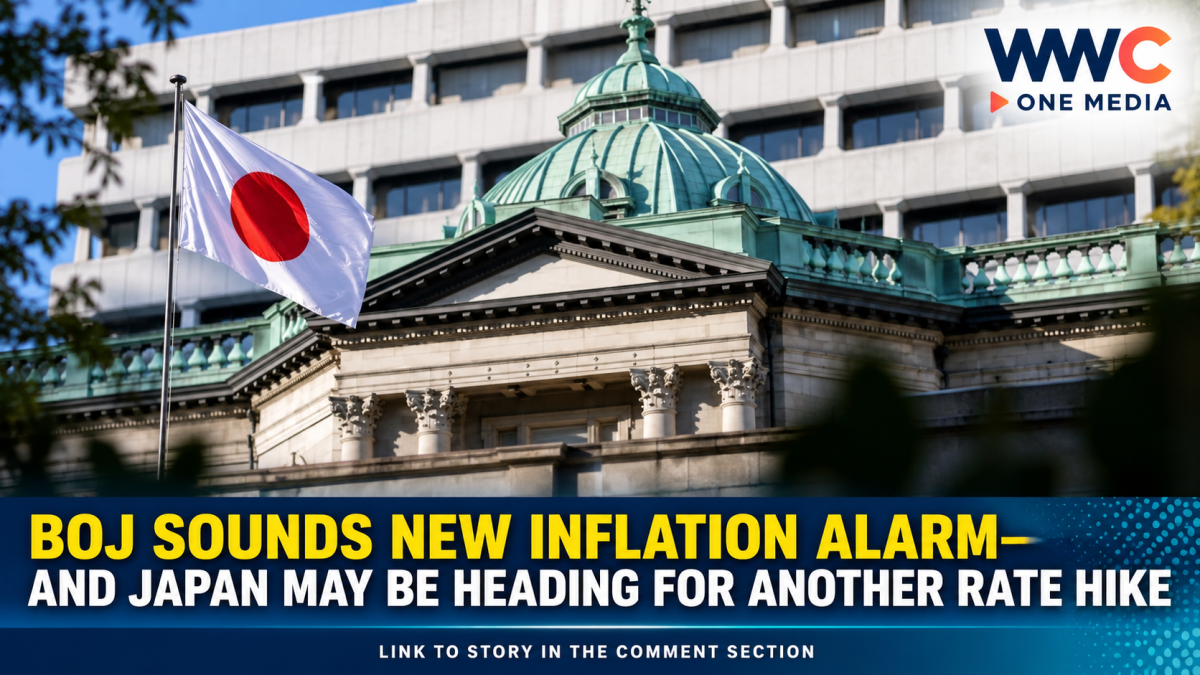
TOKYO — Japan’s central bank is warning that inflation may no longer respond to global shocks in predictable ways, raising the stakes for its next interest-rate decision as policymakers confront a combination of higher import costs, yen weakness, geopolitical tensions and a shrinking workforce.
Bank of Japan Executive Director Koji Nakamura said Japan has experienced unusually strong price reactions to external shocks, including increases in import prices and movements in the yen. His comments, made during a BOJ-hosted monetary-policy conference in May and detailed in conference notes released Monday, September 14, highlight growing concern that repeated supply shocks could become embedded in domestic inflation.
Nakamura argued that while central banks have traditionally tried to “look through” temporary supply shocks, repeated shocks can eventually push up underlying inflation and inflation expectations.
That matters because Japan’s inflation challenge is no longer being driven solely by temporary increases in energy or imported goods.
The BOJ official pointed to a combination of geopolitical risk, climate change, income and wealth polarization, populism and structural demographic changes as factors that could make future supply disruptions more persistent.
Japan has also been dealing with a shrinking labor force. Nakamura described the demographic pressure as a “slow-moving” shock that can contribute to higher wages and therefore cannot simply be dismissed as temporary inflation.
Why the BOJ is worried about “non-linear” inflation
The most significant warning involves what Nakamura described as “non-linear” reactions to external shocks.
In simple terms, a relatively modest movement in import costs or the yen can produce a disproportionately large increase in domestic prices.
That creates a difficult problem for monetary policymakers.
If the BOJ waits too long because it assumes an external price shock will eventually fade, businesses may instead pass higher costs on to consumers, inflation expectations may rise and wage-price pressures could become more entrenched.
The BOJ therefore needs to determine whether a price increase is genuinely temporary—or whether it is beginning to change the behavior of companies and households.
Nakamura said policymakers should combine hard economic data with information from businesses and households to better understand those behavioral changes.
Rate hike expectations are rising
The warning comes just days before the BOJ’s September 17-18 monetary policy meeting.
The central bank raised its policy rate to 1% in June, its highest level in roughly 31 years. Markets and economists are now widely expecting another increase, potentially taking the rate to 1.25%. Reuters reported that its latest poll showed the BOJ is expected to raise rates to 1.25% this month and potentially reach 1.75% by the second quarter of 2027.
Reuters also reported that policymakers remain concerned about inflation risks arising from the weak yen and rising costs, while the BOJ has become more attentive to the possibility that inflation could overshoot its 2% target.
The BOJ itself has acknowledged that the inflation outlook has become more complicated.
In a June speech, Governor Kazuo Ueda said higher crude-oil prices could push up energy and goods prices and warned that prolonged Middle East tensions or major supply-chain disruptions could cause inflation to move significantly above the bank’s baseline outlook.
Oil, the yen and geopolitics add to the pressure
The timing is particularly important because global energy markets remain vulnerable to geopolitical disruptions.
Higher crude-oil prices can squeeze Japanese households and companies because Japan relies heavily on imported energy. A weaker yen can amplify that effect by making imports more expensive in local-currency terms.
The BOJ has therefore been forced to consider a difficult combination: inflationary pressure on one side and weaker economic growth on the other.
Governor Ueda has said that higher oil prices could temporarily slow Japan’s economic growth by reducing corporate profits and household purchasing power, even as they push consumer prices higher.
That creates the risk of a particularly uncomfortable policy environment in which inflation rises while economic activity weakens.
The BOJ is no longer treating every shock as temporary
Japan’s experience over the past several years has changed the way policymakers view supply shocks.
The COVID-19 pandemic, Russia’s invasion of Ukraine, trade tensions and tariffs, Middle East conflict and currency movements have repeatedly disrupted global supply chains and pushed up costs.
The BOJ’s concern is that frequent shocks can become self-reinforcing.
If companies repeatedly raise prices, workers demand higher wages to compensate, and consumers begin expecting prices to keep rising, inflation can become much harder to reverse.
The central bank has previously said that underlying inflation is approaching its 2% target and that measuring it requires looking beyond any single inflation indicator.
A potentially bigger message for markets
The immediate question is whether the BOJ will raise rates this week.
But investors may be watching something even more closely: what Governor Ueda says about the next hike.
Reuters reported that markets are increasingly focused on whether the BOJ could accelerate monetary-policy normalization if inflation pressures continue to broaden.
A quarter-point increase to 1.25% is increasingly expected. But a signal that additional hikes could come sooner than previously anticipated could have a much larger impact on the yen, Japanese government bonds and global financial markets.
The BOJ’s official calendar confirms that its next monetary policy meeting is scheduled for September 17-18.
For Japan, the challenge is no longer simply getting inflation back toward its 2% target.
The bigger question is whether the economy has entered an era in which external shocks can trigger larger, faster and more persistent price increases than policymakers previously expected.
And if that is the case, Japan’s long-awaited return to normal monetary policy could be about to enter a much more aggressive phase.




Leave a Reply