
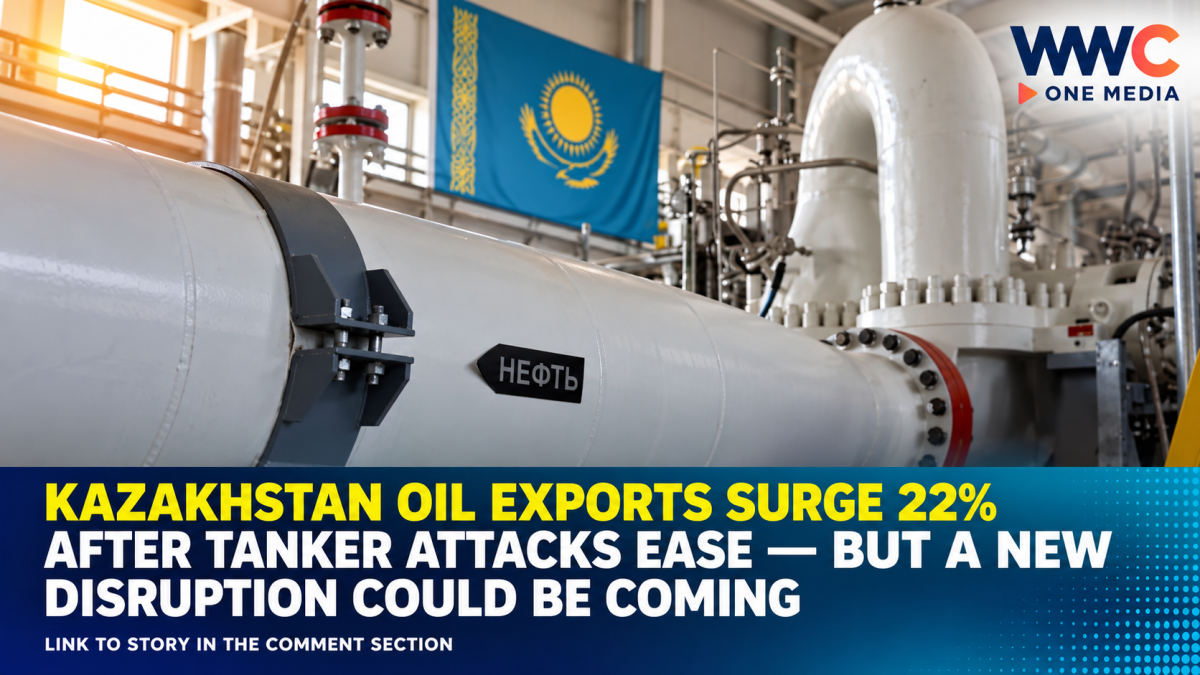
The Caspian Pipeline Consortium (CPC) sharply increased its oil exports in August after a wave of attacks on tankers and loading operations eased, offering temporary relief to one of Kazakhstan’s most important energy export routes.
CPC exports rose 22% in August from the previous month to 6.288 million metric tons, equivalent to around 1.6 million barrels per day, according to industry sources cited by Reuters and Channel NewsAsia. The recovery came as tanker loadings at the Russian Black Sea port of Novorossiysk stabilized following severe disruptions in July.
Kazakhstan Oil Leads the Recovery
The biggest increase came from Kazakh crude transported through the CPC system.
Exports of Kazakh oil rose by about 25% in August to 5.7 million tons, while Russian crude shipments through the network slipped by approximately 4% to 550,000 tons, according to the Reuters report.
The CPC pipeline is critical to Kazakhstan’s economy and global oil markets. The 1,511-kilometre Tengiz-Novorossiysk system transports crude from Kazakhstan’s major oil fields to the Black Sea, with the route carrying a substantial share of the country’s oil exports.
Major oil fields connected to the system include Tengiz, Kashagan and Karachaganak.
July Attacks Sent Shockwaves Through the Black Sea
The August rebound followed a turbulent July, when several tankers operating near the CPC marine terminal were attacked by unmanned aerial vehicles.
CPC said two tankers came under attack during loading operations on July 19, causing a fire aboard one vessel and forcing oil loading to stop temporarily. The consortium said there were no reported fatalities and no oil spill.
Another tanker was attacked the following day, according to CPC, once again disrupting loading operations and highlighting the growing danger facing commercial shipping around the terminal.
The attacks caused a dramatic drop in crude loadings.
Data reported by S&P Global showed CPC exports fell to just 163,000 barrels per day during the week of July 21 to July 27, before recovering as more tankers returned to the region despite elevated security risks and high freight costs. By the week beginning Aug. 3, loadings had climbed back to around 1.41 million barrels per day.
The Recovery Is Real — But the Damage Is Not Fully Gone
Despite August’s strong month-on-month rebound, CPC’s overall exports for the first eight months of the year remained under pressure.
Total loadings from January through August were reported at 44.8 million tons, down 8% from the same period a year earlier. The figures underline how quickly repeated attacks and shipping disruptions can affect one of Eurasia’s most strategically important oil routes.
The wider impact has also been visible in Russian Black Sea exports. S&P Global reported that Russian crude shipments from the Black Sea fell sharply in August amid attacks and continued security concerns affecting the region.
September Could Bring Another Slowdown
CPC’s recovery may face another test in September.
Industry sources expect exports through the system to decline to around 1.5 million barrels per day as maintenance work at Kazakhstan’s Karachaganak oil and gas condensate field affects supply available for export.
That means the August surge may prove temporary, especially if operational disruptions return or security risks again discourage tankers from entering the Black Sea loading area.
Why the CPC Pipeline Matters to Global Oil Markets
The CPC route is far more than a regional pipeline.
It connects major Kazakh oil production with international markets through the Black Sea and involves shareholders and shippers linked to major global energy companies. CPC has said attacks on tankers and export infrastructure could threaten international crews, disrupt energy supplies and create serious environmental risks in the Black Sea.
The latest rebound also comes at a sensitive moment for global energy markets, where other major shipping routes and oil infrastructure are facing increasing geopolitical pressure. Wider disruptions to maritime oil transport have contributed to heightened concerns about supply security and shipping costs.
For Kazakhstan, the stakes are particularly high. The CPC network remains one of the country’s most important routes for getting crude to international buyers.
For global markets, August’s 22% recovery provides some relief.
But with maintenance ahead, shipping risks still elevated and the memory of July’s attacks still fresh, the bigger question remains:
Can CPC keep the oil flowing — or was August’s recovery only a brief calm before the next disruption?




Leave a Reply