
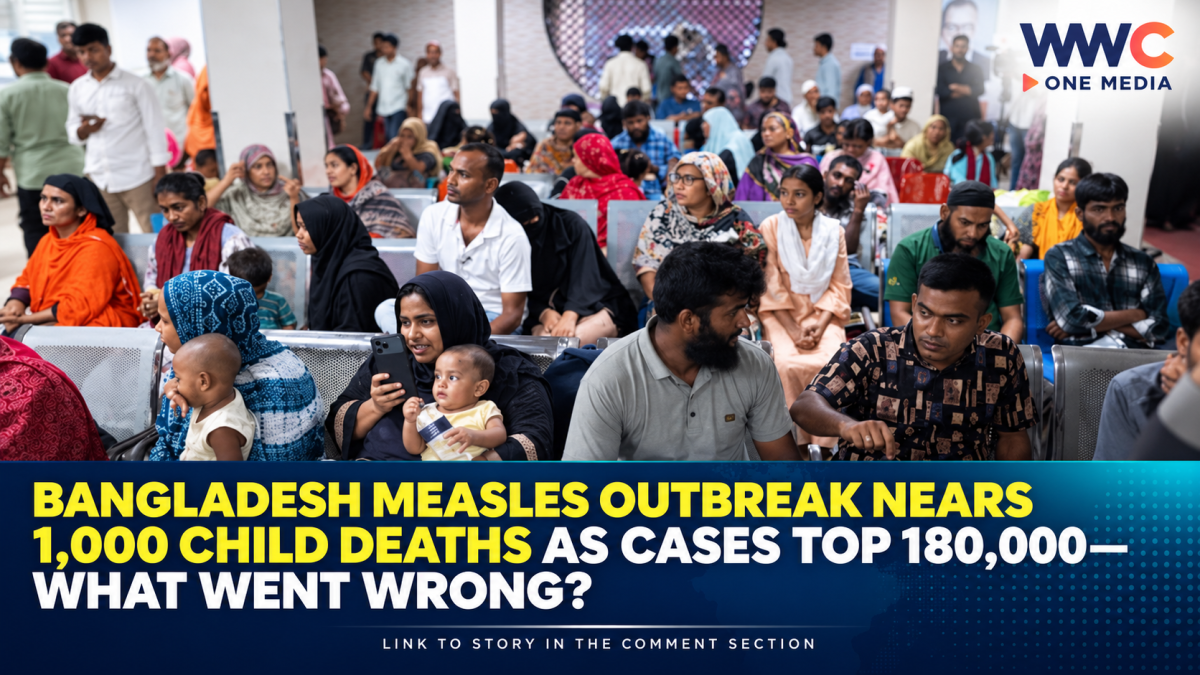
DHAKA — Bangladesh is confronting one of its worst measles outbreaks in decades, with the number of children who have died from confirmed or suspected measles-related illness now approaching 1,000.
The latest figures from Bangladesh’s Directorate General of Health Services (DGHS) show that 987 children have died from measles or measles-like symptoms since March 15, while the combined number of confirmed and suspected cases has climbed to 181,829.
The figures underscore the scale of an outbreak that has continued to overwhelm hospitals despite an emergency vaccination campaign launched earlier this year.
More than 1,100 new children developed measles-like symptoms in a single 24-hour reporting period, while 40 additional cases were laboratory-confirmed, according to the latest DGHS figures reported by Bangladeshi media.
The crisis has been particularly devastating for young children.
CNA, citing AFP reporting from Dhaka, reported that most cases have involved children between six months and five years old, with hospitals treating critically ill youngsters suffering complications including pneumonia and severe breathing difficulties.
Hospitals under mounting pressure
At Bangladesh Shishu Hospital in Dhaka, medical workers have been treating scores of children in dedicated measles wards.
CNA reported that 101 children were admitted with suspected or confirmed measles at the facility during its latest visit, while parents described children requiring oxygen after developing serious respiratory complications.
Doctors and public-health experts have also pointed to malnutrition as a major factor worsening the severity of illness.
A Bangladeshi study cited by Observer reported that about 65% of infected children were malnourished, including children suffering from moderate or severe malnutrition.
That creates a particularly dangerous combination: a highly contagious virus spreading among children whose immune systems may already be weakened.
Why did the outbreak become so severe?
The current crisis did not emerge overnight.
The World Health Organization warned earlier in the outbreak that Bangladesh was facing significant immunity gaps after disruptions to measles vaccination coverage.
In an April assessment, WHO reported that cases had already been detected in 58 of Bangladesh’s 64 districts, with children under five accounting for the majority of reported infections. WHO assessed the national risk as high because of continuing transmission, large numbers of susceptible children and measles-related deaths.
UNICEF likewise identified declining vaccination coverage as an important factor.
Its Bangladesh analysis said first-dose measles-rubella coverage had fallen from 88.6% in 2019 to 86% in 2023, while second-dose coverage dropped from 89% to 80.7% over the same period.
UNICEF said the resulting immunity gap left millions of children susceptible to measles and warned that at least 95% coverage with two doses is needed to maintain population-level protection.
The World Health Organization has also linked the outbreak to vaccine stockouts in 2024–2025, gaps in routine immunisation and the absence of regular nationwide supplementary measles-rubella campaigns since 2020.
Bangladesh launched an emergency vaccination campaign
Bangladesh has responded with a large-scale vaccination effort supported by WHO, UNICEF and Gavi, the Vaccine Alliance.
The emergency campaign began in April in high-risk areas and was designed to reach children who had missed routine vaccinations. The initial effort targeted more than 1.2 million children aged six months to five years in 30 high-risk subdistricts, with plans for wider implementation.
UNICEF later reported that its support for the government’s emergency measles-rubella campaign had helped reach approximately 18.5 million children by the end of June, even as more than 100,000 suspected cases and 625 suspected deaths had already been reported at that point.
But the continued rise in infections and deaths suggests that vaccination gaps have not yet been fully closed.
A preventable disease with potentially deadly complications
Measles is among the world’s most contagious infectious diseases.
The virus spreads through respiratory droplets and airborne transmission. Symptoms commonly include high fever, cough, runny nose, red or watery eyes and the characteristic rash.
While many patients recover, measles can cause severe complications such as pneumonia, diarrhoea, encephalitis and blindness, particularly among young or malnourished children.
There is no specific antiviral treatment for uncomplicated measles, making prevention through vaccination especially important.
WHO recommends maintaining at least 95% vaccination coverage with both measles-containing vaccine doses to prevent sustained transmission.
The warning behind Bangladesh’s numbers
The Bangladesh outbreak is more than a national health emergency. It is a warning about how quickly measles can return when vaccination coverage falls.
Bangladesh had previously made significant progress against measles. WHO noted that measles incidence declined sharply as vaccination coverage improved, but immunity gaps accumulated after disruptions to vaccination programmes.
Now, hundreds of children are still being admitted to hospitals, and the death toll is moving toward the grim 1,000 mark.
The latest figures also show why health experts are calling for more than a short-term vaccination campaign: routine immunisation, reliable vaccine supplies, early diagnosis, adequate hospital capacity and better protection for vulnerable children will all be critical if Bangladesh is to stop the outbreak from becoming an even larger tragedy.
For families across the country, the central message from health authorities remains clear: measles is highly contagious, but it is also vaccine-preventable.
WWC ONE MEDIA M.J.E




Leave a Reply