
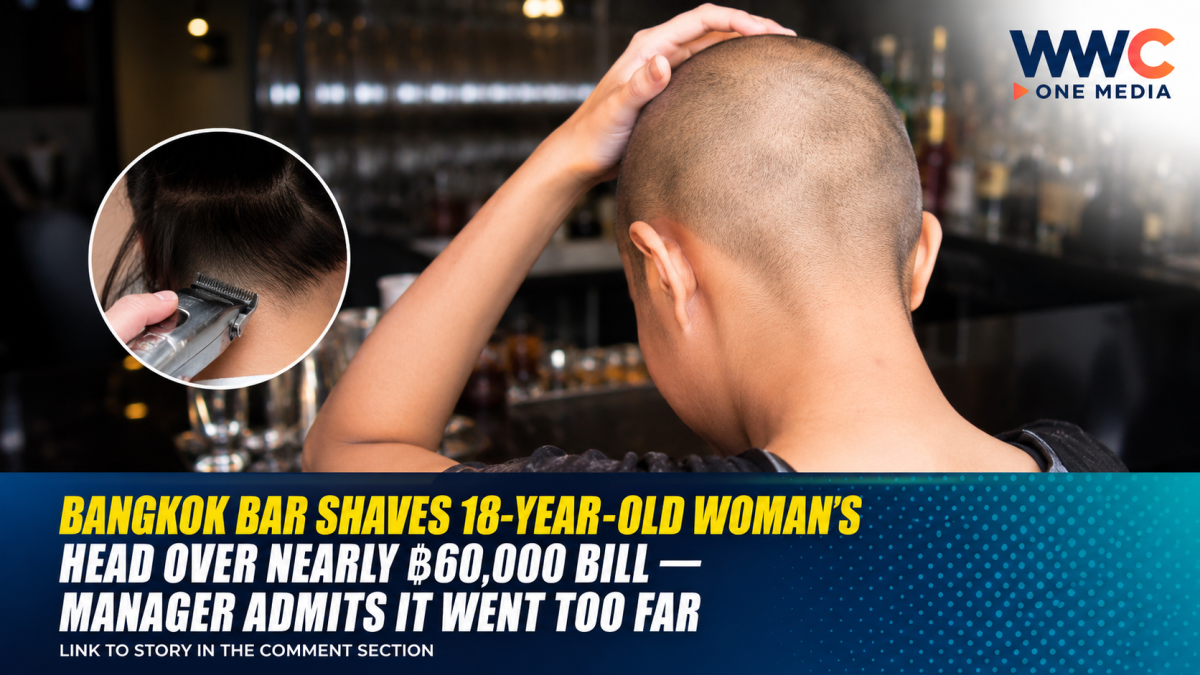
BANGKOK — A dispute over an unpaid bar bill in Bangkok has erupted into a major social media controversy after an 18-year-old woman was allegedly made to have her head shaved as part of an agreement to settle a bill of nearly 60,000 baht (about US$1,800).
The incident reportedly occurred at a host bar in Bangkok’s Pinklao area and came to public attention after Thai social activist Chalida Phalamat, known as “Ton Aor Pen Nueng,” shared details of the case online.
According to reports from Thai media, the woman had accumulated a bill of roughly 60,000 baht after spending money on drinks and services at the venue. She reportedly told the bar that she did not have enough money to pay.
Rather than immediately resolving the dispute through the authorities, the bar allegedly entered into an agreement with the woman involving her hair.
A ฿3,000 hair agreement led to a shocking outcome
Thai media reports say the woman initially agreed to a contract valuing her hair at approximately 3,000 baht, with the amount to be deducted from the outstanding bill.
The agreement reportedly specified hair of at least 60 centimetres. Her hair was initially cut to around ear length before the bar manager allegedly used electric clippers to shave the remainder of her hair from the roots, leaving her with a completely shaved head.
The bar reportedly said the hair was intended to be donated, although reports did not establish where it would ultimately be donated.
The incident triggered widespread criticism online, with many questioning whether a private business should have used the woman’s hair as a form of compensation for an unpaid bill.
Bar says woman allegedly used a fake ID
The controversy became more complicated after the bar manager gave an account of what happened.
According to Workpoint News and other Thai reports, the manager claimed the woman had used a fake identification card when entering the venue. The manager also alleged that she had previously left other establishments without paying bills. These claims remain allegations and should not be treated as established facts unless confirmed through the authorities.
The manager said the decision to shave the woman’s head was made in anger and later acknowledged that the response had gone too far.
The venue subsequently apologized and indicated that it was prepared to discuss assistance with the woman’s family.
Woman’s family goes to police
Thai media also reported that the woman’s mother accompanied her to Bang Yi Khan police station to report the incident.
The case has raised questions about the circumstances surrounding the agreement, including whether the woman was genuinely in a position to give free and informed consent while facing a large unpaid bill.
Social activist Chalida questioned why the bar did not simply take the matter to police if it believed the woman had intentionally failed to pay or had committed fraud. She also questioned why the woman’s hair had to be shaved so extensively.
The bigger question: Can an unpaid bill justify this?
The case has divided online opinion.
Some commenters have focused on the alleged unpaid bill and the woman’s responsibility to pay for services she received. Others argue that regardless of the debt, a business should not impose its own physical or humiliating punishment.
Chalida has urged businesses dealing with unpaid bills or suspected fraud to use legal channels rather than taking punishment into their own hands.
The incident has therefore evolved beyond a dispute over a bar tab. It has become a broader debate about consent, dignity, private punishment and the limits of a business’s response to an unpaid debt.
For now, the competing accounts remain important: the woman and her family have reported the incident to police, while the bar has acknowledged that its manager’s response was excessive and apologized.
The investigation and any potential legal consequences will determine whether further action is taken.




Leave a Reply