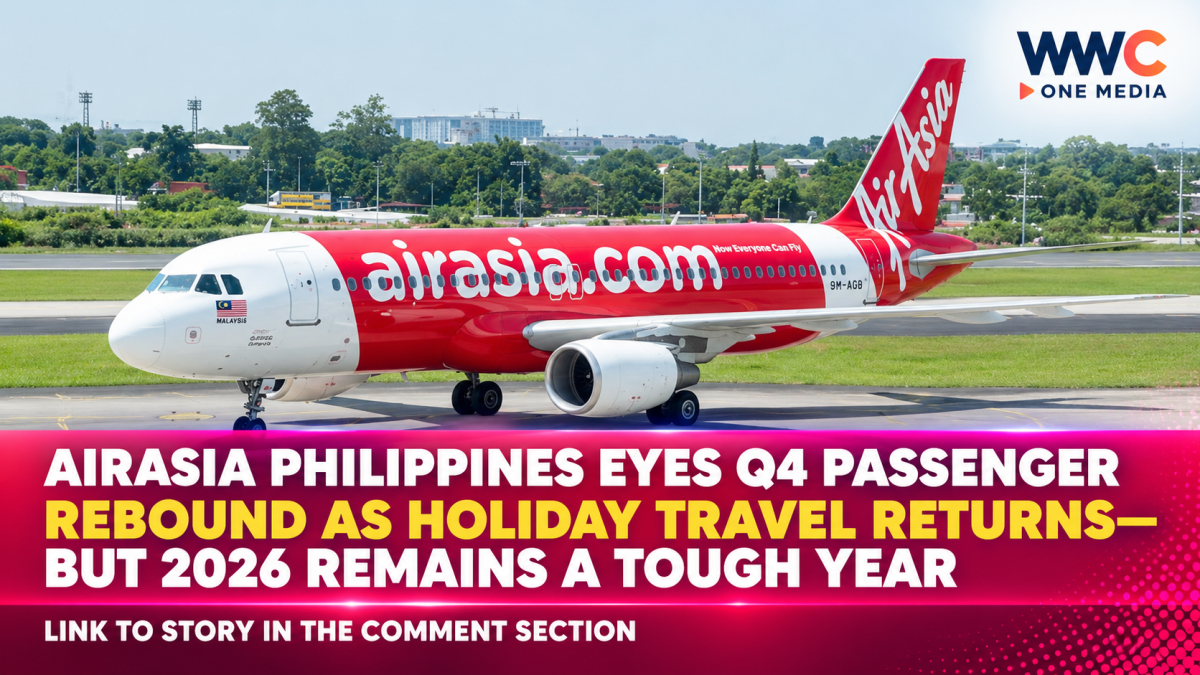
MANILA — AirAsia Philippines expects passenger traffic and load factors to improve in the fourth quarter as holiday travel picks up, giving the low-cost carrier a potential lift after a difficult first nine months marked by weaker demand, higher fuel costs and changing travel behavior.
AirAsia Philippines President and General Manager Anna Victoria Lu said the airline is preparing to increase domestic and international capacity ahead of the year-end travel season, traditionally one of the strongest periods for passenger demand. Management expects the fourth quarter to help offset some of the losses and weaker traffic recorded earlier in 2026.
The airline has been dealing with a significant shift in how Filipinos plan and purchase flights. Lu said travelers have become more cautious, with passengers increasingly booking only when they are certain they will actually travel rather than buying promotional fares in advance.
That change in behavior has affected demand even as AirAsia continues to offer low-cost fares. The airline has responded by reducing frequencies and temporarily suspending weaker routes to concentrate available aircraft and capacity on routes with stronger demand.
AirAsia Philippines carried about 2.9 million passengers during the first half of the year, compared with 5.63 million for the whole of 2025 and 6.33 million in 2024. The figures illustrate the challenge facing the carrier as it attempts to recover passenger volumes while consumers remain cautious about discretionary travel spending.
Fuel costs have been another major challenge. The conflict in the Middle East sent global oil prices sharply higher earlier this year, pushing jet-fuel costs up and forcing airlines to reassess fares, capacity and route profitability.
AirAsia Philippines has consequently rationalized parts of its network, including reductions involving its Cebu hub and Davao operations. The strategy is aimed at limiting exposure to routes that are less able to support higher operating costs while preserving capacity for stronger markets.
The fourth quarter offers a different demand environment. With Christmas, New Year and year-end holidays approaching, airlines typically see stronger bookings for both domestic leisure destinations and international trips. AirAsia Philippines is therefore preparing to ramp up capacity as demand improves.
Lu said the airline is confident that its load factors will increase in the fourth quarter, while describing 2026 overall as an exceptionally challenging year. The company is also looking at restoring some flight frequencies and introducing additional routes as market conditions improve.
Clark International Airport could become part of that longer-term expansion. AirAsia Philippines currently operates seasonal flights between Clark and Caticlan, but management said it could explore additional international services from Clark in the future. Larger aircraft expected to arrive beginning next year could provide more flexibility for expanding the network.
The broader AirAsia group is also adjusting its strategy as fuel prices remain volatile. Parent company AirAsia has been reducing underperforming routes, returning older aircraft to lessors and renegotiating supplier arrangements. The group has also said it is pursuing financing primarily for debt refinancing and balance-sheet restructuring rather than relying solely on fresh operating capital.
Despite the difficult environment, AirAsia has reported signs of stronger demand heading into the final quarter. Group-wide load factor reached 80% in the third quarter, with management citing strong fourth-quarter bookings.
For AirAsia Philippines, however, a passenger rebound will depend on more than seasonal demand. Fuel prices, airfares, household spending, geopolitical developments and consumer confidence could all influence whether travelers follow through on their holiday plans.
The airline is also preparing for longer-term fleet expansion. Additional aircraft could allow it to restore routes and explore new markets, but the timing of capacity increases will need to match actual passenger demand to avoid adding costs faster than revenues recover.
For travelers, stronger fourth-quarter demand could mean more flight options as airlines restore capacity. But elevated operating costs could continue to influence fares and route decisions.
The bigger question now is whether the holiday travel surge will be strong enough to turn AirAsia Philippines’ expected fourth-quarter rebound into a broader recovery—or whether cautious Filipino travelers and persistent fuel pressures will continue to weigh on the airline into 2027.