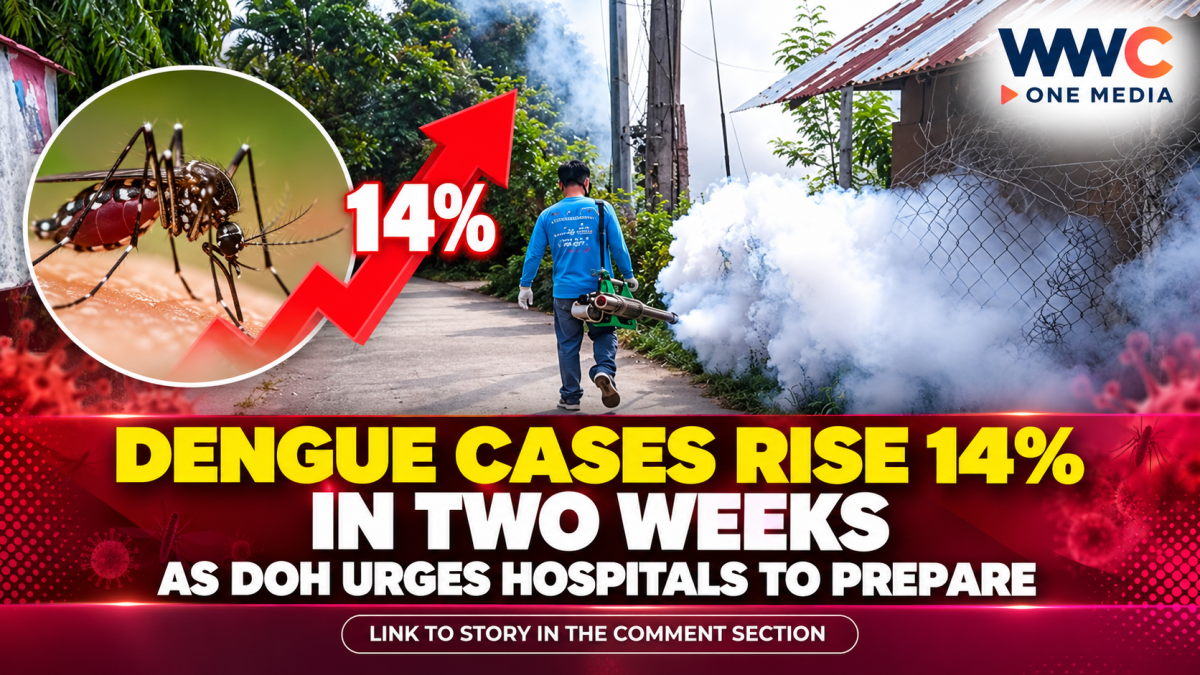
MANILA — Dengue infections in the Philippines are showing an increasing trend, with nearly 20,000 cases recorded nationwide over a two-week period in late August and early September, prompting the Department of Health to urge hospitals to strengthen their readiness.
DOH data showed 19,792 dengue cases were reported from Aug. 20 to Sept. 2, 2026, up 14 percent from the 17,342 cases recorded between Aug. 6 and 19. The increase comes as health authorities continue monitoring dengue transmission across several regions.
Despite the recent rise, the cumulative number of cases remains substantially lower than last year. From Jan. 1 through the latest reporting period, the country had recorded 155,918 dengue cases, 33 percent below the 231,850 cases reported during the comparable period in 2025.
Central Luzon, Calabarzon and the National Capital Region were among the areas reporting the highest numbers of dengue cases, making the latest increase particularly significant for densely populated communities where mosquito-breeding sites can be difficult to control.
The DOH is encouraging health facilities to consider reactivating dengue fast lanes, particularly in areas where case numbers reach alert or epidemic thresholds. These dedicated pathways are intended to allow patients with suspected dengue to receive faster assessment and appropriate medical care.
Dengue is transmitted primarily by infected Aedes mosquitoes, which can breed in containers and areas holding stagnant water. Health authorities continue to emphasize eliminating potential breeding sites around homes, schools, workplaces and communities.
The DOH’s prevention strategy includes searching for and destroying mosquito-breeding grounds, using personal protection such as insect repellent and appropriate clothing, seeking medical consultation early when symptoms develop, and supporting targeted mosquito-control activities in affected areas.
The recent national increase does not mean the Philippines is experiencing a nationwide dengue outbreak. Case levels vary considerably by location, and local health authorities assess outbreaks using surveillance trends and established thresholds.
In Cebu, for example, provincial health officials reported 3,759 cases and 21 deaths from Jan. 1 to Sept. 11, but said weekly transmission remained below the thresholds used to declare a province-wide outbreak.
Health officials continue to stress early consultation because severe dengue can develop after an initial period of fever. Warning signs requiring urgent medical attention can include severe abdominal pain, persistent vomiting, bleeding, difficulty breathing, extreme weakness or changes in consciousness.
The latest figures show a complicated picture: dengue infections are rising in the short term, but total cases for 2026 remain below last year’s level. The coming weeks will be important for determining whether the recent increase remains temporary or develops into sustained transmission in more communities.
For now, health authorities are urging households and local governments to intensify mosquito-control measures while hospitals prepare for a possible increase in patients.