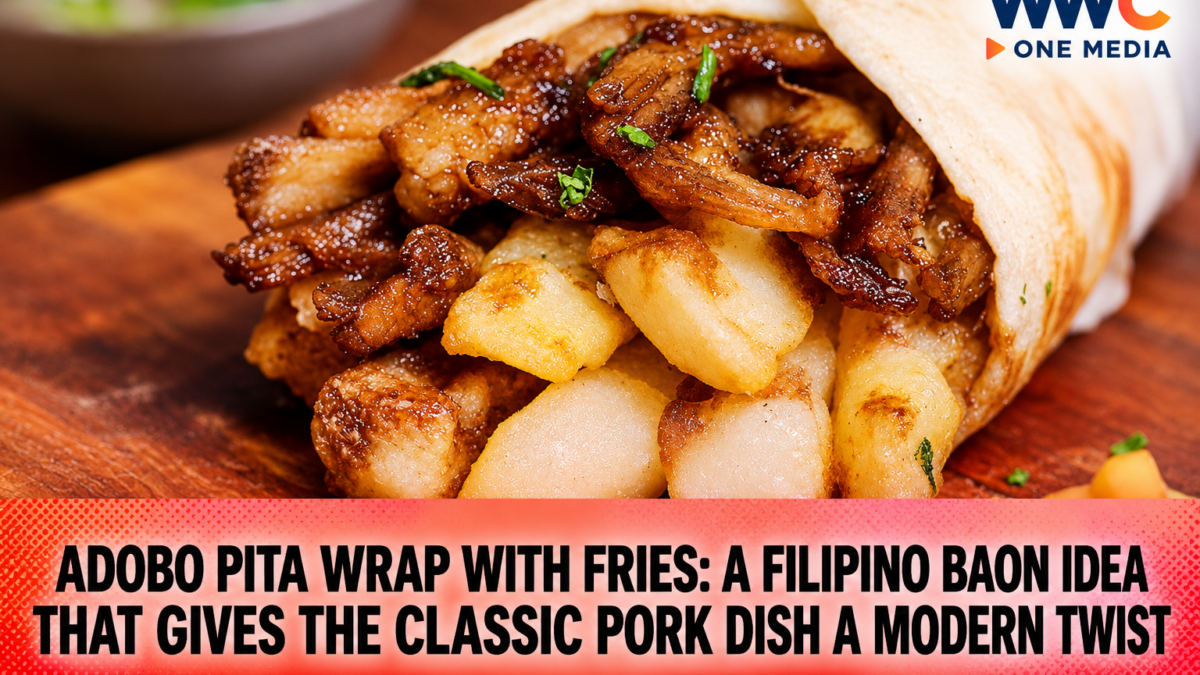
MANILA, Philippines — Looking for a new way to enjoy the country’s beloved adobo without packing the usual plate of rice? A recipe featuring shredded pork adobo, crispy French fries and homemade potato pita bread is offering Filipino workers another option for their everyday office baon.
The dish, called Potato Pita Wrapped Adobo with Fries, combines familiar Filipino flavors with a handheld sandwich-style presentation. Instead of serving adobo over rice, the recipe places shredded pork inside soft pita pockets made with potato granules, then adds golden fried potato strips for extra texture.
The recipe was featured by Philstar.com on November 12, 2026, in a food article by Dolly Dy-Zulueta. It was presented by Potatoes USA–Philippines, which also publishes the recipe on its own website.
The idea is straightforward: turn a familiar home-cooked dish into a portable meal that can be prepared ahead of time, packed for work and customized with pork or chicken.
How the adobo pita wrap works
The recipe brings together three main components:
- Potato pita bread: Homemade pita dough made with potato granules, all-purpose flour, yeast, warm water, olive oil, sugar and salt.
- Pork adobo filling: Pork cooked with garlic, vinegar, soy sauce, water, bay leaf and a little sugar before being shredded.
- Crispy fries: Straight-cut potatoes fried until golden and added to the pita pocket.
Once the pork is tender and shredded, it is mixed with some of the thickened adobo sauce. The filling is then placed inside the pita bread with the fries and finished with chopped chives.
The result is a combination of savory, tangy adobo, soft bread and crispy potatoes.
The recipe serves four people, making it an option for families preparing several packed lunches at once.
What makes the potato pita different?
Unlike conventional pita bread, this version uses standard potato granules as part of the dough.
The granules are combined with flour and yeast to create a soft dough that rises before being divided into individual portions.
The dough is shaped into eight-inch circles and baked in a very hot oven using a preheated cast-iron skillet. When properly prepared, the pita inflates and develops an internal pocket that can hold the adobo filling.
For people who do not have enough time to make bread from scratch, the recipe also suggests using store-bought pita bread.
That shortcut makes the meal easier to prepare without removing the main idea: combining adobo and fries inside a convenient bread pocket.
How to prepare the pork adobo filling
The pork filling follows familiar adobo cooking steps.
First, sear the pork on both sides. Set it aside while preparing the garlic, vinegar, water and bay leaf mixture.
After boiling the vinegar mixture, add soy sauce and return the pork to the pan. Simmer until the meat is thoroughly cooked and tender.
A little sugar is added toward the end, allowing the sauce to thicken.
Once the pork is ready, shred it using a knife or fork. Mix the shredded meat with some of the reduced adobo sauce so the filling retains its flavor without becoming excessively wet.
The original recipe uses approximately 250 grams of pork, two cloves of garlic, three tablespoons of vinegar, three tablespoons of soy sauce, one bay leaf and sugar.
Chicken can also replace pork, according to the recipe.
The recipe: What you need
For the potato pita:
- 80 grams standard potato granules
- 204 grams all-purpose flour
- 1 cup warm water
- 2 tablespoons yeast, listed as 34 grams in the published recipe
- 1 teaspoon granulated sugar
- 1 tablespoon extra virgin olive oil
- 1½ teaspoons salt
For the adobo and fries:
- 130 grams frozen straight-cut potatoes
- ¼ kilogram pork, cut for adobo
- 2 cloves garlic
- 3 tablespoons vinegar
- ½ cup water
- 1 bay leaf
- 3 tablespoons soy sauce
- ½ tablespoon sugar
- Cooking oil for frying
For serving: Chopped chives for garnish.
The original recipe specifies that the pork can be replaced with chicken.
Preparation at a glance
- Prepare the pita dough. Activate the yeast with warm water and sugar, then mix in the flour, potato granules, olive oil and salt. Knead until smooth and elastic.
- Let the dough rise. Cover and leave in a warm place until it doubles in size, approximately one hour.
- Shape the pita. Divide into eight portions, roll into balls and allow them to rest. Flatten each into a circle.
- Bake the pita. Use a preheated skillet in a 500°F oven. Bake each pita for approximately three to five minutes, until it puffs and begins turning golden.
- Cook the adobo. Sear the pork, prepare the vinegar and garlic mixture, then add soy sauce and simmer until the meat is thoroughly cooked.
- Shred the pork. Reduce the sauce, shred the meat and mix it with some of the adobo sauce.
- Prepare the fries. Deep-fry the straight-cut potatoes at 400°F for approximately four to five minutes, or until golden.
- Assemble the wrap. Fill each pita pocket with shredded adobo and fries. Garnish with chives and serve.
Important measurement check: The published recipe lists the adobo’s ½ cup of water as 236 ml. That conversion is inconsistent: one US cup is approximately 236 ml, while half a cup is approximately 118 ml. The original recipe also lists two tablespoons of yeast as 34 grams. Because these measurements can affect dough texture and cooking results, check the actual ingredient measurements and yeast type before preparing the recipe. The full original instructions are available from Potatoes USA–Philippines.
Why this could work for office baon
One of the biggest advantages of the recipe is that it offers a different way to use a familiar home-cooked dish.
Instead of preparing a separate meal for lunch, families can cook adobo as they normally would and use some of it as a pita filling.
The recipe also allows flexibility:
- Use homemade or store-bought pita bread.
- Substitute chicken for pork.
- Prepare the adobo ahead of time.
- Make several pita breads in one batch.
- Add the fries when assembling the wrap.
The recipe’s original feature also recommends preparing extra pita bread, packing the pieces separately and freezing them for later use.
That can reduce preparation time on busy mornings, although the bread should be stored and reheated properly.
Is it a healthier alternative to rice?
The dish is presented as an alternative for people who want to change their usual rice-based lunch, but that does not automatically make it a low-calorie or low-carbohydrate meal.
Potatoes are a source of carbohydrates and provide nutrients such as potassium, vitamin C and vitamin B6. However, this particular recipe also includes flour, pork, oil and deep-fried potatoes.
Its nutritional value will depend on portion sizes, the cut of pork, the amount of oil used and the balance of ingredients in each serving.
The Alliance for Potato Research & Education identifies potatoes as a source of potassium, vitamin C, vitamin B6 and dietary fiber. Potatoes USA also publishes nutrition information highlighting the nutrients found in potatoes.
The important distinction is that replacing rice with pita and fries changes the meal’s ingredients, but does not necessarily reduce its overall carbohydrate or calorie content.
For people monitoring their food intake, portion size and preparation method still matter.
Food safety matters when packing adobo for lunch
A convenient baon should also be safe to eat hours after preparation.
Because the filling contains cooked pork or chicken, it should not simply be left inside a lunch bag at room temperature for an extended period.
The United States Department of Agriculture’s Food Safety and Inspection Service recommends using at least two cold sources, such as frozen gel packs, to keep perishable packed lunches cold. For hot food, it recommends an insulated container that maintains a safe hot temperature.
For this recipe, a practical approach is to store the adobo and pita separately, keep the meat properly chilled during transport, and assemble the wrap when possible.
The fries are best prepared close to serving time because they can lose their crispness when stored with moist adobo filling.
These small steps can help preserve both the food’s quality and safety.
Filipino food culture is embracing new combinations
The adobo pita wrap is part of a wider food culture in which familiar Filipino flavors are being presented in new formats.
Restaurants and food brands increasingly combine recognizable local ingredients with international influences, giving consumers different ways to experience familiar dishes.
WWC ONE MEDIA previously explored this direction in its coverage of Sprite’s spicy food collaboration with Your Local, which brought Filipino-inspired flavors into a contemporary restaurant menu.
Another example is Auro Chocolate’s transformation of Filipino street-food favorites into chocolate creations, showing how familiar local food references can inspire unexpected products.
The growing interest in food also extends to artisan baking. WWC reported on Bread Ahead’s planned first Philippine bakery branch in Makati, reflecting the appeal of bread and bakery concepts among local consumers.
But convenience and affordability remain important considerations for everyday meals. WWC’s report on rising pressure on Filipino food prices as weather disruptions affect farms and fish ponds provides wider context for why households may look for practical ways to prepare food at home and make ingredients go further.
The adobo pita wrap is not a restaurant reinvention of Filipino cuisine. It is a home-cooking idea that uses familiar ingredients in a different combination.
The bottom line: A fresh way to bring adobo to work
The Potato Pita Wrapped Adobo with Fries recipe offers a simple twist on a familiar Filipino favorite.
It combines shredded pork adobo, homemade potato pita bread and crispy fries in a portable format that can be prepared for office lunches or family meals.
Its appeal is not that it replaces traditional adobo or makes potatoes automatically healthier than rice. Instead, it gives home cooks another way to use ingredients they already know.
For busy workers looking for a different baon, the recipe may be worth trying — especially for households that enjoy preparing food in batches.
And perhaps that is the best part: a classic Filipino dish does not always need a complete makeover to feel new. Sometimes, all it takes is a different way to serve it.