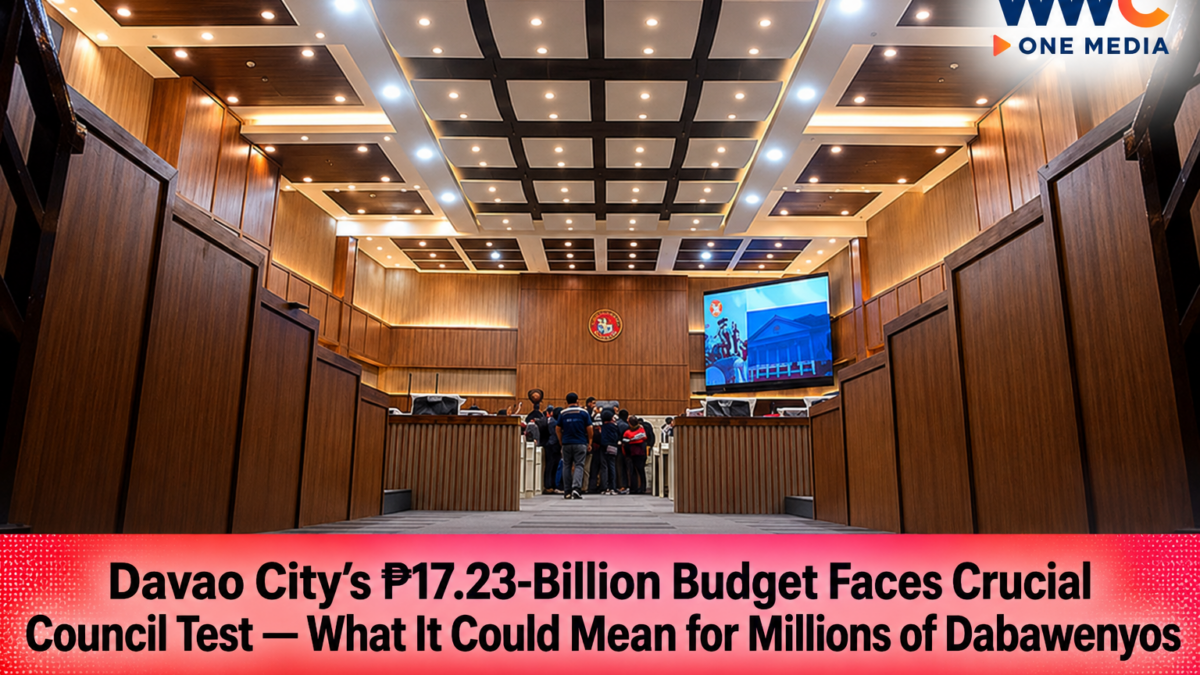
DAVAO CITY, Philippines — Davao City’s proposed ₱17.23-billion annual budget is facing another important stage in the legislative process after the city government’s spending proposal reportedly hurdled its second reading at the Sangguniang Panlungsod.
The development puts the city’s proposed spending priorities under renewed public attention, particularly as Davao continues to address the needs of its growing population.
For residents, the most important question is not simply how much money the city plans to spend, but where that money will go, which public services will benefit, and whether the proposed allocations will translate into improvements that people can actually experience.
The annual budget is one of the most important financial documents of a local government. It determines how public funds are programmed for government operations, infrastructure, social services and development initiatives.
However, passage on second reading does not automatically mean that the proposed budget has become final or that the money is already available for implementation.
Why Davao City’s ₱17.23-Billion Budget Matters
A city budget reflects the government’s priorities for the coming fiscal year.
For Davao City, these priorities are particularly significant because the local government serves approximately two million residents across 182 barangays, according to earlier reporting by Edge Davao.
Councilor Danilo Dayanghirang, chairperson of the City Council’s Committee on Finance, Ways and Means, and Appropriations, previously discussed the city’s expected revenue growth and funding sources for its 2027 budget.
In an October 13 report, SunStar Davao quoted Dayanghirang as saying that the proposed budget was initially expected to exceed ₱16 billion.
He estimated that approximately ₱8 billion could come from the National Tax Allotment (NTA), while another ₱8 billion could come from locally generated revenues.
That earlier estimate provides important context for understanding the reported ₱17.23-billion proposal.
The actual amount and its detailed allocation, however, should be checked against the official budget documents before publication.
The National Tax Allotment is the share of national government tax collections distributed to local government units under the Local Government Code. Local revenues, meanwhile, include collections from taxes, business permits, licenses and other authorized sources.