
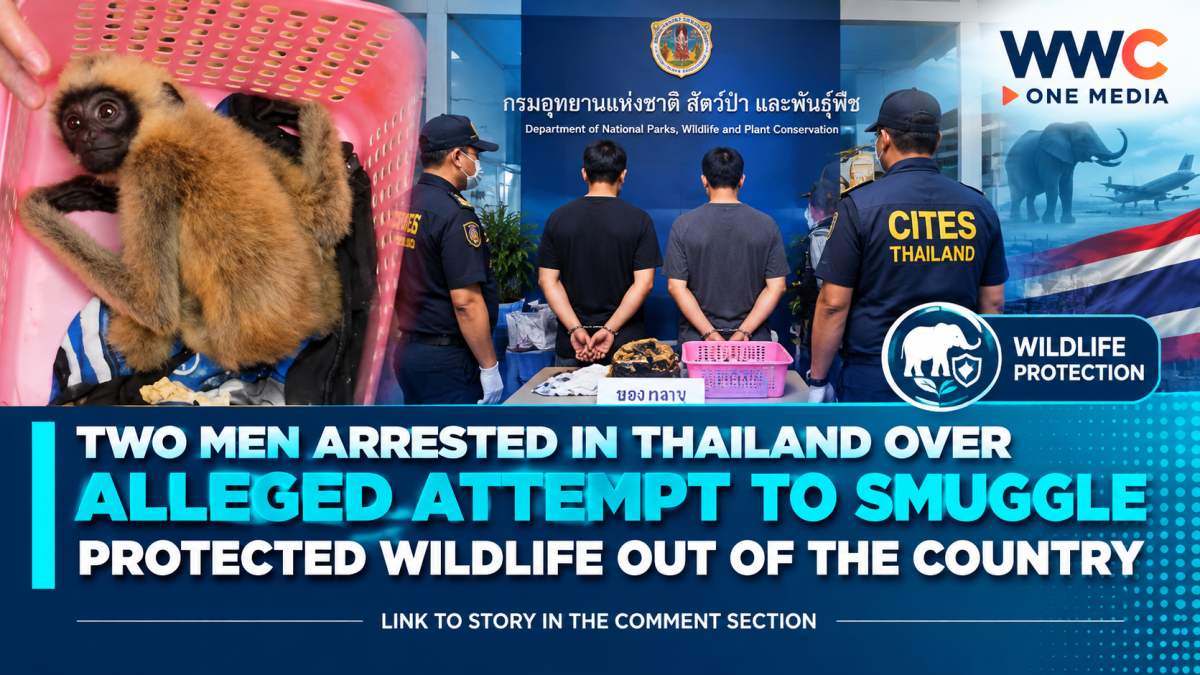
BANGKOK, Thailand — Two men have been arrested in connection with an alleged attempt to smuggle protected wildlife out of Thailand, highlighting renewed concerns over the country’s role in the international illegal wildlife trade.
The arrests, reported by the Bangkok Post, come as Thai authorities continue to intensify efforts to intercept protected animals before they are moved across international borders. The case is the latest to put the spotlight on wildlife trafficking networks operating in and through Thailand.
Thailand Steps Up Fight Against Wildlife Smuggling
Thailand has long been a major transit and trading hub in the global wildlife trafficking network, making airports, border crossings and commercial centres key targets for enforcement agencies.
Thai authorities have repeatedly intercepted attempts to move protected and controlled animals out of the country, often working alongside Customs officials, police, wildlife authorities and international partners.
In May 2026, Thailand’s Department of National Parks, Wildlife and Plant Conservation said authorities had stopped an international wildlife trafficking attempt at Suvarnabhumi Airport through a joint operation involving wildlife officials, Customs and other agencies. The department said authorities were continuing to strengthen coordinated enforcement against cross-border wildlife crime.
Wildlife Trafficking Remains a Major Cross-Border Threat
The latest case comes amid growing international concern over the illegal trade in exotic and protected animals across Southeast Asia.
Just days ago, authorities in Indonesia foiled an attempt to smuggle 101 birds through Soekarno-Hatta International Airport. Officials said the seizure included protected species and involved cooperation between aviation security, Customs and quarantine authorities.
The regional pattern shows how wildlife traffickers continue to exploit international travel and transport routes to move animals across borders.
For traffickers, live animals can be highly profitable in the illegal exotic pet trade. But for the animals themselves, the consequences can be devastating.
Many are transported in cramped containers, hidden in luggage or otherwise concealed during journeys that can cause severe stress, injury or death.
Bangkok’s Wildlife Trade Under Fresh Scrutiny
The arrests also come as Thailand’s wider wildlife trade faces increasing international scrutiny.
A recent investigation by Mongabay reported growing concerns about the availability of wildlife from around the world in Bangkok’s Chatuchak Market, including species originating from South America and other regions.
The report highlighted concerns among observers that the range of animals entering Thailand’s wildlife trade has expanded in recent years, raising fresh questions about enforcement, supply chains and the international networks behind the business.
Previous Wildlife Smuggling Cases Show Scale of the Problem
Thailand has seen a number of major wildlife trafficking cases in recent years.
In 2025, Thai authorities arrested three Taiwanese nationals at Don Mueang International Airport after investigators discovered dozens of protected animals allegedly concealed in stockings and strapped to their bodies.
According to Khaosod English, authorities seized 52 animals, including tortoises and Chinese crocodile lizards, in an operation that investigators said was linked to a larger smuggling network.
Another 2026 report described the arrest of four Indian nationals in Bangkok in connection with an alleged attempt to smuggle protected wildlife, including Indian star tortoises and primates, out of Thailand. Investigators reportedly suspected links to a broader international trafficking network.
Why Wildlife Smuggling Is So Difficult to Stop
Wildlife trafficking is not simply a local crime.
The illegal trade often involves multiple countries, intermediaries, transporters, buyers and sellers.
Animals may be captured in one country, moved through another and eventually sold thousands of kilometres away.
This makes international cooperation essential.
Thailand’s wildlife enforcement agencies have increasingly worked with foreign authorities and international organisations to identify trafficking routes and stop shipments before they leave the country.
Protected Wildlife Cannot Be Treated as Ordinary Cargo
Thai law places strict controls on the possession, transportation and export of protected and controlled wildlife.
Exporting protected animals without the necessary authorisation can lead to serious legal consequences.
Depending on the species and circumstances, suspects may also face Customs-related charges and offences connected to illegal possession, transportation or international trade in wildlife.
International trade in many endangered species is also regulated under the Convention on International Trade in Endangered Species of Wild Fauna and Flora (CITES).
The convention is designed to ensure that international commercial trade does not threaten the survival of protected species.
A Growing Battle Against International Wildlife Crime
The arrest of the two men is another reminder that Thailand remains on the front line of the fight against illegal wildlife trafficking.
Authorities are under increasing pressure to target not only individual couriers but also the larger networks that finance, supply and organise the trade.
Recent seizures across Thailand and Southeast Asia suggest traffickers are continuing to adapt their methods — using airports, personal luggage, commercial transport and other channels to move protected animals across borders.
That means enforcement agencies face an ongoing challenge.
Stopping one courier may save the animals in a single shipment. Breaking the network behind the courier could stop many more.
The Bottom Line
The reported arrest of two men over an alleged attempt to smuggle protected wildlife out of Thailand adds to growing concerns over international wildlife trafficking in the region.
With recent cases involving airports, cross-border transport and alleged international networks, Thai authorities are facing continued pressure to strengthen enforcement and close loopholes exploited by traffickers.
The bigger battle is no longer just about catching smugglers at the airport.
It is about following the entire chain — from the people who capture the animals to the middlemen, couriers and buyers who keep the illegal trade alive.
As Thailand continues its crackdown, wildlife traffickers are being put on notice:
Protected animals are not just illegal cargo — and authorities are increasingly targeting the networks behind them.
WWC ONE MEDIA J.M.D




Leave a Reply