
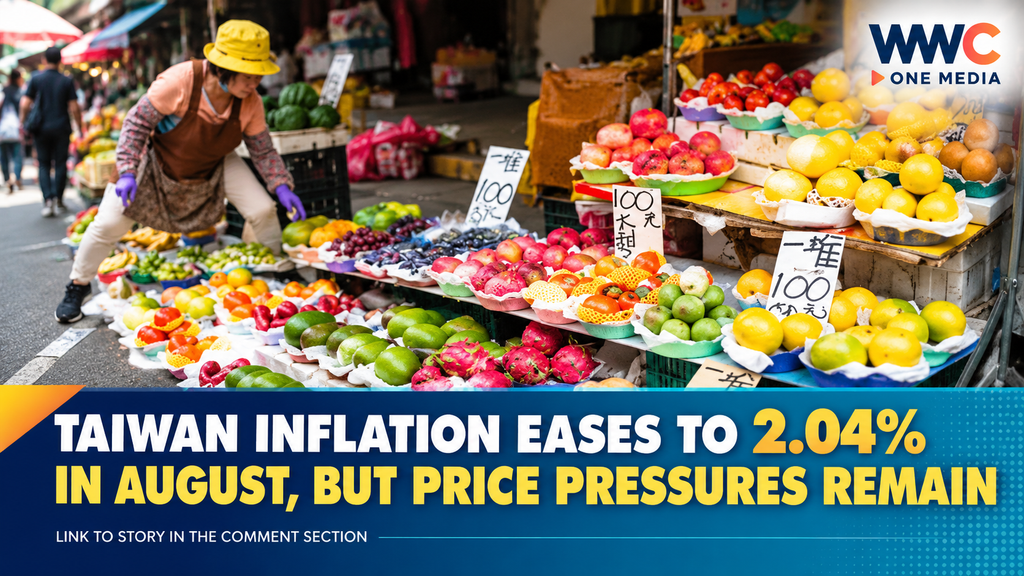
TAIPEI — Taiwan’s headline inflation eased sharply in August, with the consumer price index (CPI) rising 2.04% from a year earlier, down from July’s 2.54% increase. But the latest data offer a mixed picture: inflation remains above the government’s 2% alert level, while core price pressures continue to run above that threshold.
The August reading, released by Taiwan’s Directorate-General of Budget, Accounting and Statistics (DGBAS) on September 8, marks a significant moderation from the previous month.
On a month-to-month basis, the CPI fell 0.01%. After seasonal adjustment, however, prices increased 0.13%. For the first eight months of 2026, consumer prices were up an average 1.84% from the same period last year.
But beneath the headline number, some areas of household spending remain under pressure.
Inflation falls—but stays above the 2% warning line
August marked the fourth consecutive month in which Taiwan’s annual CPI increase exceeded the 2% inflation alert level, according to CNA.
Core CPI, which excludes fresh food and energy prices, increased 2.30% year-on-year in August. That suggests underlying price pressures remain stronger than the headline figure alone might indicate.
The latest result therefore gives Taiwan policymakers a more complicated picture than simply saying inflation has cooled.
Headline inflation is moving lower, but underlying costs have not completely returned to comfortable levels.
Cheaper vegetables helped pull inflation lower
One of the biggest factors behind August’s moderation was a decline in vegetable prices.
Taipei Times reported that the drop in vegetable prices helped offset increases in several other categories, including fuel, airfares and dining out.
That distinction matters because food prices remain an important part of household budgets.
While some grocery prices eased, consumers continued to face higher costs in services.
Eating out became noticeably more expensive
One of the clearest warning signs in the August data came from restaurant and takeaway prices.
According to CNA, food-away-from-home prices increased 3.17% year-on-year, marking their fastest increase in eight months.
That means the cooling headline inflation figure does not necessarily translate into cheaper everyday experiences for consumers.
For households that regularly eat outside the home, the cost increases may remain noticeable even as the overall CPI rate declines.
Fuel and travel costs also added pressure
Fuel prices provided another source of upward pressure.
CNA reported that although domestic gasoline and diesel prices were frozen in August, the low comparison base from the same month a year earlier meant fuel-related prices were still roughly 10% higher year-on-year.
International airfares were also pushed higher by fuel surcharges, while package-tour prices and other recreational services contributed to inflation.
This combination illustrates why Taiwan’s inflation picture remains uneven: some goods are becoming cheaper while services and travel-related costs continue to rise.
Producer prices tell a very different story
The consumer inflation slowdown also comes alongside a sharp increase in producer prices.
DGBAS reported that Taiwan’s Producer Price Index (PPI) jumped 16.75% year-on-year in August, following a 1.04% increase from July.
Import prices measured in U.S. dollars rose 20.45% from a year earlier, while export prices increased 23.05%.
The contrast is striking.
Consumer inflation is close to 2%, while producer and trade-related price measures are registering much larger annual increases.
That gap is something businesses and policymakers will likely continue watching closely.
What happens next?
Taiwan’s statistics officials expect inflation to remain above the 2% threshold in September.
CNA reported that DGBAS price statistics department head Tsai Hsiu-hui expects September CPI growth to remain above 2%, meaning the recent easing may not mark the end of inflationary pressure.
The direction of food, fuel, transportation and service prices will therefore remain important indicators for the months ahead.
The bigger economic picture
Taiwan’s August inflation report delivers both good and cautionary news.
The good news is that the headline CPI increase has fallen substantially from July’s 2.54%, moving closer to the government’s 2% alert level.
But the warning signs are still visible.
Core inflation remains at 2.30%, restaurant prices are rising faster, and producer prices are increasing sharply.
For consumers, that means the headline number may not fully reflect the prices they encounter every day.
For businesses, the steep increase in producer prices could remain a concern if higher input costs eventually feed through to consumer prices.
Bottom line
Taiwan’s inflation story is improving—but it isn’t over.
The August CPI reading of 2.04% represents a clear slowdown from July and provides some relief after several months of stronger price growth.
Yet with core inflation still above 2%, dining-out costs accelerating and September inflation expected to remain above the alert level, Taiwan’s latest figures suggest that price pressures are cooling, not disappearing.
WWC ONE MEDIA G.A


Leave a Reply