
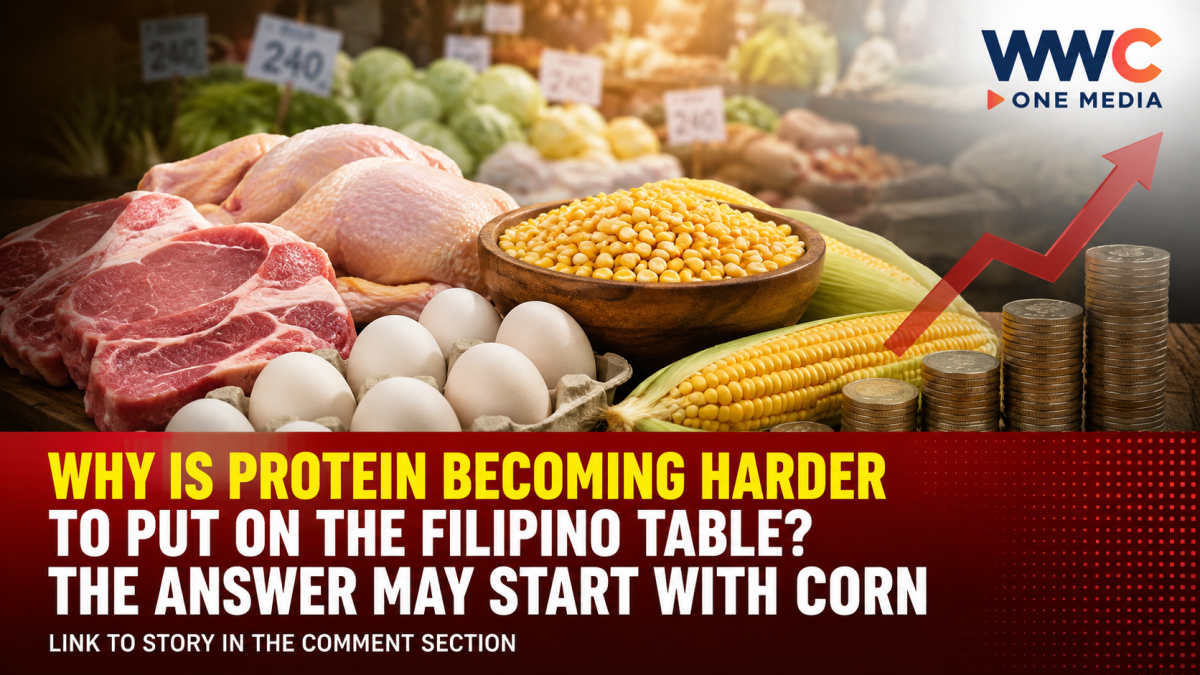
For many Filipino families, inflation is not a number discussed in economic reports. It is a question asked at the market: Can we still afford eggs? Chicken? Pork?
And behind those everyday decisions is an ingredient most consumers rarely think about—corn.
Corn may not always appear on the Filipino dinner plate, but it plays a crucial role in getting affordable chicken, pork and eggs there. As a major component of animal feed, changes in the cost and supply of corn can ripple through the livestock and poultry industries and eventually reach consumers at the grocery store and wet market.
That connection has renewed attention on a proposal to reduce the tariff on imported corn outside the government-set quota from 15% to 5%, matching the rate applied to imports within the quota. Supporters argue that making feed inputs more affordable could help ease cost pressures on producers and strengthen competition across the food supply chain.
But there is an important distinction that must not be lost: lower tariffs do not automatically guarantee lower prices at the retail level. Food prices are influenced by many factors, including transport, fuel, weather, labor, disease outbreaks, supply conditions and market competition.
Still, the debate raises a much bigger question: How can the Philippines keep nutritious sources of protein within reach of ordinary families while protecting local farmers?
The Hidden Link Between Corn and the Filipino Dinner Table
The original Philstar commentary points out that feed is a major expense for poultry and livestock producers and that corn is a key ingredient in many feed formulations. That means higher feed costs can place additional pressure on the prices of chicken, pork and eggs.
For consumers, however, the issue goes beyond economics.
It is about nutrition.
Government nutrition data have already highlighted a worrying reality: many Filipino diets remain heavily dependent on rice and other energy-rich staples, while consumption of protein-rich foods, fruits and vegetables falls short of recommended levels. Results discussed by the Department of Science and Technology–Food and Nutrition Research Institute, based on the 2023 National Nutrition Survey, showed that rice and rice-based products account for around half of the average Filipino’s energy intake. Nutrition experts continue to advocate a more balanced plate that includes adequate protein alongside fruits, vegetables and staple foods.
That makes affordability critical.
When household budgets are stretched, families may prioritize food that fills stomachs at the lowest possible cost. But being full is not always the same as being adequately nourished.
Affordable Protein Is a Food Security Issue
Chicken, eggs, fish, pork, beans and other protein-rich foods are not luxuries in a healthy diet. They are part of the broader nutritional foundation needed for growth, development and overall well-being.
The DOST-FNRI has emphasized that Filipino food choices are shaped not only by preference, but also by budget, time, lifestyle and what is readily available and affordable in local communities. When healthier and more nutrient-dense food options become harder to access, households naturally face difficult compromises.
This is why the conversation about corn tariffs should not be treated as a technical argument reserved for traders, economists and policymakers.
It eventually reaches the family dinner table.
A parent deciding whether to buy a tray of eggs. A worker choosing the cheapest lunch available. A household stretching a limited budget until the next payday.
Those decisions are where food policy becomes real.
But Farmers Cannot Be Left Behind
Any effort to reduce the cost of imported feed ingredients must also address the legitimate concerns of Filipino corn farmers.
Cheaper imports can increase pressure on local producers, particularly if farmers continue to face high production costs, weak infrastructure, limited access to technology and inefficient logistics.
The answer should not be framed as a simple choice between cheap food for consumers and protection for farmers.
The Philippines needs both.
A stronger long-term strategy would focus on improving domestic agricultural productivity and competitiveness while ensuring that food producers have access to reasonably priced inputs. Investments in better seeds, technology, post-harvest facilities, transport and market access could help local farmers compete more effectively without forcing consumers to absorb unnecessarily high costs.
A Policy Debate With Real Consequences
The proposal to reduce the out-of-quota corn tariff deserves serious and transparent scrutiny. Advocates believe a uniform tariff could create more predictable rules and reduce input costs. Critics and farmers, meanwhile, are right to ask how increased imports could affect local livelihoods and agricultural production.
Both concerns are valid.
What policymakers should avoid is pretending that one policy change will solve food inflation or the country’s nutrition challenges overnight. It will not.
But neither should the government ignore the links between agricultural policy, production costs and the affordability of nutritious food.
The Philippines already faces a broader challenge of building healthier and more balanced diets. Government nutrition experts have warned that many Filipinos consume fewer protein-rich foods, fruits and vegetables than recommended, reinforcing the need to make nutritious choices more accessible—not less.
At its heart, this is not just a debate about tariffs.
It is about whether economic and agricultural policies are helping families put healthier meals on the table.
Because somewhere between a corn shipment, a feed mill and a farm lies a question that matters to millions of Filipinos:
Will tomorrow’s dinner still include enough protein—or will it become one more thing families are forced to cut back on?




Leave a Reply