
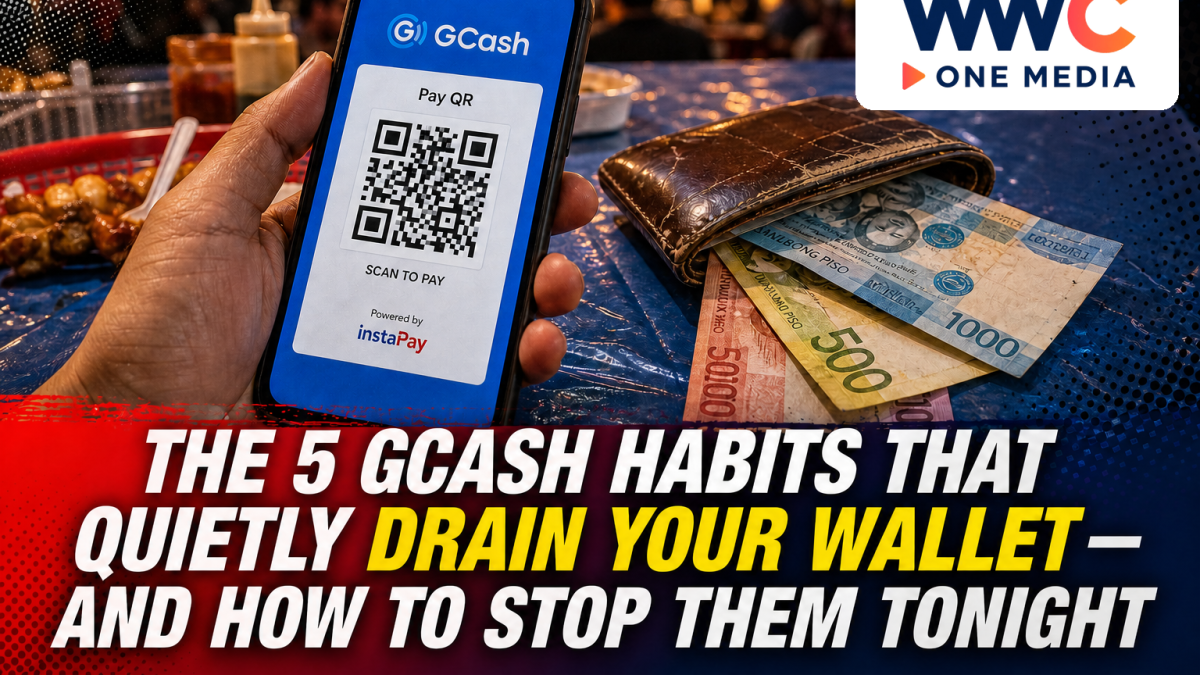
MANILA, Philippines — The balance said ₱427 on a Tuesday that was not even payday-adjacent. A desk editor in Makati opened GCash the way you open a fridge you already know is empty, hoping the light would lie. It did not.
Sunday Shopee. A Grab dinner in BGC because the meeting ran late. A “mini” insurance add-on nobody remembered accepting. GCredit, tapped like it was a wallet. None of them look like a disaster on their own. Together they are why the peso is gone on the 28th.
GCash feels like cash until the leaks start. These five habits are ordinary. That is the problem. Kill them tonight, before payday math gets creative.
1. Auto-save with no ceiling is not a personality
GSave and the other “set aside” tools are useful if you pick an amount you will not miss after rent and an MRT load. They are not useful if every inbound transfer skims a percentage you never recalculated after a job change, a freelance dry month, or the semester when the sibling’s tuition landed.
Open the setting. Put a number. If you cannot name the number out loud, it is too high.
We like the idea of being the kind of person who auto-saves. The app likes that idea too. It will keep skimming after your overtime disappeared and the only inbound transfer this week was a refund from a cancelled bus. A peso cap you could explain to a parent is the adult version. “Whatever is left” is how you discover that nothing is left.
If the auto-save is the only reason you still have an emergency buffer, keep it. Cap it. ₱50 a day is a different product from “sweep a percent of everything.” One of those survives a bad week. The other is how you borrow from GCredit to buy load.
2. GCredit is a loan with a friendly icon
Using it for a Grab dinner in BGC because payday is Tuesday is how a small fee becomes a second bill. The icon sits on the home screen like a spare wallet. It is not a spare wallet.
If you must keep the product — some people have a real reason, a medical gap, a repair — hide it off the home shortcuts. Treat it like a credit card you already dislike. A peso you do not have is still a peso you will pay, with the kind of interest that does not care that the sisig was good.
A slightly opinionated line, since we are here: GCredit should not be how you eat on a Friday. If Friday food requires a loan product, the problem is the week, not the restaurant. That is an ugly sentence. It is also cheaper than pretending the icon is cash.
Hide it. The muscle memory of the tap is the habit. Remove the shortcut and you will feel the extra second, which is often enough to close the app and eat leftover rice like a person who has paid rent.
3. Sale notifications stacked on sale notifications
Shopee, Lazada, and GCash partner drops will train your thumb. The “just looking” scroll at 11 p.m. in a Quezon City boarding house is the most expensive hobby that does not look like one. Fluorescent light, phone on the pillow, a live host yelling about a pan you do not need.
Turn off promotional push. Keep transactional alerts: money in, money out, login from a new device. That split is the whole game.
GCash will still be there in the morning. The flash sale will also still be there, which is the thing the notification is designed to make you forget. We turned off promos on a newsdesk phone for two weeks. The thumb still opened Shopee. It opened it less, and it opened it on purpose, which is a different kind of spending.
Keep the login alert. Keep the send-money alert. If a new device logs into your wallet at 3 a.m., you want that banner more than you want a 12.12 reminder. The reminder is not your friend. It is a salesperson who sleeps in your pocket.
4. The QR you did not actually read
A sticker on a Taguig stall can be covered by another sticker. Confirm the name on screen matches the stall. If the amount is editable, look twice.
This is not a lecture about scams in the abstract. It is the three extra seconds before you tap, the ones vendors hope you skip when a line is forming behind you and the sisig is getting cold and someone is already saying “excuse, boss.”
We have all tapped fast. The desk has tapped fast. The name on the screen was a person’s name that did not match the tarp. We cancelled, asked, and paid the tarp. Awkward for ten seconds. Cheaper than a dispute.
Night markets, parking “collectors,” the guy with a printed QR taped to a motorcycle helmet: same rule. If the amount field is blank and waiting for you, that is not convenience. That is a test you can fail with a zero.
5. The monthly statement you treat like junk mail
The in-app history is a palengke receipt for your whole life. Once a month — pick the day after payday — scroll for names you do not recognize, subscriptions that outlived the promo, and double charges from a flaky Wi-Fi tap at a stall that said “wait lang, signal.”
Screenshot anything weird into a folder for disputes. Then close it. The point is a ritual, not a spiral.
Look for the small ones. ₱49 here. ₱99 there. A “premium” that started as a free month. An auto-load you set up during a typhoon week and never turned off. The big fraud, if it happens, tends to shout. The leaks whisper.
A colleague found three identical coffee charges from the same afternoon, two of them from a failed tap that later went through. She only found them because payday-plus-one is now a calendar mark, same as a bill. That is the energy. Not forensic accounting. A scroll.
Twelve minutes, if you do not open Shopee in the middle
Open Settings, then notifications: keep login and transfer alerts, kill promos. Open GCredit and remove it from shortcuts if you keep tapping it like a wallet. Open GSave and type a peso cap you could explain to a parent. Scroll 30 days of history and star anything you do not recognise.
That is the whole audit. Repeat the day after payday, not during a Shopee live, not in a jeepney, not at 11 p.m. when the boarding-house light is doing that yellow thing that makes every checkout button look reasonable.
If you share the wallet in a household — some families still float GCash like a common purse — do the scroll together once. The leaks are sometimes a sibling’s game top-up that everyone agreed to and then forgot. Sometimes they are not. You want to know which.
GCash is infrastructure in Manila now, which means the leaks are infrastructure too. Cap the auto-save. Stop treating GCredit like a buffer. Silence the sale pings. Read the QR name. Audit the month on a calendar date.
None of this requires a new wallet. It requires treating the app like a bank, because that is what it already is, even when the icon is still the one you used to buy load from a sari-sari in college.
The ₱427 Tuesday is a specific memory on this desk. The audit would not have put the sisig back. It would have made the next Tuesday less of a surprise. That is the only magic available here. Do it tonight, while the balance is still a number you can look at without flinching — or especially if it isn’t.



Leave a Reply