
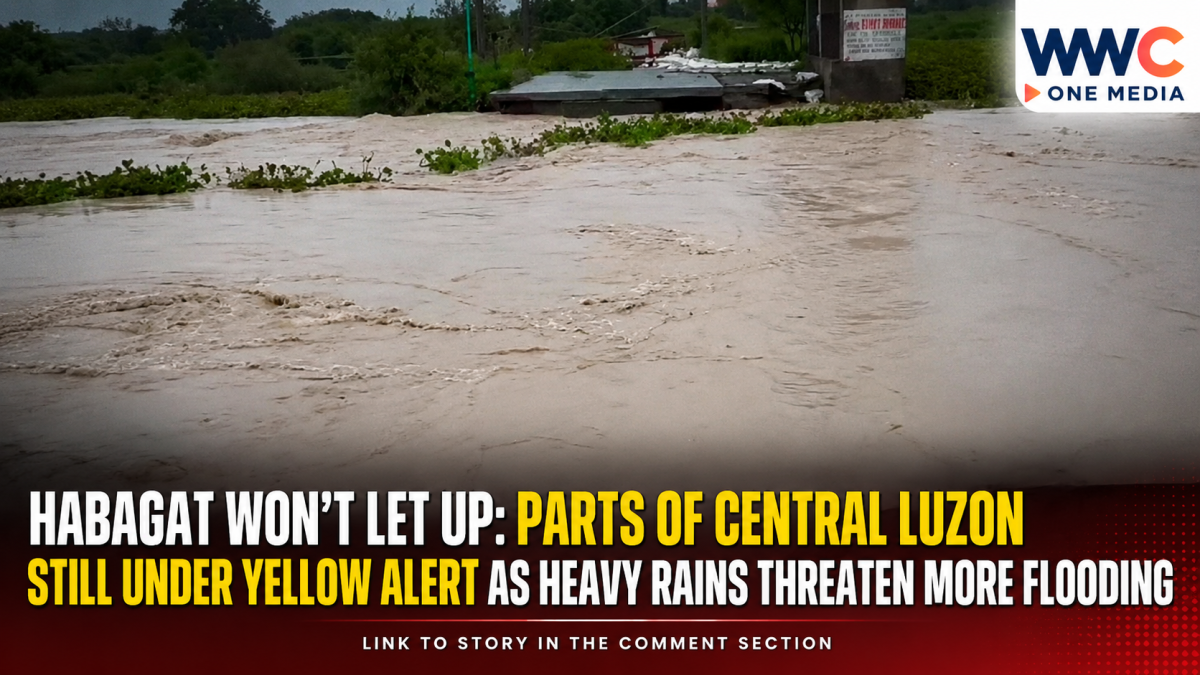
MANILA, Philippines — The rainfall warning may have been downgraded, but the threat from the relentless southwest monsoon is far from over.
Parts of Central Luzon remained under a Yellow Rainfall Warning on Monday, August 31, as the Philippine Atmospheric, Geophysical and Astronomical Services Administration (PAGASA) warned residents in flood-prone areas to stay alert amid continuing rains.
In its 8 a.m. advisory, PAGASA placed Zambales and Bataan, as well as several areas in Tarlac, Nueva Ecija and Pampanga, under the yellow warning level due to the southwest monsoon, or Habagat. Under this warning level, flooding remains possible, particularly in vulnerable and low-lying areas.
Among the areas covered were Tarlac City and several municipalities in Tarlac; Cuyapo, Nampicuan, Carranglan, Lupao and Talugtug in Nueva Ecija; and Porac, Floridablanca, Mabalacat and Angeles in Pampanga.
PAGASA also said light to moderate rains, with occasional heavy downpours, could affect parts of Metro Manila and nearby areas, underscoring that the weather situation remains unstable even as some warning levels have eased.
Up to 200 mm of Rain Forecast in Some Areas
The latest weather outlook paints a broader picture of the continuing threat across Luzon.
PAGASA’s forecast, as reported by GMA News, indicated that 100 to 200 millimeters of rainfall could affect several areas, including Zambales, Bataan, Tarlac and Pampanga, while Nueva Ecija and Bulacan were among areas expected to receive significant rainfall as the Habagat continues to strengthen.
The monsoon is being enhanced by Tropical Depression Pilandok and two other weather disturbances, according to PAGASA. Pilandok was reported to be far east of extreme Northern Luzon and is not expected to make landfall, but its presence and other nearby weather systems are helping intensify the southwest monsoon.
That means the danger does not disappear simply because a warning has been downgraded.
Days of Rain Have Already Taken a Heavy Toll
The continuing rains come after several days of severe weather that have already battered Central Luzon.
Earlier reports showed that parts of Zambales, Bataan, Tarlac and Pampanga had experienced higher-level rainfall warnings before conditions eased.
The human impact has also been devastating. The Philippine Daily Inquirer reported on Monday that at least 16 people had died in Central Luzon in less than a week, with floods, landslides and strong currents linked to the persistent Habagat rains. Four people were also reported missing at the time of the report.
In Metro Manila, the scale of the recent downpour was equally striking. Data cited by the Metropolitan Manila Development Authority showed that 186 millimeters of rain fell over a 23-hour period from August 29 to 30, highlighting how quickly prolonged monsoon rains can overwhelm drainage systems and trigger flooding.
Public Urged: Stay Alert as Conditions Can Change Quickly
PAGASA continues to warn the public against flash floods and landslides, especially in areas that have already experienced days of saturated ground and persistent rainfall.
Residents in affected areas are advised to closely monitor official PAGASA bulletins and local disaster authorities, particularly as rainfall warnings can change rapidly depending on the movement and intensity of rain bands.
For now, the message is clear: the warning may be lower, but the risk remains. With the Habagat still being enhanced by multiple weather systems, communities across Central Luzon should not let their guard down.
Stay safe, stay informed, and be prepared—because in a season of relentless rain, conditions can change in a matter of hours.



Leave a Reply