
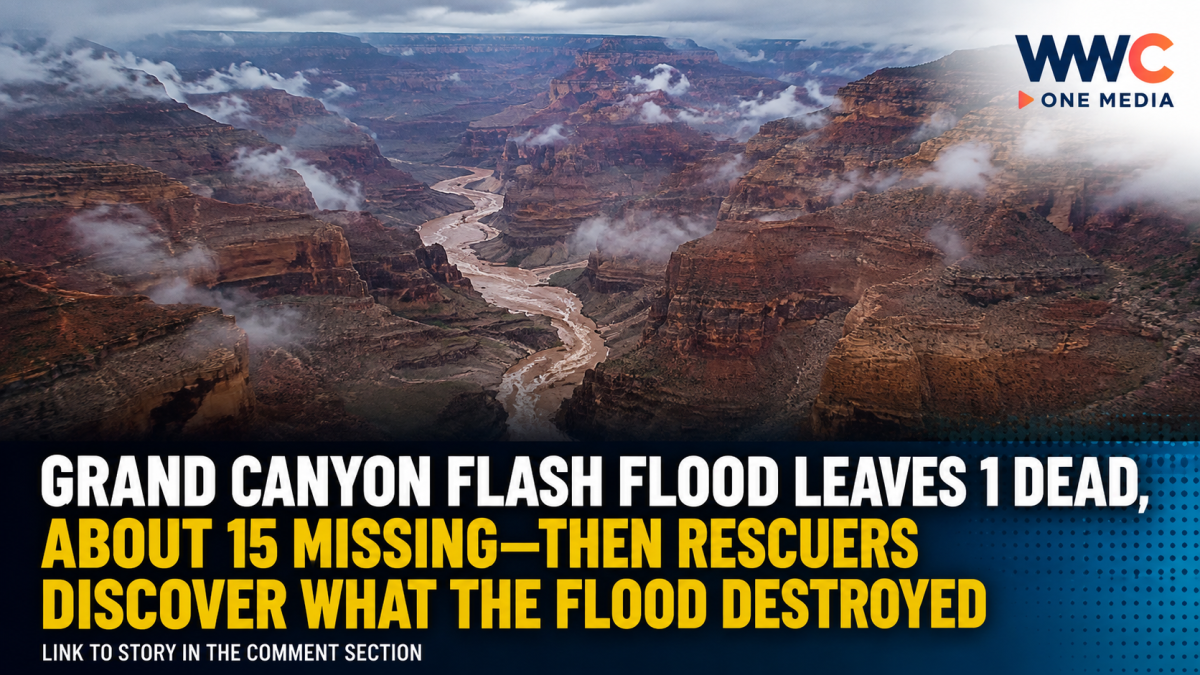
FLAGSTAFF, Arizona — A powerful flash flood tore through the Grand Canyon over the weekend, leaving one person dead and about 15 others missing or unaccounted for, while forcing the evacuation of more than 60 people from some of the canyon’s most remote areas.
The National Park Service (NPS) said the flash flood struck the Bright Angel Canyon and Phantom Ranch area on Saturday, August 29, at around 2:30 p.m., sending torrents of water, mud, boulders and debris through the canyon and into the Colorado River.
The situation became even more serious Sunday when authorities recovered the body of a 46-year-old man near Crystal Rapids along the Colorado River. Officials have not yet publicly identified the man.
About 15 people remain unaccounted for
The NPS initially asked the public for information about more than 20 people who could have been missing following the flood.
The agency later revised the figure to about 15 people who may still be missing or unaccounted for.
Officials are asking anyone who knows of hikers, backpackers or campers who were in the affected area on August 29 to contact the NPS Investigative Services Branch. The request includes people who may have been traveling along the North Kaibab Trail, staying at Bright Angel Campground or in the area known as “the Box” north of Phantom Ranch.
The NPS has emphasized that “missing or unaccounted for” does not necessarily mean all of those people are confirmed victims. Authorities are still working to determine who was in the affected areas and account for everyone.
More than 60 people evacuated
At least 62 people were evacuated from Phantom Ranch and the lower North Kaibab Trail, with additional evacuations continuing from areas including Cottonwood Campground and Phantom Ranch. Evacuees were transported to the South Rim, where the American Red Cross was helping coordinate assistance.
Hiker Parth Desai, who was in Bright Angel Canyon when the storm struck, described seeing floodwaters rise rapidly along with waterfalls, boulders, mud and landslides. His group was eventually rescued by helicopter.
Flood destroyed bridges and changed the canyon landscape
The flooding caused extensive damage throughout Bright Angel Canyon.
According to the NPS, nearly all footbridges spanning Bright Angel Creek were destroyed, cutting off important hiking routes through the canyon. Large boulders, metal structures and other debris were also swept into the Colorado River.
The force of the water also significantly altered the creek bed and created what appeared to be a new or substantially changed river rapid.
Phantom Ranch, Bright Angel Campground, the Phantom Ranch Canteen and cabins, and the entire North Kaibab Trail between the trailhead and Phantom Ranch have been closed until further notice. The Black Bridge and Silver Bridge crossings over the Colorado River are also closed.
The Colorado River itself has been closed to river traffic in the affected area because of debris and damaged metal structures.
Flash flood also knocked out critical water pipeline
The disaster created another major problem for Grand Canyon National Park: the flood damaged the sole water pipeline serving tourists and residents in the park.
Because of the resulting water shortage, the NPS announced significant conservation measures. Beginning Monday, tourists will not be permitted to stay overnight at lodges and hotels inside the national park, while year-round residents have been asked to conserve water.
The pipeline is already undergoing a major rehabilitation project. The ongoing project, estimated at about $208 million, began in 2023 and was expected to be completed next year. The flood damage represents a significant setback to the park’s water infrastructure.
How did the Grand Canyon flood so quickly?
The National Weather Service said roughly 0.5 to 1 inch (1 to 2.5 centimeters) of rain fell within about 20 to 30 minutes over steep, rocky terrain.
The ground had already been soaked by earlier storms, meaning much of the additional rainfall rapidly flowed downhill instead of being absorbed.
Bright Angel Creek descends from the North Rim toward the Colorado River, dropping roughly 6,000 feet (1,828 meters). That extreme elevation change can turn intense rainfall into a dangerous torrent with very little warning.
The flooding occurred during Arizona’s summer monsoon season, when thunderstorms can develop rapidly and produce intense rainfall across the Grand Canyon region.
More dangerous weather could still be coming
Authorities warned that the emergency may not be over.
The National Park Service said additional thunderstorms and heavy rainfall were possible through Monday, potentially causing more flash flooding, debris flows, rockfalls and rapidly changing trail and river conditions.
The National Weather Service has also warned of dangerous flooding in normally dry washes, creeks and narrow canyon areas, where water levels can rise suddenly.
For now, authorities are continuing to assess the damage, evacuate people from affected areas and work to determine the whereabouts of those still unaccounted for.
The latest developments have transformed what began as a severe weather emergency into a broader rescue, recovery and infrastructure crisis inside one of America’s most visited national parks.




Leave a Reply